Key Takeaways
- Major industry gatherings now draw 1,000+ attendees, including C-suite executives and policymakers, for networking you can’t replicate over Zoom.
- Top 2026 events: DC Blockchain Summit (policy focus), Blockchain Futurist Conference (Web3 & AI), Consensus (largest, roughly 15,000 attendees), and Cornell Blockchain Conference (academic).
- Expect 250+ speakers at the bigger events, real AI x blockchain programming, and deal-making formats like private cabanas instead of stiff banquet halls.
- Entry-level tickets start around $20 for students; many events now run parallel metaverse or livestream tracks for remote attendees.
- Early-bird pricing typically saves 30-50% off day-of rates, so timing your registration matters as much as picking the event.
A blockchain conference is a large gathering where developers, investors, and regulators meet to discuss distributed ledger technology and digital assets. These events combine networking, education, and deal-making in a way that scattered online communities can’t match.
As of 2026, the event landscape spans Washington D.C., Toronto, Miami, New York, and London. Whether you’re a policymaker shaping regulation, a founder pitching VCs, or an engineer learning from core protocol teams, there’s likely an event built around your specific goals. This guide breaks down the top gatherings of the year and how to get real return on your travel budget.
What Is a Blockchain Conference?
The Evolution of Industry Gatherings
A blockchain conference is a strategic meeting point where the full ecosystem, enterprises, startups, regulators, and academia, converges under one roof. What started as small developer meetups has scaled into something closer to a major trade show. Consensus, for instance, now pulls in roughly 15,000 attendees according to CoinDesk’s event coverage, which tells you a lot about how far the Web3 industry has come since the early meetup days.
Key Components of a Modern Event
A typical program features keynotes from industry figures like Vitalik Buterin or SEC Chairman Paul Atkins, panel discussions on DeFi and regulation, hands-on developer workshops, and a busy expo floor where projects demo live products. Networking is the actual product being sold here. Organizers now build in cabana meetings, VIP lounges, and even metaverse galleries specifically to generate deal flow, not just fill a schedule.
Why Attend in 2026?
Networking with Decision-Makers
Face time with decision-makers is the single biggest reason to show up in person. The DC Blockchain Summit reported 70% C-suite attendance and over 30 lawmakers present, making it a genuine opportunity to influence policy conversations rather than just watch them unfold on Twitter. The Blockchain Futurist Conference takes a different approach, curating private cabanas specifically for VIP deal-making. Either format beats cold outreach for building the kind of trust that leads to actual term sheets.
Education and Real-World Use Cases
With 250+ speakers and over 100 sessions, the Futurist Conference delivers real depth on AI, DeFi, real-world assets (RWAs), and broader Web3 infrastructure. The Cornell Blockchain Conference takes the academic route, bridging research and industry with roughly 60 speakers from finance and government plus hands-on demos from blockchain accelerators. If you want signal over noise, the smaller, research-driven events tend to deliver it.
Business Development and Deal Flow
For companies exhibiting, these events function as lead-generation engines. The DC Blockchain Summit hosted over 600 companies and generated more than 1.5 million social impressions, which is a meaningful reach multiplier for sponsors. Purpose-built networking zones, like the outdoor stages at the Futurist Conference, turn informal chats into signed deals far more reliably than a cold LinkedIn message ever will.
“Among the world’s best blockchain conferences and expos to attend.” – Business Insider, on the DC Blockchain Summit
Top Global Events to Consider

Below is a comparison of the leading events on the 2026 circuit. Use this table to match an event against your specific professional goals.
| Event Name | Location | Dates (2026) | Approx. Attendees | Primary Focus | Ticket Starting Price |
|---|---|---|---|---|---|
| DC Blockchain Summit | Washington D.C. | Next edition April 6-7, 2027 | 1,100+ | Policy & Regulation | Contact for pricing |
| Blockchain Futurist Conference Toronto | Toronto, Canada | July 21-22 | 2,500+ | Web3, AI, DeFi | From $199 |
| Consensus 2026 | Miami, FL | May 2026 | ~15,000 | Digital Asset Economy | From $599 |
| Cornell Blockchain Conference | New York City (Cornell Tech) | April 24 | 800+ | Academic & Industry Research | $20 (students) / $60 (early bird) |
| ETHDenver | Denver, CO | February 17-21, 2026 | Tens of thousands | Developer Hackathon & Builder Culture | Varies by pass tier |
Policy-Focused Gatherings
The DC Blockchain Summit stands out as the premier venue for regulatory discourse in the U.S. With over 30 lawmakers and a 70% C-suite crowd, it directly shapes digital asset policy conversations rather than reacting to them after the fact. If you need to understand where regulation is heading, this is close to essential. The CoinDesk Policy & Regulation event, scheduled for September 2026, offers a similar insider vantage point.
Tech and Web3 Megafests
For builders and DeFi practitioners, the Blockchain Futurist Conference is close to mandatory. Held at Toronto’s Rebel Entertainment Complex and Cabana Pool Bar, it blends outdoor festival energy with genuinely technical content, running 250+ speakers and a full day dedicated to AI, including live demos and robotics. Consensus, now based in Miami, dwarfs everything else on this list with roughly 15,000 attendees and a decade-long track record. Both events do a solid job of pairing innovation with real investment activity, just at very different scales.
Academic and Research-Focused Events
The Cornell Blockchain Conference brings together researchers, students, and industry leaders for a genuinely technical program. With around 60 speakers and 800+ attendee capacity at the Verizon Center on Roosevelt Island, it keeps access affordable with $20 student tickets and $60 early-bird pricing. This event suits anyone who wants to study the programmable economy without wading through sales pitches.
How to Choose the Right Event for Your Goals
Step 1: Define Your Primary Objective
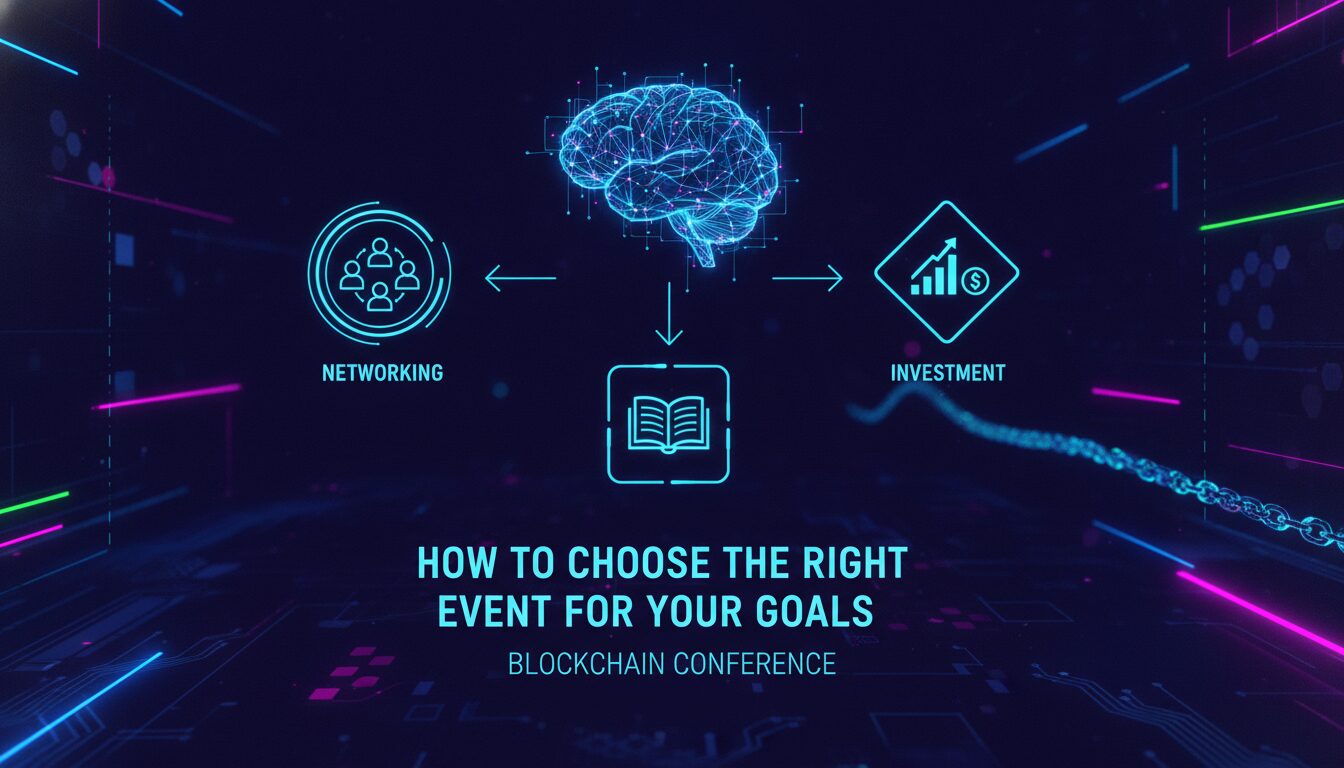
Start by naming exactly what you want out of the trip, because that answer determines everything else. Trying to network with regulators? A policy-heavy event like the DC Blockchain Summit is your best bet. Seeking capital? Choose something with a proven deal-flow track record, like the Futurist Conference. Want deep technical learning? Cornell’s academic program or a developer-focused hackathon like ETHDenver fits better than a general expo.
Step 2: Evaluate the Attendee Profile
Look at past attendee data before you book anything. The DC Blockchain Summit attracts 1,100+ people with 70% C-suite representation, which is close to perfect for B2B outreach. Consensus draws a much broader mix of roughly 15,000 participants, better suited to mass visibility than targeted deals. A niche event like Cornell’s, by contrast, guarantees smaller crowds but higher-quality, research-oriented conversations.
Step 3: Assess Location, Cost, and Format
North America still dominates the circuit, but Europe and Asia host serious events too, including the London Blockchain Conference. Budget matters: early-bird tickets can save you 30-50% off standard pricing. Consider hybrid formats as well. The Futurist Conference offers a full metaverse experience that allows remote attendance without sacrificing the networking angle entirely. Weigh travel and accommodation costs against expected ROI before committing to any single event.
Maximizing Your Experience Once You’re There
Pre-Event Preparation
Set clear goals before you land. Identify roughly 10 target contacts from the speaker list or attendee app ahead of time. Prepare a one-page company summary and tighten your elevator pitch to under 30 seconds. A well-planned agenda keeps you in the sessions that actually matter instead of wandering the expo floor aimlessly.
On-Site Networking Tactics
Use official side events to multiply your opportunities. Canada Crypto Week, for example, runs parallel to the Futurist Conference and effectively doubles your networking surface area. Carry business cards with a QR code linking to LinkedIn or a Linktree page. Don’t skip cabana meetings either. They’re designed for the kind of deep, unhurried conversation a crowded expo floor simply can’t offer.
Post-Conference Follow-Up
Send personalized follow-ups within 48 hours of the closing session, while your conversation is still fresh in the other person’s mind. Reference something specific you discussed to build real rapport instead of a generic “great to meet you.” Connect on social channels and nurture the relationship over the following months. Tracking the number of qualified leads or partnership discussions that trace back to a given event helps justify next year’s travel budget to whoever signs off on it.
Pros and Cons
Pros
- Face-to-face access to regulators, founders, and protocol teams you’d rarely reach by email.
- Compressed timeline: dozens of meetings and sessions packed into 2-3 days instead of months of scattered outreach.
- Direct exposure to emerging trends, like on-chain AI agents, months before they hit mainstream crypto media.
- Early-bird and student pricing keeps entry costs reasonable relative to the connections made.
Cons
- Travel and premium ticket costs add up fast, especially for flagship events like Consensus.
- Signal-to-noise ratio can be low at massive events with 15,000+ attendees and hundreds of side pitches.
- Expo floors are increasingly crowded with speculative projects that add little educational value.
- Virtual and metaverse tracks, while improving, still can’t fully replace the deal-making that happens in a cabana or hallway conversation.
The Future: AI Convergence and Virtual Reality
AI-Infused Agendas
The line between a blockchain-focused event and an AI summit is disappearing fast. The Blockchain Futurist Conference 2026 dedicates an entire day to artificial intelligence, featuring live demos, robotics, and discussions on decentralized AI infrastructure. This mirrors a real on-chain trend: autonomous agents and data markets are moving from whitepaper concepts to deployed protocols. Expect nearly every major industry event to run a dedicated AI track by 2027.
Metaverse and Hybrid Immersion
Several events now offer parallel metaverse experiences alongside the physical venue. The Futurist Conference provides an immersive gallery for remote attendees to network and browse NFT exhibitions without buying a plane ticket. Hybrid formats improve accessibility and cut down on the travel footprint tied to any large gathering, making them more inclusive for participants outside North America.
Sustainability and Community Ownership
Forward-thinking organizers are experimenting with on-chain ticketing and DAO-governed event models. This approach cuts down on scalping and fraud while letting community members vote directly on speaker lineups or session topics. As the underlying technology matures, the event itself starts to look like a working case study in decentralized coordination, which is a fitting outcome for an industry built on that premise.
Expert Insights: Why Industry Leaders Prioritize These Events
Business Insider’s endorsement of the DC Blockchain Summit underscores the real value a well-chosen event delivers beyond the ticket price. Leaders like SEC Chairman Paul Atkins and Binance CEO Richard Teng use these stages to announce major initiatives that move markets and shape policy in real time. For working professionals, skipping the right event in a given year can mean missing a policy shift or a partnership window that doesn’t reopen.
On-chain data and industry reporting consistently show that in-person deal flow at flagship crypto events outperforms cold digital outreach for early-stage partnerships, a pattern that has held steady across multiple event cycles according to CoinDesk’s ongoing event coverage.
If you’re building protocol infrastructure or designing tokenomics and want direct access to the builders shaping this year’s agenda, consider applying to the Genesis Cohort at digitalblockchains.com. We work with serious teams tackling smart contract architecture, DAO design, and token launch strategy, and these events are exactly where that kind of collaboration starts.
Frequently Asked Questions
What is the biggest blockchain conference in 2026?
Consensus 2026 in Miami drew roughly 15,000 attendees, making it the largest event on the calendar this year. The DC Blockchain Summit and Blockchain Futurist Conference each draw over 1,000 highly targeted participants, trading scale for a more focused crowd.
Where is the 2026 Bitcoin Conference going to be?
Multiple Bitcoin-focused events are scheduled worldwide throughout the year. Notable ones include Bitcoin Asia in Hong Kong (August 2026) and Bitcoin Amsterdam (November 2026). Check Luma for updated listings as dates get finalized.
What is the best crypto conference for networking?
The Blockchain Futurist Conference is purpose-built for deal-making, with private cabanas and VIP passes designed specifically for that purpose. For policy insiders, the DC Blockchain Summit offers exceptional access to lawmakers and regulators you won’t find elsewhere.
What is the blockchain summit?
A summit is typically a smaller, more focused gathering than a giant industry conference. The DC Blockchain Summit, for example, emphasizes regulatory discussions with high-level government participation rather than a broad expo floor.
How much do tickets typically cost?
Prices range from $20 for students at the Cornell Blockchain Conference to $599 and up for premium events like Consensus. Many events offer early-bird discounts of 30-50% off standard pricing, so booking early pays off.
Are virtual attendance options worth it?
Yes, many events now offer solid livestreams or metaverse experiences that support real networking and learning remotely. That said, in-person attendance still maximizes the relationship-building that drives actual deal flow.