Key Takeaways
- Entry level blockchain jobs span engineering, marketing, operations, and design, with many remote options available.
- Top job boards like CryptocurrencyJobs.co and Web3.Career list thousands of open positions with no prior experience required.
- Salaries for entry level roles range from $45,000 to over $200,000, depending on the function and company.
- Internships are the most common pathway, with many firms offering paid programs and direct routes to full-time employment.
- Building practical skills through bootcamps, personal projects, and open-source contributions improves hiring chances.
Entry level blockchain jobs are positions in the cryptocurrency and distributed ledger technology sector that require minimal prior professional experience, typically including internships, graduate programs, and junior roles across engineering, marketing, and operations.
What Are Entry Level Blockchain Jobs?

blockchain jobs require no more than two years of relevant work experience, making them accessible to recent graduates and career changers. Unlike traditional tech sectors, the blockchain industry often values demonstrated interest and hands-on skills over formal credentials. Companies like Wintermute and Grayscale regularly post internships and graduate programs that assume candidates are new to the field but show genuine passion for crypto.
Common Misconceptions About Blockchain Careers
Many people believe that all blockchain roles require deep programming knowledge or prior crypto trading experience. In reality, the ecosystem needs diverse talent. Non-technical positions in marketing, community management, and operations are abundant for those who can articulate complex concepts clearly. Even technical roles often provide on-the-job learning if you can demonstrate foundational coding skills and willingness to grow.
Types of Entry Level Blockchain Jobs

The blockchain job market offers diverse opportunities across technical and non-technical functions. For those with a computer science background, these jobs in engineering include software developer, data analyst, and smart contract engineer positions. While these roles typically require some programming ability, many accept candidates who have completed a Solidity bootcamp or contributed to open-source projects.
Technical and Engineering Roles
Engineering positions command the highest salaries in the such blockchain jobs market. Ellipsis Labs recently advertised a Software Engineer – 2027 New Grads role with a salary range of $150,000 – $200,000. Other technical opportunities include blockchain developer positions, smart contract auditor roles, and data analyst positions focused on on-chain metrics.
Non-Technical Roles in Crypto
Non-tech roles make up a significant portion of available the level blockchain jobs and are often easier to enter without prior blockchain experience. Common titles include marketing intern, community manager, legal associate, and compliance analyst. Grayscale has a Distribution Intern paying $54,000 – $60,000, while Polymarket runs a Legal Summer Associate Program. These positions value communication, organizational skills, and genuine interest in the technology.
Internships: The Primary Entry Point
According to CryptocurrencyJobs.co, which lists over 60 entry-level blockchain jobs at any time, internships dominate the category. Companies like Animoca Brands, ether.fi, and Chainalysis run structured programs that often convert to full-time offers. These opportunities provide mentorship and real-world project experience, making them the most reliable path into the industry.
How to Find Entry Level Blockchain Jobs

The most efficient way to discover open positions is through niche job boards that focus exclusively on blockchain and web3. These specialized platforms aggregate opportunities from crypto-native companies that traditional job sites often miss.
Specialized Crypto Job Boards
The table below compares the most popular platforms currently active in 2026:
| Job Board | Active Entry Level Listings | Remote Options | Key Features |
|---|---|---|---|
| CryptocurrencyJobs.co | 60+ jobs | Yes | Curated listings, talent collective |
| Web3.Career | 1,642 jobs | Yes | Bondex integration, World ID verification |
| CryptoJobsList | Hundreds | Yes | Salary data, workforce reports |
| NoDesk | 1,000+ total (700 remote) | Yes | Aggregates from multiple boards |
Company Career Pages and Direct Applications
Many blockchain firms post roles exclusively on their own websites. Wintermute, Grayscale, and Xapo Bank frequently update their careers pages with entry-level openings. Applying directly can sometimes bypass the heavy competition on large job boards and shows genuine interest in the company.
Networking and Crypto Communities
Discord servers, Twitter spaces, and Reddit forums like r/ethdev are where industry insiders share referrals and unlisted job opportunities. Attending local meetups in hubs like Singapore, London, and New York can also open doors that never appear on public boards.
Skills and Qualifications for Entry Level Blockchain Jobs
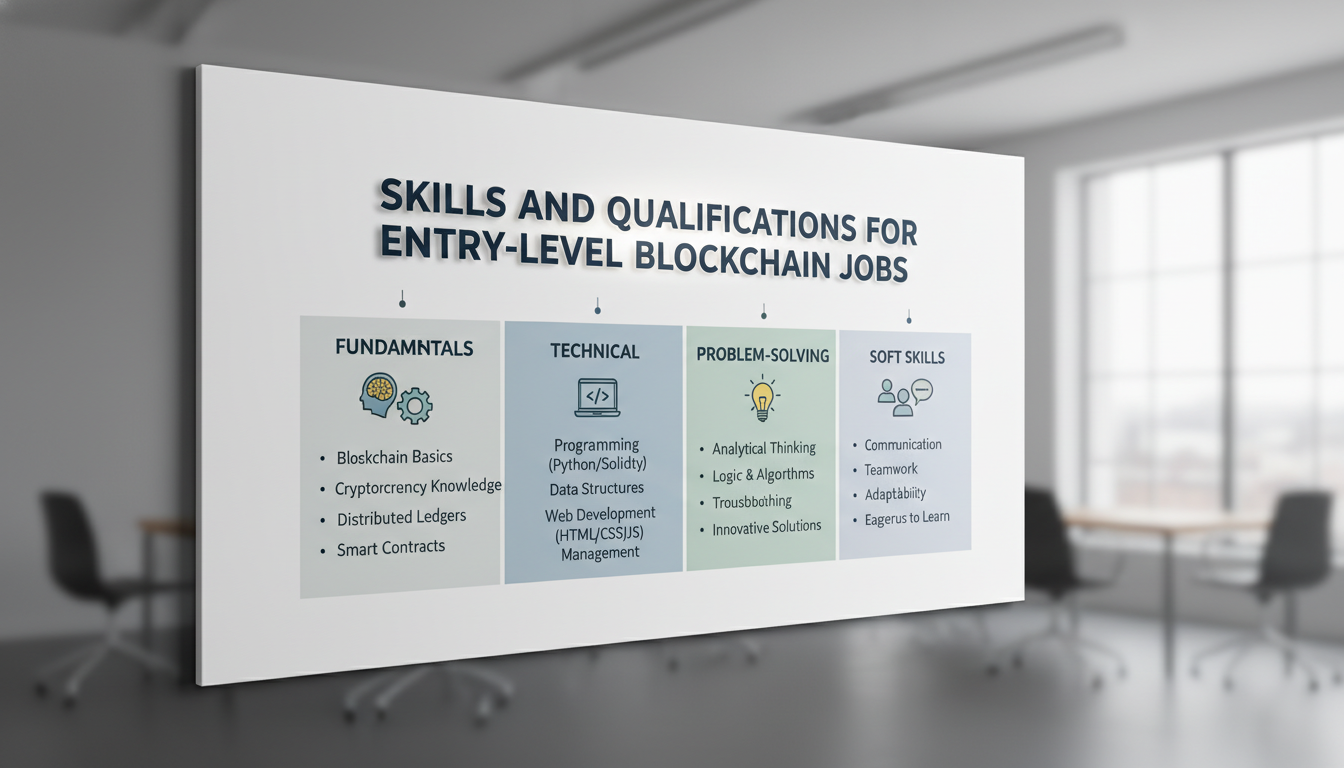
Success in jobs depends on a combination of technical skills, industry knowledge, and soft skills. For developer roles, familiarity with Solidity, Rust, or Python is often required. Understanding smart contracts, EVM chains, and DeFi protocols like lending and automated market makers will set you apart.
Technical Skills That Boost Your Resume
Even for non-tech roles, knowing how to read a block explorer or explain what a gas fee is can impress hiring managers. The ability to navigate tools like Etherscan, understand transaction flows, and explain basic cryptographic concepts demonstrates genuine engagement with the technology.
The Importance of Soft Skills
Communication, adaptability, and a collaborative mindset are repeatedly named in job descriptions as critical. The blockchain industry moves fast; companies want team members who can learn on the fly and thrive in ambiguity. A demonstrable passion for the space, through personal research, blog posts, or portfolio projects, often outweighs formal qualifications.
Certifications and Bootcamps
Several bootcamps now offer job guarantees. Metana, prominently featured on Web3.Career, promises job placement or a full refund. While not a universal requirement, completing a structured program can give you the practical skills and networking circle to land that first role faster.
Salary Expectations for Entry Level Blockchain Jobs
Compensation for entry level varies significantly based on role type, company stage, and geographic location. Technical positions consistently command higher salaries than non-technical roles, but both offer competitive entry-level wages compared to traditional industries.
Engineering and Developer Salaries
Technical blockchain jobs command impressive compensation. As noted, Ellipsis Labs offers up to $200,000 for new grad software engineers. Other job postings confirm a wide but healthy range: B2C2 lists a Graduate Trader role at $94,000 – $96,000, while a Graduate Quant Developer at the same firm matches that band. Even a Junior Python Developer at B2C2 can earn $84,000 – $108,000.
Non-Tech Salary Ranges
Non-technical roles typically pay less than engineering but still offer competitive entry-level wages. The Grayscale Distribution Intern position, for instance, is budgeted at $54,000 – $60,000. Marketing, community, and operations interns can expect similar figures, with full-time junior roles often reaching $65,000 – $90,000 depending on the company’s funding stage.
Remote Work Salary Considerations
Many blockchain companies set location-based pay scales. A remote junior analyst based in a low-cost region might earn less than a counterpart in a high-cost city, though some firms (like Bitfinex) advertise fixed global salary bands to attract worldwide talent. Always check the job descriptions for geo-specific adjustments.
Companies Hiring for Entry Level Blockchain Jobs
The landscape of companies offering these jobs spans crypto-native startups, traditional finance firms entering the space, and specialized technology providers. Each category offers different advantages for new graduates and career changers.
Crypto-First Startups
Startups such as Wintermute, Animoca Brands, and LayerZero Labs consistently post internship and graduate programs. Because these companies are building core infrastructure or gaming ecosystems, they offer hands-on experience with cutting-edge technology and rapid career progression for early employees.
Traditional Finance Entering Crypto
Established financial service providers are expanding their digital asset arms. Grayscale, Xapo Bank, and Sygnum now run internship schemes targeting students from top universities. These roles often combine conventional finance training with blockchain applications, providing a broader skill set.
Tech and Security Firms
Companies like Chainalysis, Ledger, and TRM focus on crypto compliance and cybersecurity. Their such blockchain jobs include software engineering, data analysis, and legal internships. Because these firms operate at the intersection of tech and regulation, experience gained here is highly transferable across the industry.
Remote vs. On-Site Entry Level Blockchain Jobs
Remote work is deeply embedded in crypto culture, with most the level blockchain jobs offering flexible work arrangements. NoDesk aggregates over 1,000 blockchain jobs, of which 700+ are remote-friendly.
Benefits of Remote Blockchain Work
This flexibility allows candidates from anywhere to apply to top-tier companies without relocating, and many firms offer stipends for home office setup. Remote positions also provide access to a global talent pool, meaning you can work for Singapore-based companies while living anywhere with reliable internet.
Challenges of Working Remotely in Crypto
Time zone coordination across global teams can be grueling, especially for intern-level staff who need more guidance. Self-discipline and reliable internet are prerequisites; without a physical office, it’s easier to feel disconnected from company culture. Successful remote workers actively seek out digital watercoolers like team Discord channels.
Hybrid and On-Site Opportunities
Not every role is fully remote. Polymarket requires its 2026 summer interns to be in New York, and Ellipsis Labs expects new grads to work from its Manhattan office. These on-site positions often come with extra mentorship and networking events, which can accelerate early career growth.
Step-by-Step Guide to Landing Your First Blockchain Job
Breaking into the blockchain industry requires a strategic approach that combines foundational learning, practical experience, and targeted applications. Here’s how to position yourself for success in landing jobs.
Step 1: Build Foundational Knowledge
Start by understanding what a blockchain is, how consensus mechanisms work, and the difference between layer-1 and layer-2 networks. Free resources like the Ethereum.org developer portal and introductory courses from Coursera can give you a solid base in under 20 hours. Follow crypto news outlets to stay updated on industry trends.
Step 2: Gain Practical Experience
Theory alone won’t get you hired. Build a simple dApp, contribute to an open-source smart contract on GitHub, or participate in a hackathon hosted by ETHGlobal. Even a well-documented personal project that demonstrates your ability to research and execute can serve as a portfolio piece. For non-coders, analyzing a DeFi protocol and publishing your findings on a blog shows initiative.
Step 3: Apply Strategically
Tailor your resume to highlight blockchain-specific keywords like DeFi, smart contracts, or community management. Write a cover letter that connects your background to the company’s mission, mention their recent product launch or token. Finally, use the comparison table above to target the job boards with the most listings and set up alerts for new postings.
Interview Preparation for Entry Level Blockchain Jobs
Preparing for blockchain job interviews requires understanding both technical concepts and industry dynamics. Most entry level will test your foundational knowledge through practical scenarios rather than abstract theory.
Common Technical Questions
Expect questions about gas fees, smart contract basics, and the difference between proof-of-work and proof-of-stake. For developer roles, you might be asked to explain how you’d approach building a simple token or what security considerations matter in smart contract development. Practice explaining these concepts in simple terms.
Demonstrating Industry Knowledge
Stay current with major protocol upgrades, regulatory developments, and market trends. Interviewers often ask about recent news to gauge your genuine interest in the space. Being able to discuss the implications of a major DeFi hack or a new layer-2 launch shows you’re actively engaged with the ecosystem.
Pros and Cons
Pros
- High salary potential with blockchain jobs offering $45K-$200K+ depending on role
- Remote work opportunities available in over 700 positions according to current job board data
- Rapid career progression in a fast-growing industry with emerging roles constantly being created
- Access to cutting-edge technology and the opportunity to work on revolutionary financial infrastructure
- Strong community support with active Discord servers, forums, and networking events
Cons
- High volatility in job security due to market cycles and regulatory uncertainty
- Steep learning curve requiring constant upskilling as technology evolves rapidly
- Limited traditional career paths with many roles being newly created and undefined
- Potential for long hours during critical launches or market events
- Regulatory risks that could impact company operations and job stability
Future Outlook for Entry Level Blockchain Jobs
The sector is maturing, and as institutional adoption grows, demand for junior talent will only increase. The emergence of new categories like tokenomics design, decentralized identity, and regulatory compliance creates fresh opportunities for these jobs.
Industry Growth Projections
“The entry-level blockchain job market is more accessible than ever, with companies like Grayscale and Wintermute running recurring internship programs that often convert to full-time roles.”
According to on-chain data and hiring trends, the demand for blockchain talent continues to outpace supply, particularly for roles that combine traditional business skills with crypto knowledge.
Emerging Roles to Watch
Beyond traditional development and marketing, keep an eye on positions in tokenomics design, decentralized identity, and regulatory compliance. These areas are experiencing rapid hiring as governments clarify crypto laws and projects move beyond simple tokens toward complex economic models.
Geographic Hotspots and Global Demand
“According to industry workforce reports, the demand for junior talent proficient in both AI and blockchain technologies has risen sharply, creating a new category of hybrid roles.”
While hubs like Singapore, London, and New York remain strong, remote work has decentralized opportunity. Even companies headquartered in regulatory strict regions are hiring globally to tap into diverse talent pools. For candidates outside traditional tech centers, such blockchain jobs offer a legitimate path into a borderless, high-paying industry.
Ready to start your blockchain career? Apply to the Genesis Cohort at Digital Blockchains and join the next generation of Web3 builders.
Frequently Asked Questions
What is the average salary for entry level blockchain jobs?
Salaries vary widely. Technical roles like graduate software engineer can range from $84,000 to over $200,000 per year, while non-technical internships often fall between $45,000 and $65,000. Compensation depends on the company size, funding, and geographic location.
Can I get a blockchain job with no experience?
Yes. Many companies offer the level blockchain jobs explicitly labeled “no experience required” or “internship.” Building a basic portfolio of projects, contributing to open-source, and networking in crypto communities can help you stand out even with a non-technical background.
What skills are needed for entry level blockchain jobs?
For technical roles, knowledge of Solidity, Rust, or Python is common. Non-technical roles require strong communication, analytical thinking, and familiarity with blockchain concepts. In both cases, demonstrable passion for the space, through personal projects or crypto community involvement, is crucial.
Are there remote entry level blockchain jobs?
Absolutely. Over 700 remote-friendly blockchain jobs are currently listed on platforms like NoDesk. Many crypto-native companies operate fully distributed teams, so remote work is the norm rather than the exception.
What companies offer entry level blockchain internships?
Wintermute, Grayscale, Animoca Brands, Chainalysis, and Polymarket are among the many firms running structured internship programs. These typically last 3–6 months and often lead to full-time offers for high performers.
How do I get started in blockchain without coding?
Focus on non-technical jobs in marketing, community management, content writing, or operations. Start by learning the fundamentals through free online courses, then build a presence on crypto social media by sharing insights and engaging with projects. Internships are particularly friendly to non-coding backgrounds.