Key Takeaways
- A blockchain attorney is a legal professional who specializes in distributed ledger technology, digital assets, and the regulatory frameworks that govern them.
- You need a blockchain attorney when launching a token, facing an SEC investigation, or sorting out complex tax obligations tied to crypto.
- The right legal partner brings a multidisciplinary team with experience across securities law, AML compliance, and cross-border enforcement.
- Regulatory agencies including the SEC, CFTC, and FinCEN are actively shaping the industry. Specialized counsel is no longer optional.
- Fees vary by expertise and engagement model. Many firms offer initial consultations, and the cost of inadequate counsel almost always exceeds the cost of good counsel.
A blockchain attorney is a legal professional who specializes in distributed ledger technology, digital assets, token offerings, and crypto regulatory compliance. They sit at the intersection of code and law.
What Is a Blockchain Attorney?
Defining the Role in Web3 and DeFi
A attorney is not simply a technology lawyer with a crypto hobby. They combine deep knowledge of decentralized systems with expertise in securities law, anti-money laundering (AML) regulations, tax codes, and intellectual property. As blockchain applications extend from simple cryptocurrency transfers to complex DeFi platforms and NFT ecosystems, these attorneys must interpret legacy regulations while anticipating future enforcement trends. According to Holland & Knight, their blockchain team includes former SEC enforcement supervisors who were involved in the earliest enforcement actions involving bitcoin and dark web marketplaces, which illustrates the caliber of background this work demands.
The Intersection of Law and Emerging Technology
Understanding a this type of attorney‘s role starts with the technology itself. Blockchain is a decentralized, tamper-resistant digital ledger that records transactions across a distributed network of computers. That foundational architecture raises novel legal questions about jurisdiction, data privacy, and contractual enforceability. A proficient attorney explains how smart contracts operate under existing contract law, advises on whether a token is a security or a utility instrument, and designs legal structures that reduce risk without killing the project. They function as both legal counsel and strategic advisors for teams pushing the limits of traditional legal frameworks.
When Do You Need a Blockchain Attorney?
Launching a Crypto Startup or Conducting a Token Offering
Any founder planning an initial coin offering (ICO) or token generation event should engage a this kind of attorney before writing a single line of the white paper. The attorney assesses whether the token is likely classified as a security under the Howey Test, structures the offering to comply with SEC exemptions such as Regulation D or Regulation S, and drafts essential documentation including terms of service and investor disclosures. A misstep at this stage can produce crippling enforcement actions later. As Greenberg Traurig’s practice page confirms, their team advises on “token structuring, fund formation, investment strategies, financial regulation and registration” – the full breadth of guidance a founding team needs from day one.
Facing Regulatory Scrutiny or Enforcement Actions
When the SEC, CFTC, or DOJ issues a subpoena or Wells Notice, the stakes are immediate and severe. A skilled blockchain can challenge jurisdictional overreach, negotiate settlements, or represent clients in litigation. Bracewell notes that its cryptocurrency team “can manage the various enforcement inquiries and investigations that the cryptocurrency community currently faces,” which underscores why white-collar defense experience combined with deep crypto knowledge is a non-negotiable credential.
Navigating Complex Tax and Compliance Issues
Cryptocurrency transactions trigger a web of tax obligations, from capital gains reporting to FBAR filings for foreign exchanges. A attorney with tax expertise, often working alongside CPAs, helps clients build compliant structures, handle IRS audits, and avoid criminal exposure. Freeman Law describes its attorneys as “steeped in legal, tax, and regulatory issues related to cryptocurrency,” confirming that tax guidance is a core component of blockchain legal practice rather than a specialty add-on.
Regulatory Agencies and Their Impact on Blockchain
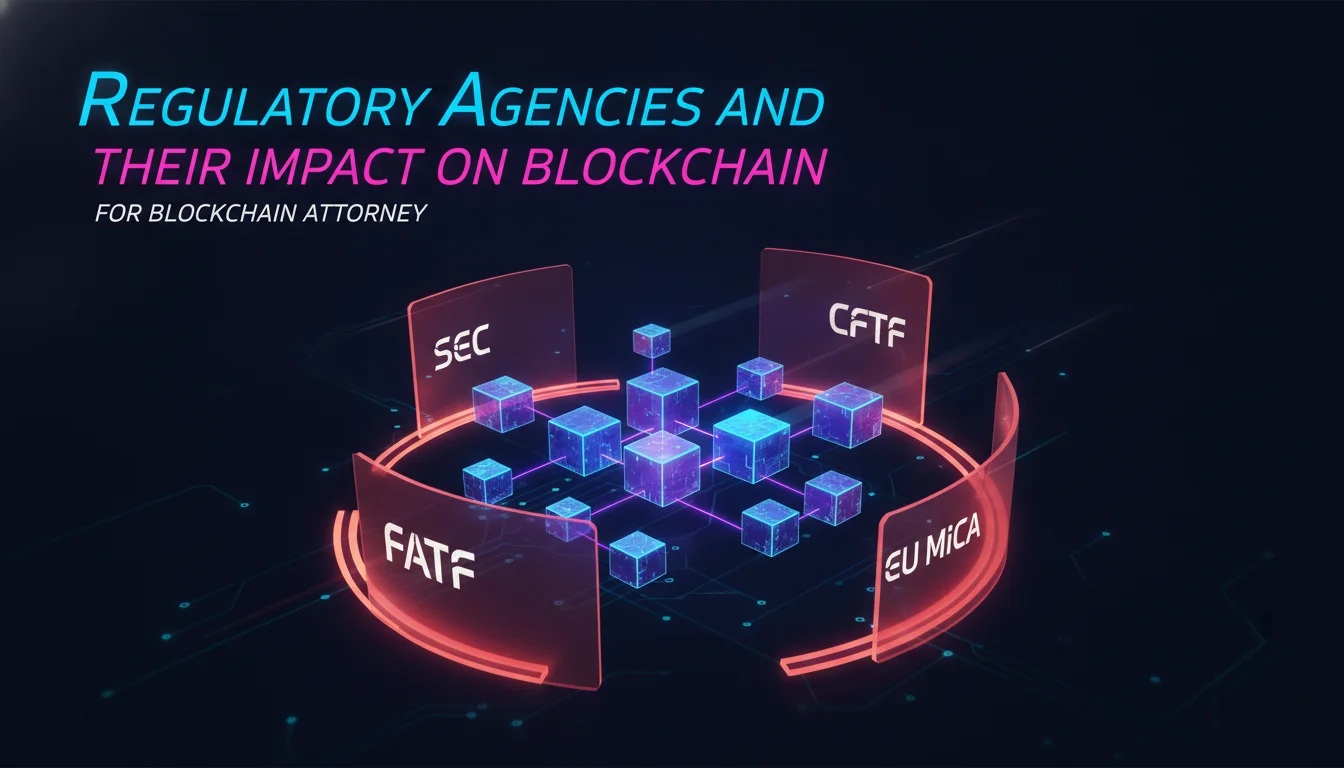
Securities and Exchange Commission (SEC)
The SEC applies federal securities laws to digital assets, using the Howey Test to determine whether a token qualifies as an investment contract. If it does, the issuer must register or find a valid exemption. The SEC has brought high-profile enforcement actions against ICOs, exchanges, and NFT projects. A this type of attorney helps structure tokens as utility instruments where the facts support it and ensures compliant disclosure when securities laws clearly apply.
Commodity Futures Trading Commission (CFTC)
The CFTC regulates derivatives on digital assets and has jurisdiction over commodities, a category that includes Bitcoin and many other cryptocurrencies. The agency has penalized exchanges for offering illegal derivatives and pursued fraud cases in spot markets. Per Bracewell’s published practice description, their team has deep experience with CFTC matters including commodities and derivatives enforcement. this kind of attorneys with CFTC experience help platforms register as swap execution facilities or designated contract markets and represent clients in enforcement proceedings.
Financial Crimes Enforcement Network (FinCEN)
FinCEN enforces the Bank Secrecy Act (BSA) as it applies to money transmitters. Many crypto businesses, including exchanges, wallet providers, and certain DeFi protocols, must register as Money Services Businesses (MSBs) and implement AML/KYC programs. A blockchain attorney advises on registration obligations, designs compliance programs, and defends against penalties for non-compliance.
| Agency | Focus | Key Tools | Typical Matters |
|---|---|---|---|
| SEC | Securities law compliance | Howey Test, registration requirements, enforcement actions | ICO/STO legality, token classification, fraud |
| CFTC | Derivatives and commodity fraud | Derivatives regulation, anti-manipulation rules | Futures on digital assets, spot market manipulation |
| FinCEN | Anti-money laundering, MSB registration | BSA compliance, SARs, KYC requirements | MSB registration, transaction monitoring, sanctions |
| IRS | Tax treatment of virtual currencies | Notice 2014-21, capital gains rules, FBAR | Tax reporting, basis tracking, audits |
How to Select the Right Blockchain Attorney for Your Needs
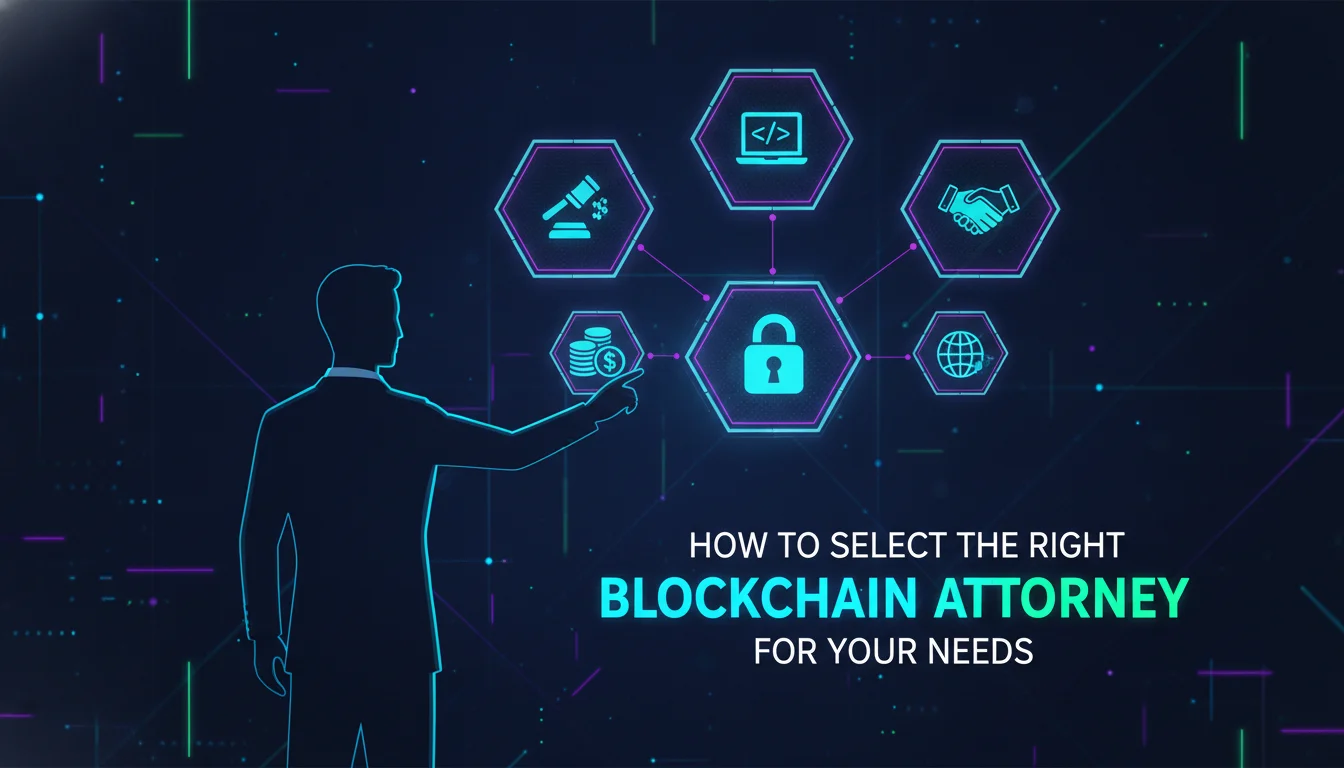
Multidisciplinary Expertise: Why It Matters
“Greenberg Traurig’s global Blockchain & Digital Assets Group comprises more than 100 attorneys across multiple legal disciplines in key financial hubs around the world, providing a centralized approach to blockchain and digital asset matters.” – Greenberg Traurig
That scale exists for a reason. No single lawyer can master every dimension of blockchain law. A well-rounded blockchain attorney works within a team that includes securities lawyers, tax experts, intellectual property counsel, and litigators. When evaluating candidates, look for firms that demonstrate cross-practice collaboration and a track record handling the full lifecycle of digital asset matters, from token creation through regulatory defense. The depth of the bench matters as much as the name on the door.
Evaluating Track Record and Industry Recognition
Beyond the polished website, concrete indicators of a reliable blockchain attorney include published thought leadership, peer recognition in publications like Best Lawyers in America, and involvement in landmark cases. Freeman Law notes that its attorneys have been recognized by U.S. News and World Report’s Best Lawyers in America list, Super Lawyers, and Chambers & Partners. Holland & Knight’s team pioneered service by NFT in 2022, becoming “the first legal team in the world to serve a defendant legal notice by airdropping an NFT to the defendant’s blockchain address,” a creative solution that signals genuine technical fluency. Ask for case studies that reflect your specific situation, whether that means capital raising, enforcement defense, or cross-border licensing.
Global Capabilities and Cross-Border Experience
Blockchain networks are borderless by design, so regulatory exposure can span multiple jurisdictions simultaneously. A strong blockchain attorney should be familiar with the EU’s MiCA framework, Asia-Pacific regimes in Singapore and Japan, and key U.S. state-level requirements like New York’s BitLicense. Bracewell’s published practice description notes work with international bodies including the World Economic Forum, International Monetary Fund, and Bank for International Settlements, which reflects the kind of global policy engagement that keeps clients ahead of incoming rules rather than reacting to them.
Pros and Cons of Hiring a Blockchain Attorney
Pros
- Regulatory clarity before launch: A qualified attorney identifies securities law exposure, AML obligations, and licensing requirements before you ship a single transaction, not after a regulator knocks.
- Enforcement defense: Former SEC and DOJ practitioners on legal teams understand how investigators think and build cases, giving clients a structural advantage in any inquiry.
- Cross-border coverage: Top firms track MiCA, FinCEN, CFTC, and state-level rules simultaneously, so a global protocol doesn’t get blindsided by a jurisdiction it overlooked.
- DAO and smart contract structuring: Attorneys experienced in on-chain governance can design legal wrappers for DAOs that protect participants and create enforceable rights.
- Asset recovery coordination: Firms like Freeman Law use proprietary data analytics to trace stolen digital assets through blockchain transactions, giving victims a realistic path to recovery.
Cons
- Cost at senior levels: Partner-level rates at major firms can exceed $1,000 per hour, which strains early-stage project budgets significantly.
- Regulatory uncertainty limits guarantees: Even the best attorney cannot promise a specific regulatory outcome in a space where agency guidance shifts frequently.
- Variable technical depth: Not every attorney who lists “blockchain” on their website has genuine protocol-level knowledge. Vetting is essential and time-consuming.
- Jurisdictional complexity adds cost: Multi-jurisdiction projects require coordinated teams, which multiplies both complexity and billing hours quickly.
The Cost of Hiring a Blockchain Attorney
Common Fee Structures
The cost of engaging a blockchain attorney varies significantly by engagement model. Most established firms bill by the hour, with rates ranging from mid-three figures for associates to well over $1,000 for senior partners with specialized credentials. For startups, some firms offer flat fees for token structuring or regulatory analysis, and alternative fee arrangements that may include a success component or equity element. A limited-scope retainer addressing immediate needs while building toward a longer relationship is often a practical starting point.
Factors That Influence Legal Costs
Complexity drives cost more than any other variable. A straightforward opinion letter costs far less than defending a multi-jurisdictional SEC investigation. Geographic location matters too: attorneys in major financial centers command higher rates. The urgency of the matter and the depth of team required, for example whether you need white-collar defense litigators alongside securities counsel, will further shape the final bill. Many clients start with a free consultation to assess scope before committing to a full engagement.
When Free Consultations Are Available
Search query data confirms that “cryptocurrency lawyer free consultation near me” is one of the most common entry points for potential clients. Many firms provide a 30-minute call or brief initial assessment to determine fit. Use that time deliberately. Ask pointed questions about their experience with similar projects, their familiarity with the specific regulations you face, and how their team is structured. The consultation tells you as much about their communication style as it does about their technical grasp.
Crypto Mining: Energy, Environmental, and Legal Considerations
Proof-of-work mining operations face a distinct legal surface area that most founders underestimate. Beyond the obvious energy costs, mining companies must navigate environmental permitting, state-level power purchase agreements, zoning regulations, and increasingly, carbon disclosure requirements. Bracewell’s practice description explicitly covers “crypto mining and related energy and environmental considerations,” reflecting the reality that a mining operation in Texas or Wyoming faces a materially different regulatory environment than one in New York or the EU. A blockchain attorney with energy sector experience can structure power contracts, advise on renewable energy credits, and anticipate the environmental reporting obligations that regulators are beginning to impose on large-scale mining facilities.
Tokenization of Physical Assets
Tokenizing real-world assets, whether agricultural commodities, real estate, or energy infrastructure, is one of the most legally complex applications in the current Web3 cycle. The token may simultaneously implicate securities law (if it represents an investment interest), commodity law (if the underlying asset is a regulated commodity), and property law (if ownership transfer is involved). Bracewell’s team specifically covers tokenization of physical assets in the energy and agricultural sectors, which signals that this is no longer a theoretical use case. Founders building in this space need counsel who can map the full regulatory stack before the first token is minted. For a deeper look at how tokenomics intersects with asset-backed structures, see our analysis of token design frameworks on the Digital Blockchains blog.
Future Trends in Blockchain Law
Central Bank Digital Currencies (CBDCs) and Stablecoin Regulation
Stablecoin issuers face intensifying scrutiny from banking regulators globally. A forward-looking blockchain attorney helps clients design compliant stablecoin models and engage with the emerging regulatory frameworks shaping this market. As of 2026, the EU’s MiCA regulation has brought the first comprehensive stablecoin licensing regime into force, and U.S. federal stablecoin legislation remains actively debated in Congress. Staying ahead of that curve requires counsel who tracks legislative drafts, not just final rules.
DeFi Governance and the Rise of DAOs
Decentralized autonomous organizations challenge every conventional legal category. Without a central entity, liability for a protocol’s failure or a user’s loss becomes genuinely ambiguous. Courts are beginning to grapple with these questions. According to Alston & Bird’s published practice overview, their team litigates cases involving “disputes involving decentralized autonomous organizations (DAOs), multisignature wallets, smart contracts, token ownership, and on-chain governance.” That litigation experience is shaping the next generation of DAO legal structures. Attorneys who have been inside these disputes understand which governance design choices create legal exposure and which ones hold up under scrutiny.
“These matters often present novel challenges, such as the absence of formal agreements, unclear governance structures, pseudonymous actors, and cross-border enforcement and discovery, that require creativity and technically informed legal strategies.” – Alston & Bird
That framing captures exactly why generic corporate counsel falls short. The legal challenges in DeFi are structurally different from anything in traditional finance, and the attorneys who understand them have built that knowledge through direct engagement with the technology. For builders working on DAO architecture, our Digital Blockchains studio resources cover governance design patterns that hold up under both technical and legal scrutiny.
Frequently Asked Questions
How much does a blockchain attorney cost?
Costs vary widely. Hourly rates for a blockchain attorney can start in the mid-three-figure range for associates and exceed $1,000 for partners at major firms. Many offer flat-fee packages for specific tasks like token structuring or regulatory opinion letters. Free initial consultations are common and a practical way to assess fit before committing.
What does a blockchain attorney do?
A blockchain attorney provides legal advice on matters involving cryptocurrency, tokens, smart contracts, DeFi, and NFTs. Core services include regulatory compliance, token structuring, tax planning, enforcement defense, DAO governance design, and intellectual property protection across multiple jurisdictions.
When should I hire a blockchain attorney?
Engage a blockchain attorney before launching any crypto project, when you receive a subpoena or inquiry from a regulator, if you need tax advice on digital assets, or when entering a business partnership involving blockchain technology. Earlier is almost always cheaper than later.
Can a blockchain attorney recover stolen crypto?
A blockchain attorney can coordinate with forensic analysts to trace stolen funds on-chain, obtain court orders to freeze assets held at exchanges, and pursue litigation against identified bad actors. Freeman Law specifically notes the use of proprietary data analytics to trace defrauded digital assets through blockchain transactions. Recovery success depends on jurisdiction, exchange cooperation, and how quickly action is taken.
What qualifications should a blockchain attorney have?
Look for a blockchain attorney with a strong grounding in securities law, AML/KYC regulations, and genuine technical familiarity with distributed ledger systems. Former SEC or DOJ experience is a meaningful signal. Credentials like CAMS (Certified Anti-Money Laundering Specialist) or a CPA designation add practical depth, particularly for tax-heavy engagements.
If you’re building a protocol, launching a token, or structuring a DAO and need to think through the legal architecture before you ship, the Digital Blockchains Genesis Cohort is where serious builders work through exactly these problems. Apply to the Genesis Cohort at digitalblockchains.com.