Key Takeaways
- Blockchain games merge video gaming with decentralized technology to grant players true ownership of in-game assets as NFTs.
- The play-to-earn (P2E) model lets players earn cryptocurrency, with documented cases of individuals in the Philippines covering living costs through titles like Axie Infinity.
- The blockchain gaming market was valued at $4.83 billion in 2022 and is projected to grow at a compound annual rate of 68% through 2030, according to Allied Market Research.
- Top franchises include Axie Infinity, The Sandbox, and Decentraland, while newer releases like Seal M attracted nearly 300,000 daily active users in early 2026.
- Challenges persist around scalability, environmental impact, and regulatory uncertainty, but the industry is shifting toward energy-efficient blockchains and sustainable tokenomic models.
A blockchain game is a video game that uses distributed ledger technology to give players verifiable ownership of in-game assets and enable play-to-earn mechanics. From 2017’s CryptoKitties to today’s $4.83 billion market, these titles blend gaming with real digital asset ownership.
| Feature | Traditional Gaming | Blockchain Gaming |
|---|---|---|
| Asset Ownership | Licensed to player; assets locked on game servers; cannot be sold outside the ecosystem. | True ownership via NFTs; stored on blockchain; freely tradeable on decentralized marketplaces. |
| Monetization | In-app purchases, DLCs, subscriptions; revenue goes entirely to the publisher. | Play-to-earn, NFT sales, token staking; players earn real-world value. |
| Interoperability | Assets restricted to one title; no cross-game usage. | NFTs can be used across multiple games or metaverse platforms, enhancing utility. |
| Governance | Centralized control by developer; players have no say. | Often governed by DAOs; token holders vote on protocol upgrades. |
| Platform Dependency | If servers shut down, items are lost forever. | Assets persist on the blockchain, though game-dependent functionality may cease. |
What Is a Blockchain Game?
 What Is a Blockchain Game? – blockchain game | Digital Blockchains” class=”wp-image-1069″ loading=”lazy” width=”1792″ height=”1024″ />
Core Technology: NFTs and Smart Contracts
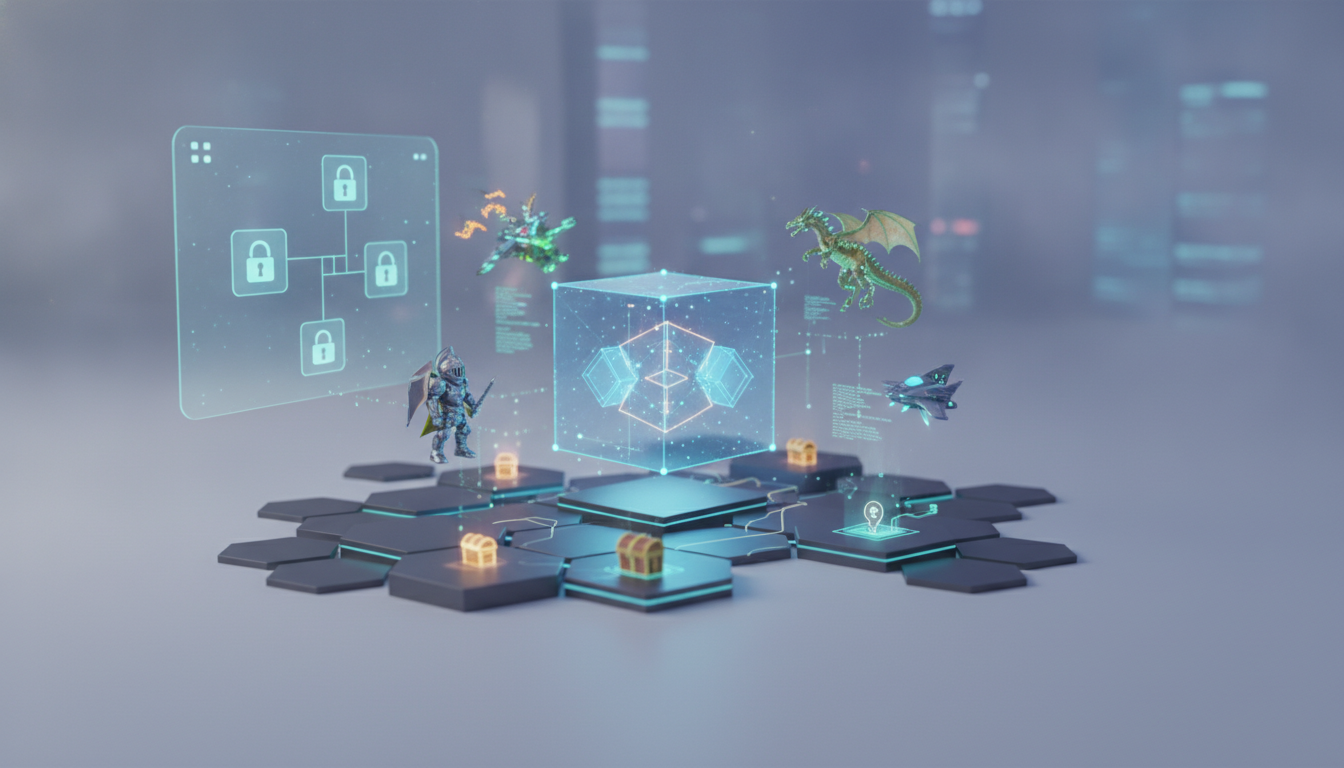
A game is any video game that uses blockchain technology to manage in-game assets, transactions, or governance. Unlike traditional games where items live on a centralized server, a this type of game records every item on a decentralized ledger, making it tamper-proof and publicly verifiable. NFTs (non-fungible tokens) are the backbone of this system: unique digital tokens that represent ownership of a specific in-game asset, whether a sword, a skin, or a virtual land parcel. Smart contracts are self-executing code that automatically enforces transaction rules, ensuring that when you trade an NFT, the transfer happens without intermediaries or trust assumptions.
From Decentralization to Digital Sovereignty
In a traditional video game, your hard-won items belong to the publisher. If the game shuts down, you lose everything. A this kind of game flips this model by giving players digital sovereignty: true ownership that persists independently of the game’s servers. Blockchains like Ethereum, Polygon, and Ronin host the NFTs and smart contracts that make this possible. Many blockchains are also governed by Decentralized Autonomous Organizations (DAOs), where players vote on updates, fee structures, and future content, transforming the community into real stakeholders rather than passive consumers.
“The shift from publisher-controlled inventories to player-owned NFTs is the most structurally significant change in gaming economics since the introduction of in-app purchases,” according to the Konvoy VC blockchain gaming research framework.
Getting Started: A Step-by-Step Guide
Entering the world of a game follows a clear path once you know the steps.
- Choose a game: Research titles that match your interests, whether it’s a card battler like Axie Infinity or a metaverse platform like The Sandbox.
- Set up a crypto wallet: Most games require a wallet such as MetaMask or Ronin Wallet to store your NFTs and cryptocurrency.
- Purchase cryptocurrency: On an exchange like Coinbase or Binance, buy the game’s native token (e.g., AXS, SAND) and transfer it to your wallet.
- Connect and play: Link your wallet to the game’s website or app, and you’re ready to start earning or collecting assets.
- Trade on marketplaces: Once you hold NFTs or tokens, you can sell them on platforms like OpenSea or the game’s proprietary marketplace.
How Blockchain Transforms Gaming Experiences
True Ownership and Player-Driven Economies
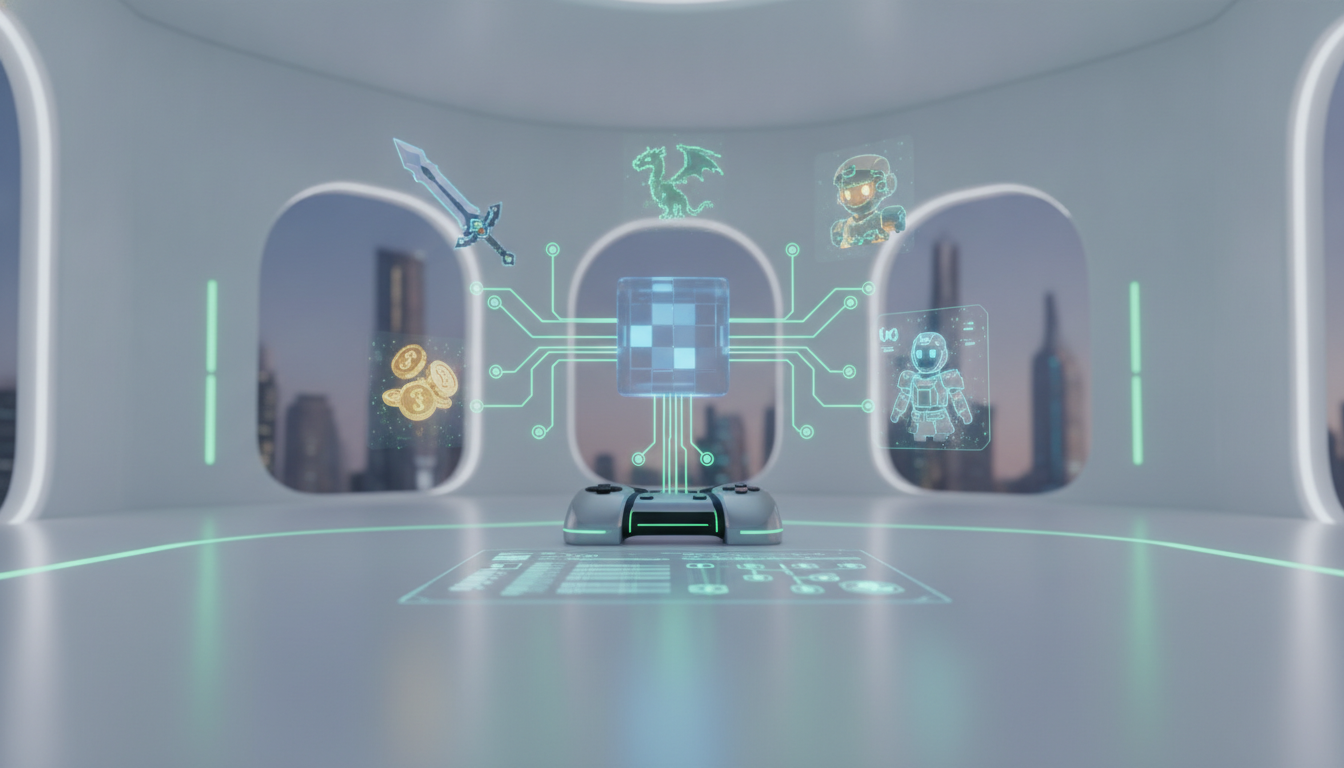
The most significant shift a this type of game brings is true ownership. Players can own, sell, or rent their digital possessions just like physical goods. This creates player-driven economies where the market, not the publisher, determines the value of rare items. In December 2017, a single CryptoKitty sold for over $100,000, demonstrating the potential of digital scarcity and collector enthusiasm. That transaction captured mainstream attention and proved that virtual items could hold tangible, tradeable value.
Interoperability Across Virtual Worlds
Another transformative feature is interoperability. A this kind of game NFT can be designed to function across multiple games and platforms. Imagine earning a legendary sword in one RPG and wielding it in a completely different battle arena. This cross-asset compatibility is becoming a reality with token standards like ERC-721 and ERC-1155. Projects like The Sandbox and Decentraland already allow users to port certain wearables and items between their respective metaverses, blurring the lines between isolated game economies.
The Rise of Play-to-Earn Mechanics
Axie Infinity and the Philippine Phenomenon
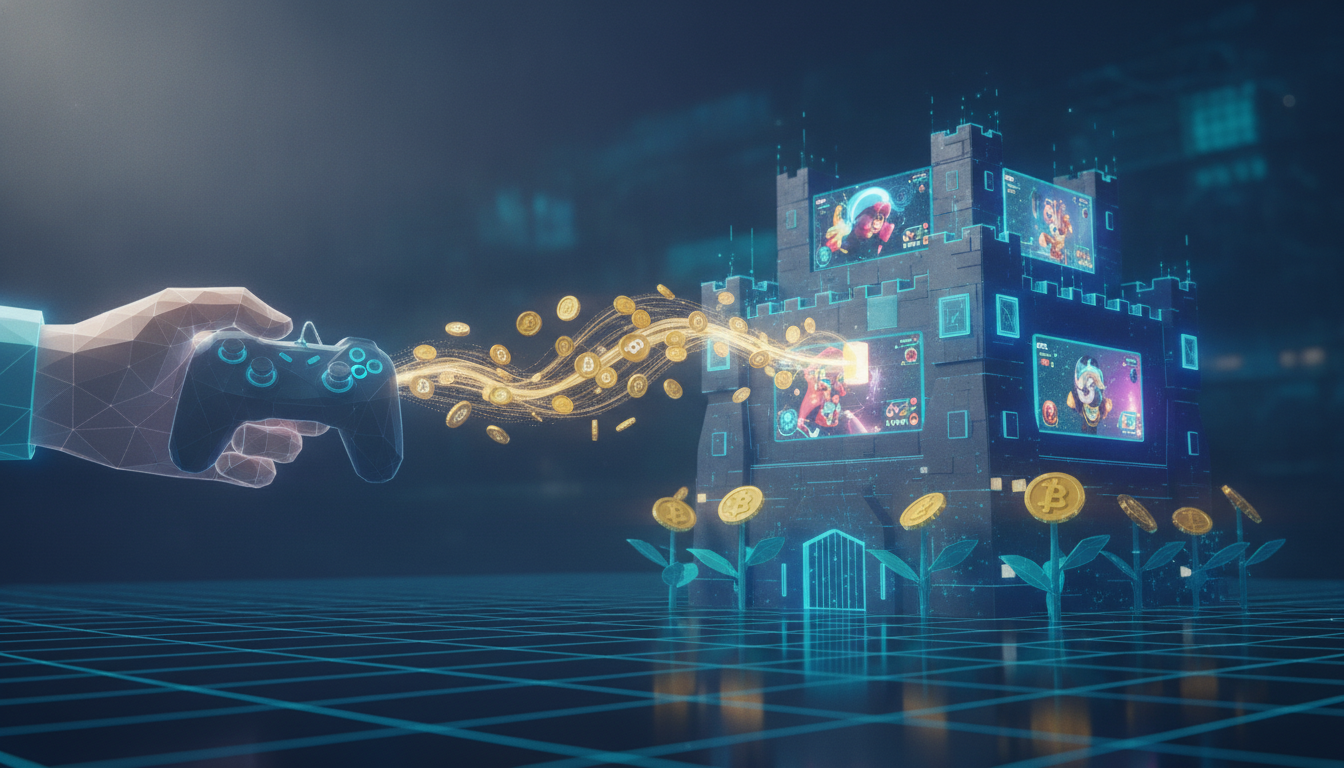
Play-to-earn (P2E) is the model that turned blockchain gaming into a genuine livelihood for many players worldwide. Axie Infinity, launched in 2018 by Sky Mavis, became the defining example of P2E. During its peak, players in the Philippines earned enough cryptocurrency to cover their monthly cost of living by breeding and battling digital creatures called Axies. The game’s reach was broad enough that governments began examining the taxation of virtual income. The darker side arrived in March 2022, when Axie Infinity suffered a $600 million hack of its Ronin cross-chain bridge, exposing the security risks that every blockchain must address.
New P2E Models: From Grinding to Sustainable Rewards
Early play-to-earn economies frequently hit hyperinflation because reward tokens were minted faster than demand could absorb them. The industry responded with sustainable tokenomics. Per the 2026 Web3 Gaming KPI Report, sustainable games should target a Day 1 retention rate of 35-45% and demonstrate monthly deflation in their in-game currency. Pixels shifted from native token rewards to USDC payouts, reducing selling pressure and stabilizing its economy. Night Crows lowered minting costs by 50% to attract new players without flooding the market with excess supply.
“Achieving a D1 retention of 35-45% and ensuring monthly deflation are the new benchmarks for sustainable game economies,” according to the 2026 Web3 Gaming KPI Report.
Top Blockchain Game Picks for 2026
Established Giants: Axie Infinity, The Sandbox, Decentraland
Despite market fluctuations, several this type of games have cemented their status as category leaders. Axie Infinity continues to evolve with new gameplay modes and a robust breeding economy. The Sandbox offers a voxel-based metaverse where users monetize their game-making skills using the SAND token. Decentraland remains a fully decentralized virtual world where land parcels are NFTs, and communities host concerts, casinos, and art galleries. These three titles alone account for billions of dollars in all-time NFT trading volume, according to on-chain data tracked by Chainalysis.
Emerging Hits: Seal M, Pixels, and Matr1x Fire
New entrants are redefining what a this kind of game can achieve. Seal M, a classic MMORPG launched on the CROSS chain, saw nearly 300,000 daily active users (DAU) in early 2026 and exceeded 2.2 million pre-registrations before launch. Pixels has attracted a broad audience with its farming and social mechanics, recently opening its AI-powered reward infrastructure to external studios. Matr1x Fire, a mobile first-person shooter on Polygon, has gained traction for its competitive esports scene combined with NFT ownership. For mobile-first players, Android titles like SNPIT and EGGRYPTO are consistently well-rated.
NFT Integration and True Asset Ownership
How NFTs Create Scarcity and Value
In a blockchain, every item, whether a weapon, skin, or land plot, can be minted as an NFT: a unique, indivisible token on the blockchain. Developers typically cap the supply of these NFTs to create digital scarcity, much like rare physical collectibles. CryptoKitties had Generation 0 cats that could never be bred again, making them highly sought after. The blockchain ensures that each NFT’s provenance and full transaction history is transparent, so buyers can verify authenticity before purchasing on a marketplace like OpenSea.
Trading and Marketplace Dynamics
Once you own an NFT from a game, you can list it on decentralized marketplaces immediately. The top ten this type of game NFT collections generated significant trading volume between 2022 and 2023, with Axie Infinity leading the pack, according to Chainalysis. These marketplaces are permissionless: anyone can buy or sell without developer approval. Trading volume has declined from the 2021 peak due to broader crypto market conditions, but new games continuously launch limited-edition NFTs that attract both collectors and speculators.
Challenges Facing Blockchain Games
Scalability and High Transaction Fees
Scalability was one of the earliest structural criticisms of the blockchain game model. When CryptoKitties went viral in late 2017, the Ethereum network became severely congested: roughly 30% of all Ethereum transactions at the time were related to the game. That congestion caused slow confirmation times and high gas fees, making microtransactions impractical for casual players. Layer-2 solutions like Polygon, Immutable X, and sidechains like Ronin have alleviated significant pressure, but scalability remains a concern for mass adoption at the scale of traditional gaming platforms.
Environmental Concerns and the Shift to Green Solutions
Blockchain games initially ran on proof-of-work chains like early Ethereum, consuming substantial energy and drawing sharp criticism from environmental groups. The industry has largely shifted to proof-of-stake (PoS) chains or specialized sidechains that use a fraction of the electricity. Square Enix became a validator on the Tezos blockchain in early 2026, signaling how major game companies are embracing eco-friendly networks. Many newer games launch on Polygon or Immutable X, both of which are carbon-neutral or actively offset their emissions.
Regulatory Uncertainty and Security Risks
Governments worldwide are still working out how to classify in-game tokens and NFTs. Are they securities, commodities, or a new asset class entirely? This regulatory ambiguity creates real risk for both developers and players. In Asia, South Korea and Japan have each issued guidance on virtual asset taxation, though frameworks remain inconsistent across jurisdictions. The $600 million Ronin bridge hack remains the starkest reminder that security flaws can wipe out user funds instantly. Players should use hardware wallets where possible, interact only with audited smart contracts, and never share seed phrases.
Steam’s Policy and Platform Gatekeeping
Platform policy is a practical barrier that often goes undiscussed. In 2021, Steam banned all blockchain games and NFT titles from its storefront, citing concerns about items with real-world monetary value. This decision cut off access to Steam’s massive player base and forced Web3 studios to build their own distribution channels or rely on alternative platforms. Epic Games Store took a more permissive stance, accepting some blockchain titles. The Steam ban remains in effect as of 2026 and represents a meaningful adoption ceiling for any blockchain game targeting PC players.
Pros and Cons
Pros
- True asset ownership: NFTs give players verifiable, transferable ownership that persists outside any single game’s servers.
- Real economic opportunity: Play-to-earn models have provided documented income for players in developing economies, with guilds in the Philippines, Venezuela, and Indonesia scaling this further.
- Transparent economies: On-chain data means every transaction, every item’s history, and every token supply is publicly auditable, reducing fraud.
- DAO governance: Players become genuine stakeholders, voting on protocol upgrades and fee structures rather than accepting top-down decisions.
- Interoperability potential: Standards like ERC-721 and ERC-1155 lay the groundwork for assets that function across multiple platforms and virtual worlds.
Cons
- High entry costs: Many titles require upfront NFT purchases worth hundreds of dollars before a player can earn meaningfully.
- Security vulnerabilities: Bridge hacks and smart contract exploits, exemplified by the $600 million Ronin incident, can destroy user funds with no recourse.
- Tokenomic instability: Early P2E models suffered severe inflation when reward tokens were minted faster than demand, eroding player earnings rapidly.
- Regulatory risk: Unclear classification of tokens as securities or commodities exposes both developers and players to sudden legal changes.
- Platform restrictions: Steam’s ban on blockchain games limits distribution reach and forces studios to build alternative acquisition channels from scratch.
The Economic Impact of Blockchain Games
A $4.83 Billion Market and Growing
The blockchain game sector is no longer a niche experiment. In 2022, the market was valued at $4.83 billion, and it is projected to grow at a compound annual rate of 68% through 2030, according to Allied Market Research as cited by Chainalysis. As of April 2026, the aggregate market capitalization of gaming-related cryptocurrencies had contracted to roughly $4.25 billion from a higher peak, but active wallet counts and DAU metrics point to underlying growth that market cap alone doesn’t capture. Games like Seal M regularly top charts across Asia, and institutional capital continues flowing into Web3 gaming studios.
New Employment: Gaming as a Job
Perhaps the most profound economic effect is the rise of gaming as a profession. In countries like the Philippines, Venezuela, and Indonesia, blockchain games have given rise to guilds: organized groups that lend expensive NFTs to players in exchange for a share of earnings. This model has provided a genuine lifeline during economic downturns. Outside developing economies, players in the US and Europe have built full-time income streams through NFT trading and content creation around blockchain games. The line between work and play has genuinely blurred, and that shift has structural implications for how we think about digital labor.
The Future of Blockchain Games
AI Integration and Dynamic NFTs
Artificial intelligence is positioned to reshape blockchain games by creating dynamic NFTs that evolve based on player behavior or external data. Picture a blockchain game where a sword gains new abilities after 1,000 verified on-chain battles. Projects like Pixels’ Stacked infrastructure are already using AI to distribute rewards more intelligently, tailoring economic incentives to player skill and engagement level. This combination of AI and blockchain could produce deeply personalized gaming experiences that also carry real-world value, a combination no traditional game can replicate.
Mainstream Adoption and AAA Studios
The presence of legacy publishers like Square Enix and Take-Two Interactive signals that AAA blockchain games are a near-term reality, not a distant concept. Many traditional gamers remain skeptical, but the technology is being integrated into established franchises. MapleStory N, a blockchain-powered version of the classic MMORPG, is one highly anticipated release. As user-friendly wallets and fiat on-ramps become standard, the barrier to entry will drop significantly, potentially bringing tens of millions of mainstream players into the ecosystem.
Interconnected Metaverse Economies
The vision of a fully interoperable metaverse, where assets from one blockchain game function in another, is getting closer to practical reality. Initiatives like the Metaverse Standards Forum and cross-chain bridges are laying the groundwork for a unified economy. In this future, your hard-earned NFT sword could be your ticket to a premium tournament in a different game, or your virtual land could host a store serving customers from multiple platforms. Full interoperability is still years away, but the infrastructure is being built now, and the direction is clear.
Blockchain games have come a long way since CryptoKitties clogged the Ethereum network in 2017. True asset ownership, play-to-earn mechanics, and DAO governance represent a genuine structural shift in how games are built and who benefits from them. Scalability, regulation, and security remain real obstacles, but the industry’s rapid pivot to sustainable models and the entry of major studios confirm this is not a passing trend. For developers, investors, and players alike, the blockchain game space offers a frontier of innovation that rewards those who engage with it seriously.
If you’re building in this space, apply to the Genesis Cohort at Digital Blockchains and work with a team that deploys smart contracts and designs tokenomics for production-grade Web3 games.
Frequently Asked Questions
What is a blockchain game?
A blockchain game is a video game that uses blockchain technology to give players verifiable ownership of in-game assets as NFTs and often includes play-to-earn mechanics where players can earn cryptocurrency. Unlike traditional games, assets in a blockchain game exist on a decentralized ledger rather than a publisher-controlled server.
How do I start playing a blockchain game?
You’ll need a crypto wallet like MetaMask or Ronin Wallet, the game’s native token purchased from an exchange like Coinbase or Binance, and a connected account on the game’s platform. Most games provide tutorials covering how to earn, trade, and manage your assets from day one.
Are blockchain games free to play?
Some blockchain games are free to start, but many require an initial investment in NFTs or tokens before meaningful earning begins. Free-to-play options without mandatory crypto elements are increasingly available as studios work to attract mainstream players who are new to Web3.
Can you really make money playing blockchain games?
Yes, but earnings vary widely and are never guaranteed. During peak periods, players in the Philippines and other countries earned a living from titles like Axie Infinity. Treat it as a high-risk activity that requires time, skill, and often upfront capital rather than a reliable income source.
Does blockchain gaming have a future?
The fundamentals point to continued growth. Allied Market Research projects a 68% compound annual growth rate through 2030, AAA studios are integrating blockchain into established franchises, and sustainable tokenomic models are replacing the inflationary P2E designs that caused early collapses. The technology is maturing faster than the skepticism.
Are blockchain games safe from hacking?
Not inherently. The Axie Infinity $600 million Ronin bridge hack is the clearest example of how security flaws can wipe out user funds instantly. Use hardware wallets when possible, interact only with audited smart contracts, and never share your seed phrase with anyone or any platform.