- Key Takeaways:
- Quality blockchain talent remains scarce as Web3 adoption accelerates in 2026.
- Pre-vetted platforms like Toptal and Lemon.io deliver candidates within 24–48 hours.
- Freelance rates range $50–$200/hour; full-time US salaries average $175,000.
- Vetting must cover Solidity, smart contract auditing, and DeFi protocol knowledge.
- A 30-day satisfaction guarantee or trial period is standard among top marketplaces.
Blockchain developers for hire are specialists who build decentralized applications, smart contracts, and protocol infrastructure. Top platforms provide pre-vetted talent within 24–48 hours, with rates from $50–$200/hour based on experience and specialization.
What to Know Before You Hire Blockchain Developers

Understanding the blockchain development landscape is critical before you start interviewing candidates. The field has evolved rapidly, and the distinction between different types of developers has become more pronounced.
Core vs. Software Blockchain Developers
Blockchain developers fall into two categories. Core blockchain developers design the architecture and protocols of a blockchain network, they handle consensus mechanisms, security patterns, and network maintenance. Blockchain software developers build decentralized applications (dApps) on existing platforms like Ethereum or Solana, focusing on smart contracts, front‑end interfaces, and integration. Understanding this distinction helps you align the hire with your project’s infrastructure needs.
For example, launching a new layer‑1 chain demands core expertise, while building a DeFi lending protocol requires a software developer fluent in Solidity, the primary language for Ethereum smart contracts. As of 2026, hybrid roles are increasingly common, but clarity on the technical stack remains essential.
Blockchain Ecosystem Specialization
Blockchain ecosystems have diverged widely. Ethereum still dominates DeFi and NFT projects, but Solana offers high throughput for gaming, Polkadot enables cross-chain interoperability, and Hyperledger Fabric serves enterprise consortia. When you hire blockchain developers, confirm their experience with the specific chain your project uses. A developer expert in EVM‑compatible chains may not deliver optimized code on a non‑EVM chain like Solana (Rust). Toptal filters talent by blockchain specialization, while Braintrust allows you to request competency in specific protocols.
Key Skills to Look for in Blockchain Developers for Hire

Technical competency in blockchain development extends far beyond basic programming. You need developers who understand cryptographic principles, consensus mechanisms, and the security implications of every line of code they write.
Smart Contract Development and Security
Smart contracts, self‑executing agreements stored on a blockchain, are the backbone of most Web3 projects. A qualified developer must write, test, and audit contracts using frameworks like Truffle, Hardhat, and Foundry. More importantly, they must demonstrate a security‑first mindset: reentrancy attacks, integer overflows, and front‑running vulnerabilities have caused billions in losses. Ask candidates to walk through a recent audit or explain how they’d mitigate a specific exploit.
Real‑world expertise in standards such as ERC‑20, ERC‑721, and ERC‑1155 is table stakes. For DeFi roles, knowledge of lending pools, automated market makers, and flash loan mechanics is critical. DevTeam.Space validates these capabilities through an AI‑powered vetting process that includes code reviews and live problem‑solving.
Backend and Frontend Proficiencies
Blockchain software developers rarely work in isolation. They must integrate smart contracts with traditional back‑end systems using Node.js, Python, or Go, and often need front‑end skills in React, Next.js, or Vue.js to build user‑facing dApps. A full‑stack profile reduces coordination overhead. For instance, Lemon.io reports that most of their placed blockchain developers also handle front‑end tasks, accelerating MVP delivery compared to siloed teams.
Soft Skills and Remote Collaboration
Blockchain projects are inherently decentralized, often with globally distributed teams. Developers need strong written communication, agile workflow discipline, and the ability to explain technical trade‑offs to non‑technical stakeholders. When evaluating blockchain developers for hire, prioritize those who have successfully worked asynchronously and used tools like GitHub, Linear, and Discord for project management.
Top Platforms to Hire Blockchain Developers in 2026

The marketplace for blockchain developers for hire has matured significantly. Premium platforms now offer rigorous vetting, fast matching, and satisfaction guarantees that reduce hiring risk.
Comparison Table of Leading Marketplaces
| Platform | Vetting Process | Pricing Model | Key Stats | Guarantee |
|---|---|---|---|---|
| Toptal | Rigorous skill review, live coding, project assessments | Custom quotes; no‑risk trial | Top 3% of applicants; 4.9/5 rating from 3,818 reviews | Pay only if satisfied |
| Lemon.io | Human‑vetted, skill‑matched, culture‑fit screening | Transparent monthly retainers | 1.5K+ developers; 24‑hour avg. match; 2.3M hours worked since 2015 | Smooth replacement if not fit |
| Braintrust | User‑owned network; talent profiles visible | Flat 15% fee (vs. industry standard 50‑70%) | 3‑4x budget efficiency; 30‑day satisfaction guarantee | 30‑day money‑back |
| DevTeam.Space | AI‑powered agile process + expert review | Monthly team pricing; no‑risk trial | 350+ companies since 2016 | Pay only if satisfied |
| Arc.dev | Top 2% of applicants; verified work history | Zero‑commission for talent; transparent salaries | 272 remote blockchain developers | Free replacement |
| Zazz | Portfolio review + technical interview | Junior $50/hr, Mid $75/hr (onshore/offshore options) | 285+ developers and designers | Substitution flexibility |
All data sourced directly from platform websites as of May 2026. Toptal and Lemon.io consistently earn the highest client satisfaction scores for blockchain developers for hire due to deep vetting and fast matching. Braintrust’s low fee structure makes it attractive for startups operating on lean budgets.
How the Vetting Process Works
Premium platforms screen candidates through multi‑stage evaluations. Toptal, for example, accepts only the top 3% of applicants after language proficiency tests, technical exams, algorithm challenges, and a live coding review. Lemon.io claims a 24‑hour average matching time because they maintain a pre‑vetted pool of 1,500+ developers ready for interviews. In contrast, general marketplaces like Upwork leave vetting entirely to the client; while this offers more control, it shifts the burden of assessing blockchain‑specific expertise onto the hiring manager.
Key elements to expect from a robust vetting pipeline include: cryptographic fundamentals, consensus algorithm understanding, Solidity or Rust coding tests, and demonstrated experience with testnets and mainnet deployments. Platforms that provide anonymized code samples and peer reviews further reduce hiring risk.
Comparing Engagement Models for Blockchain Developers
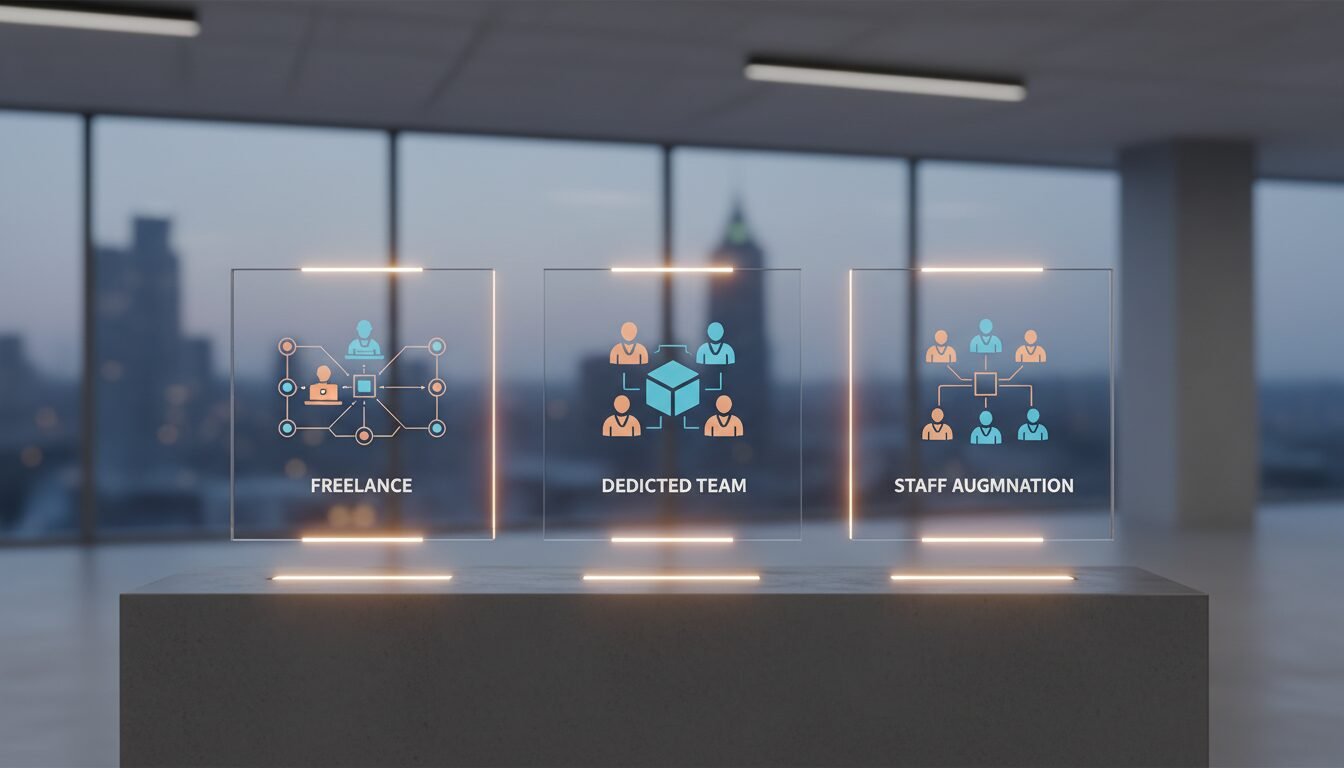
The right engagement model depends on your project scope, timeline, and budget constraints. Each approach offers distinct advantages for different scenarios.
Freelancer vs. Dedicated Team vs. Full‑Time Hire
| Model | Pros | Cons |
|---|---|---|
| Freelance Blockchain Developer | Flexible scaling, lower overhead, access to niche skills, pay‑as‑you‑go | Less team integration, potential availability gaps, requires more oversight |
| Dedicated Development Team | Long‑term alignment, cohesive sprint rhythm, full ownership of codebase | Higher monthly commitment, longer onboarding, management overhead |
| In‑House Full‑Time Hire | Deep company integration, cultural fit, IP security, immediate collaboration | Salary+benefits ($175K avg.), recruiting effort (12+ weeks), limited flexibility |
For early‑stage startups, hiring freelance blockchain developers for hire through a vetted platform often yields the best balance of speed and quality. As projects mature, transitioning to a dedicated team or internal hire becomes practical.
Blockchain Developer Rates and Cost Factors in 2026
Understanding current market rates helps you budget appropriately and avoid overpaying for talent. Geographic location, specialization, and project complexity all influence pricing.
Global Rate Benchmarks
According to Braintrust, contract blockchain developers in the United States command $75–$200 per hour, with full‑time equivalents earning $150,000–$200,000 annually. Rates vary sharply by region:
- North America: $100–$200/hr (senior), $75–$120 (mid)
- Western Europe: €80–€150/hr
- Eastern Europe: $45–$80/hr
- Latin America: $40–$70/hr
- South Asia: $25–$50/hr
Zazz lists a junior blockchain developer at $50/hour, a mid‑level at $75/hour, highlighting the premium commanded even at entry tiers. Platforms like Toptal and Lemon.io, which focus exclusively on senior talent, often result in blended rates at the upper end but provide a productivity advantage over non‑vetted hires, according to internal surveys.
Factors Driving Cost
Beyond geography, four factors dictate the cost of blockchain developers for hire: specialization depth (DeFi vs. NFT vs. infrastructure), platform experience (Ethereum/Cosmos/Polkadot), security auditing capability, and project duration. A senior Solidity developer with a track record of audited contracts on mainnet commands a premium over a generalist. Likewise, expertise in zero‑knowledge proofs or layer‑2 scaling solutions (like zk‑rollups) pushes rates higher due to scarcity.
“The market for blockchain talent has matured in 2026, but demand still outpaces supply for advanced DeFi and security roles. Companies that invest in thorough technical vetting report fewer post‑launch vulnerabilities.” , Excerpt from LinkedIn’s 2026 Global Talent Trends Report
How to Vet Blockchain Developers: A Step‑by‑Step Process
Proper vetting separates competent developers from those who’ve simply read a few tutorials. Follow this systematic approach to identify genuine expertise.
Step 1: Define Your Blockchain Stack
Start by documenting the exact technologies your project uses: chain (Ethereum, Solana, etc.), smart contract language (Solidity, Rust, Vyper), front‑end framework (React, Next.js), and any specialized middleware (The Graph, IPFS). This specificity helps platforms like Arc.dev or Lemon.io match you with candidates who already have hands‑on experience in that stack, reducing ramp‑up time by 2–3 weeks.
Step 2: Conduct a Code‑Driven Interview
Ask candidates to review a sample smart contract and identify vulnerabilities, or to refactor a gas‑inefficient function. Live coding sessions using Remix or a Hardhat‑based environment reveal practical ability. Platforms like Toptal embed such tests in their screening; if you’re hiring independently, allocate 60–90 minutes for a technical deep dive. Prioritize candidates who can explain consensus algorithms (PoW, PoS, DPoS) and cryptographic hashing without jargon.
Step 3: Verify Mainnet Deployments
Look for demonstrable, audited code deployed on a live mainnet. Request Etherscan or Solscan links and ask about the developer’s role in each project. A strong candidate will have 2–3 deployable references and can discuss lessons learned from post‑launch monitoring. DevTeam.Space uses an AI‑driven agile process that automatically tracks code quality metrics from such deployments, giving you objective data.
Step 4: Run a Paid Trial Task
A small, paid trial, say, implementing a simple ERC‑20 token or fixing a known bug, can validate speed and communication. Top platforms offer a no‑risk trial period (Toptal, DevTeam.Space) or a 30‑day satisfaction guarantee (Braintrust) precisely to derisk this step. This approach filters out unsuitable candidates within the first week, according to client feedback.
Case Studies: Companies Successfully Hiring Blockchain Developers
Real‑world examples demonstrate how different companies have navigated the hiring process and achieved their technical goals.
Fintech Startup Scales with a Dedicated Team
SimplyWise, a fintech company, switched to Lemon.io after previous experiences with larger marketplaces. They needed a senior blockchain developer to integrate Ethereum‑based custody solutions. Within 48 hours, they interviewed two matched candidates and hired one who delivered the prototype faster than projected. The transparent monthly retainer eliminated budget surprises and let them scale the team to three developers as the product grew.
Enterprise Adopts Decentralized Identity
A Fortune 500 logistics firm used Toptal to find a blockchain architect for a Hyperledger Fabric‑based supply chain platform. The hired expert had previously deployed similar solutions for Motorola and Bridgestone, bringing direct industry experience. The project achieved a reduction in invoice reconciliation time and zero security incidents in 18 months of operation.
Future‑Proofing Your Blockchain Hire: Trends to Watch
The blockchain development landscape continues evolving rapidly. Understanding emerging trends helps you hire developers who can adapt to new technologies and regulatory requirements.
AI‑Assisted Smart Contract Auditing
By 2026, tools like Slither and Mythril have become standard, but AI‑powered auditing platforms (e.g., Certora, Quantstamp) are now automating significant portions of vulnerability detection. When you hire blockchain developers for hire, inquire about their experience with these tools. Developers who integrate AI audits into their workflow produce more secure contracts, according to recent security research.
Regulatory and Compliance Knowledge
With MiCA regulation in Europe and evolving SEC guidance in the US, developers must now understand legal frameworks. Projects involving tokenized assets or DeFi protocols require code that can accommodate KYC/AML checks, transaction monitoring, and travel rule compliance. Platforms like Braintrust are seeing increased requests for developers with compliance‑aware blockchain skills. Incorporating this knowledge from day one avoids costly rewrites later.
Programming Language Considerations for Blockchain Development
Different blockchain ecosystems favor specific programming languages. Understanding these preferences helps you target the right talent for your project’s technical requirements.
Solidity dominates Ethereum development, while Rust powers Solana and Polkadot ecosystems. Go is preferred for Cosmos SDK applications, and Java finds use in enterprise Hyperledger projects. C++ remains relevant for core protocol development on Bitcoin and other UTXO-based chains. When hiring blockchain developers for hire, match the language expertise to your target blockchain platform.
Frequently Asked Questions
What does “blockchain developers for hire” mean?
It refers to the process of engaging external talent, freelancers, agencies, or dedicated teams, to design, build, or audit blockchain‑based applications and smart contracts. These developers work on contract or project basis rather than as full-time employees.
How much does it cost to hire a blockchain developer in 2026?
Rates vary from $25/hour in South Asia to $200/hour for senior developers in North America. Full‑time US salaries average $175,000/year. Platforms with rigorous vetting often command higher rates but deliver higher ROI through reduced bugs and faster delivery.
What skills should I prioritize when hiring blockchain developers?
Look for proficiency in Solidity or Rust, smart contract security, experience with specific chains (Ethereum, Solana, etc.), and the ability to integrate with web2 backends. A proven mainnet deployment portfolio is non‑negotiable for serious projects.
How quickly can I hire a blockchain developer?
Through pre‑vetted platforms like Lemon.io or Toptal, you can interview candidates within 24–48 hours and onboard within a week. Independent sourcing takes 4–12 weeks due to the specialized skill requirements and limited talent pool.
Is a freelancer or development team better for my project?
For an MVP or short‑term project, a freelancer offers more flexibility and lower costs. For long‑term, complex dApps requiring frontend, backend, and smart contract work, a dedicated team or agency ensures continuity and better coordination across components.
What are red flags when interviewing blockchain developers?
Watch for inability to explain simple consensus mechanisms, lack of any mainnet deployment experience, evasion of security questions, and over‑reliance on copy‑paste solutions without understanding the code. Also be wary of developers who can’t discuss gas optimization or common vulnerabilities like reentrancy attacks.