Quick Answer: To hire blockchain developers effectively, focus on three core areas: technical depth (Solidity, smart contract security, Web3 frameworks), practical experience (live DApp deployments, mainnet transactions), and problem-solving ability (gas optimization, cross-chain integration). Budget $80-200/hour for experienced developers, or $120k-250k annually for full-time roles.
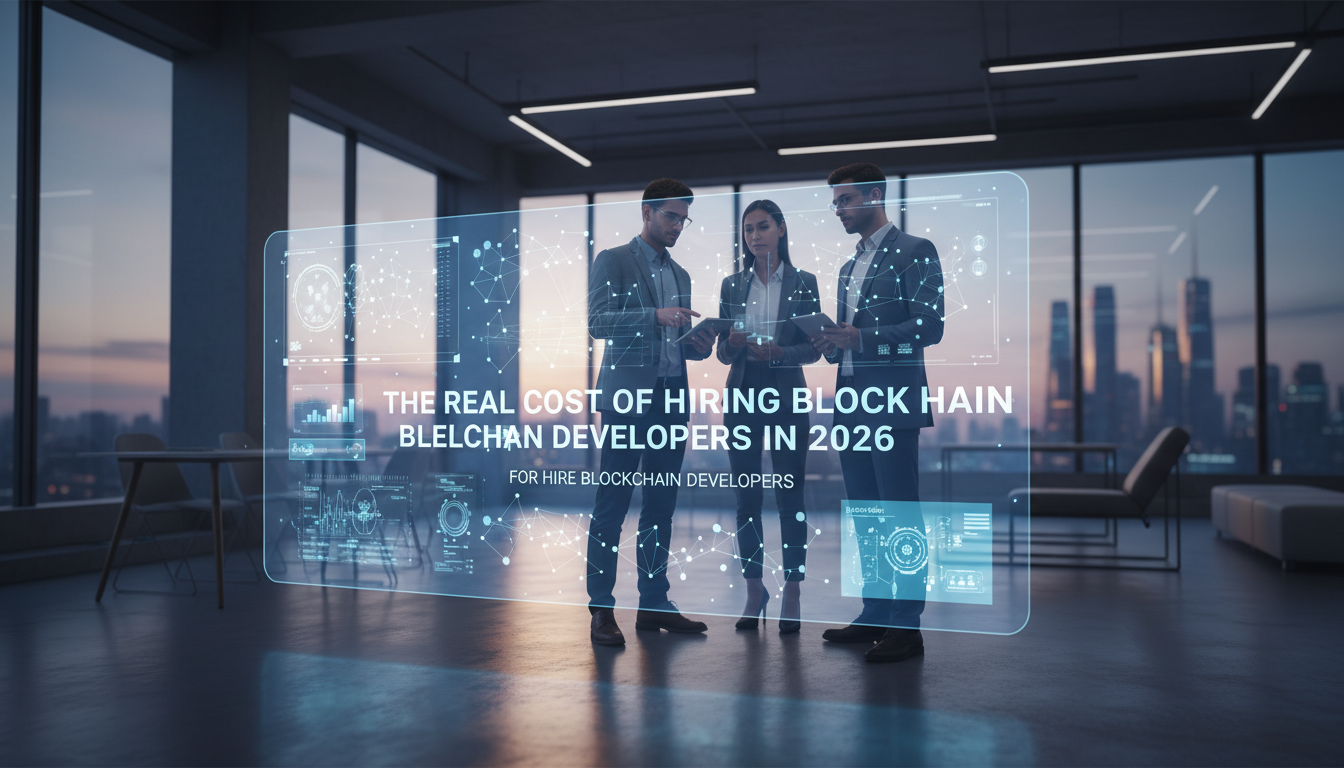
The Real Cost of Hiring Blockchain Developers in 2026
Let’s start with what everyone wants to know: the numbers.
Blockchain developers command premium rates because the talent pool is still relatively small. Based on our work with hundreds of Web3 projects, here’s what you’re looking at:
| Experience Level | Hourly Rate | Annual Salary | Key Skills |
|---|---|---|---|
| Junior (0-2 years) | $50-80 | $80k-120k | Basic Solidity, testnet deployment |
| Mid-level (2-4 years) | $80-130 | $120k-180k | Smart contract auditing, DeFi protocols |
| Senior (4+ years) | $130-200+ | $180k-250k+ | Protocol design, cross-chain development |
These rates reflect the current market reality. A developer who can architect a secure DeFi protocol or optimize gas costs for high-volume applications is worth every dollar. The alternative , hiring cheap and dealing with smart contract vulnerabilities , can cost millions.
Geography matters less than you’d think. Remote work is the norm in Web3, and top talent commands similar rates regardless of location. We’ve seen excellent developers from Eastern Europe, Latin America, and Southeast Asia who match or exceed Silicon Valley quality at competitive rates.
Essential Technical Skills Every Blockchain Developer Needs

Not all blockchain developers are created equal. The field spans everything from basic smart contract deployment to complex protocol architecture.
Here’s what separates competent developers from exceptional ones:
Core Programming Languages: Solidity dominates Ethereum development, but don’t overlook Rust (Solana, Polkadot), Go (Cosmos, Hyperledger), and TypeScript (frontend integration). A developer who knows multiple languages can adapt to different blockchain ecosystems.
Security-First Mindset: Smart contracts are immutable once deployed. Your developer should understand common vulnerabilities (reentrancy attacks, integer overflows, front-running) and use tools like Slither, MythX, or Echidna for automated testing.
Gas Optimization: On Ethereum, inefficient code costs real money. Look for developers who can explain concepts like storage packing, function modifiers, and assembly optimization. They should be able to reduce gas costs by 20-40% through careful coding.
Web3 Integration: Modern DApps require seamless frontend integration. Your developer should be comfortable with Web3.js, Ethers.js, and wallet connection protocols. They should understand how to handle transaction states, error handling, and user experience flows.
The best developers also stay current with ecosystem changes. Ethereum’s transition to proof-of-stake, Layer 2 scaling solutions, and emerging standards like EIP-4337 (account abstraction) are constantly evolving the landscape.
Where to Find Quality Blockchain Talent

The traditional hiring playbook doesn’t work for blockchain developers. LinkedIn and Indeed are starting points, but the best talent congregates in Web3-native communities.
Developer-First Platforms: GitHub is your best friend. Look for developers with active repositories, contributions to major protocols, and clean, well-documented code. Check their commit history , consistent activity over months or years indicates genuine passion.
Web3 Communities: Discord servers for major protocols (Ethereum, Solana, Polygon) are goldmines. Active contributors who help others solve technical problems often make excellent hires. Twitter (X) is surprisingly effective , many top developers share insights and showcase their work.
Hackathons and Conferences: ETHGlobal, Solana Breakpoint, and Consensus attract serious builders. Winners and active participants have proven ability to ship under pressure. We’ve hired several developers we first met at hackathons.
Specialized Platforms: CryptoJobs, AngelList (for startups), and Web3 Career have higher signal-to-noise ratios than general job boards. Developers on these platforms are actively seeking blockchain roles.
Don’t overlook bootcamp graduates. Programs like ConsenSys Academy, ChainShot, and Alchemy University produce job-ready developers with solid fundamentals. They might lack experience but often bring fresh perspectives and strong motivation.
The Interview Process: Beyond Coding Challenges

Technical interviews for blockchain developers require a different approach than traditional software engineering roles.
Start with Fundamentals: Can they explain how blockchain consensus works? Do they understand the difference between Layer 1 and Layer 2 solutions? These concepts underpin everything they’ll build.
Code Review Exercise: Instead of whiteboard coding, give them a smart contract with intentional vulnerabilities. Ask them to identify security issues and suggest improvements. This mirrors real-world work better than algorithm challenges.
Architecture Discussion: Present a hypothetical DApp (DEX, NFT marketplace, DAO) and ask them to design the smart contract architecture. Look for considerations around upgradeability, gas efficiency, and user experience.
Portfolio Deep Dive: Have them walk through a project they’ve deployed to mainnet. Ask about challenges they faced, how they handled edge cases, and what they’d do differently. Real deployment experience is invaluable.
We’ve learned to include a “failure discussion” in every interview. Ask about a time their code failed in production or a security vulnerability they discovered. How they handle mistakes reveals more about their character than their successes.
Red flags include: inability to explain their own code, dismissing security concerns, or claiming they’ve never encountered bugs. The blockchain space is unforgiving , you want developers who are paranoid about edge cases.
Building vs. Hiring: When to Choose Each Path
Should you hire blockchain developers or partner with a development agency? The answer depends on your timeline, budget, and long-term plans.
Hire Full-Time When: You’re building a core Web3 product, need ongoing development, or want to retain institutional knowledge. Full-time developers become domain experts in your specific use case and can make architectural decisions aligned with your vision.
Contract Developers For: Specific features, audits, or short-term projects. A smart contract audit might require specialized security expertise you don’t need permanently. MVP development can be outsourced while you build your internal team.
Agency Partnerships For: Complex projects requiring multiple specialists, tight deadlines, or when you lack technical leadership. Agencies bring proven processes and can scale teams quickly.
We often recommend a hybrid approach: hire one senior blockchain developer as your technical lead, then supplement with contractors for specific needs. This gives you internal expertise while maintaining flexibility.
Consider the learning curve too. Blockchain development has unique challenges , testnet vs. mainnet deployment, gas estimation, wallet integration. A developer transitioning from traditional web development might need 3-6 months to become productive.
Red Flags and Deal Breakers in Blockchain Hiring
The blockchain space attracts both brilliant innovators and opportunistic charlatans. Here’s how to spot the difference.
Portfolio Red Flags: Projects that only exist on testnets, copied code without attribution, or claims about “revolutionary” algorithms without technical details. Real builders ship to mainnet and can explain their design decisions.
Communication Warning Signs: Excessive use of buzzwords without substance, inability to explain complex concepts simply, or dismissive attitudes toward security concerns. Good developers are teachers at heart.
Technical Concerns: Unfamiliarity with gas optimization, security best practices, or current ecosystem developments. The space moves fast , developers who aren’t staying current will quickly become liabilities.
Experience Inflation: Claims of “5 years blockchain experience” when smart contracts have only been mainstream since 2017. Be skeptical of inflated timelines or vague project descriptions.
We’ve seen developers who talk a good game but can’t deploy a simple ERC-20 token. Always verify technical claims with practical exercises. The blockchain doesn’t lie , transactions are public and verifiable.
Trust your instincts. If something feels off during the interview process, dig deeper. The cost of a bad hire in blockchain development , security vulnerabilities, failed launches, technical debt , far exceeds the effort of thorough vetting.
Onboarding and Retaining Top Blockchain Talent
Hiring great blockchain developers is only half the battle. Keeping them engaged and productive requires understanding what motivates Web3 builders.
Technical Growth Opportunities: The best developers are lifelong learners. Provide access to conferences, courses, and experimentation time. Many blockchain developers spend evenings contributing to open source projects , support this passion.
Cutting-Edge Projects: Blockchain developers chose this field to work on the future of technology. Boring, maintenance-heavy projects will drive them away. Give them opportunities to experiment with new protocols and solve novel problems.
Autonomy and Ownership: Web3 culture values decentralization and individual agency. Micromanagement kills productivity. Set clear goals and let developers choose their implementation approach.
Competitive Compensation: The market for blockchain talent is hot. Regular salary reviews and equity participation keep top performers from jumping ship. Consider token allocations if you’re building a protocol.
Remote work isn’t just accepted in blockchain , it’s expected. Build processes that support distributed teams. Async communication, clear documentation, and flexible schedules are table stakes.
Create a learning culture. Weekly tech talks, protocol deep dives, and hackathon participation keep teams sharp. The developers who stay current with ecosystem changes become your most valuable assets.
Ready to build your blockchain development team? Our Genesis Cohort connects you with pre-vetted Web3 developers who’ve shipped real projects to mainnet. Apply to the Genesis Cohort at digitalblockchains.com and skip the lengthy hiring process.