Key Takeaways
- An xrp blockchain explorer provides real-time access to all public XRP Ledger data: transactions, addresses, balances, and network health.
- XRPScan and Bithomp lead the market with advanced token and NFT tracking, validator registries, and developer APIs, while XRPL.org’s open-source tool offers a lightweight alternative.
- Developers can self-host explorers from the Ripple GitHub repository and use APIs for automated monitoring and compliance audits.
- Always verify you are on an official platform (e.g., xrpscan.com, livenet.xrpl.org) to avoid phishing sites that mimic real explorers.
- As of June 2026, the XRP Ledger has surpassed 104.9 million validated ledgers, with a circulating supply of roughly 62 billion XRP out of a 100 billion maximum.
An xrp blockchain explorer is a web interface that lets users query every public transaction, account balance, and validator record on the XRP Ledger. Tools like XRPScan and Bithomp serve both casual users and developers who need reliable, real-time XRPL data.
What Is an XRP Blockchain Explorer?

An xrp blockchain explorer is a web-based interface that reads data directly from the XRP Ledger, a decentralized, high-performance blockchain designed for payments. Unlike general-purpose tools, a dedicated XRPL explorer exposes protocol-specific elements: the federated consensus mechanism, XRP burn rates, account reserves, and the built-in decentralized exchange (DEX). These tools translate raw ledger data into human-readable dashboards, making the network transparent and auditable.
Core Functions of an XRP Ledger Explorer
Every XRPL explorer offers a few fundamental capabilities. First, it lets you search by transaction hash, wallet address, ledger index, or destination tag. Second, it displays real-time metrics: as of June 16, 2026, the XRP Ledger had surpassed 104.9 million validated ledgers, with an average ledger close time of 3.84 seconds and a transaction throughput of 23.15 tx/s per XRPScan data. Third, it shows per-transaction details: amount, fee, sender, receiver, and outcome. Finally, most tools surface network-wide statistics such as 16,653 active accounts in the last 24 hours (per Bithomp), roughly 14.35 million XRP burned all-time, and a circulating supply of approximately 62 billion XRP out of a 100 billion hard cap.
Why Not Use a General Blockchain Explorer?
A general tool like Etherscan cannot interpret the XRPL’s unique data model. The XRP Ledger uses a federated consensus protocol, not proof-of-work, so concepts like “gas” and “blocks” don’t map directly. Instead, you have “ledgers” with transaction fees set by network load. A purpose-built explorer also surfaces XRPL-specific features: issued tokens (analogous to ERC-20s on Ethereum), automated market maker (AMM) pools, decentralized identifiers (DIDs), and network amendments. Using a dedicated tool ensures you see accurate, meaningful data rather than misinterpreted fields.
Top XRP Explorer Tools Compared (2026)
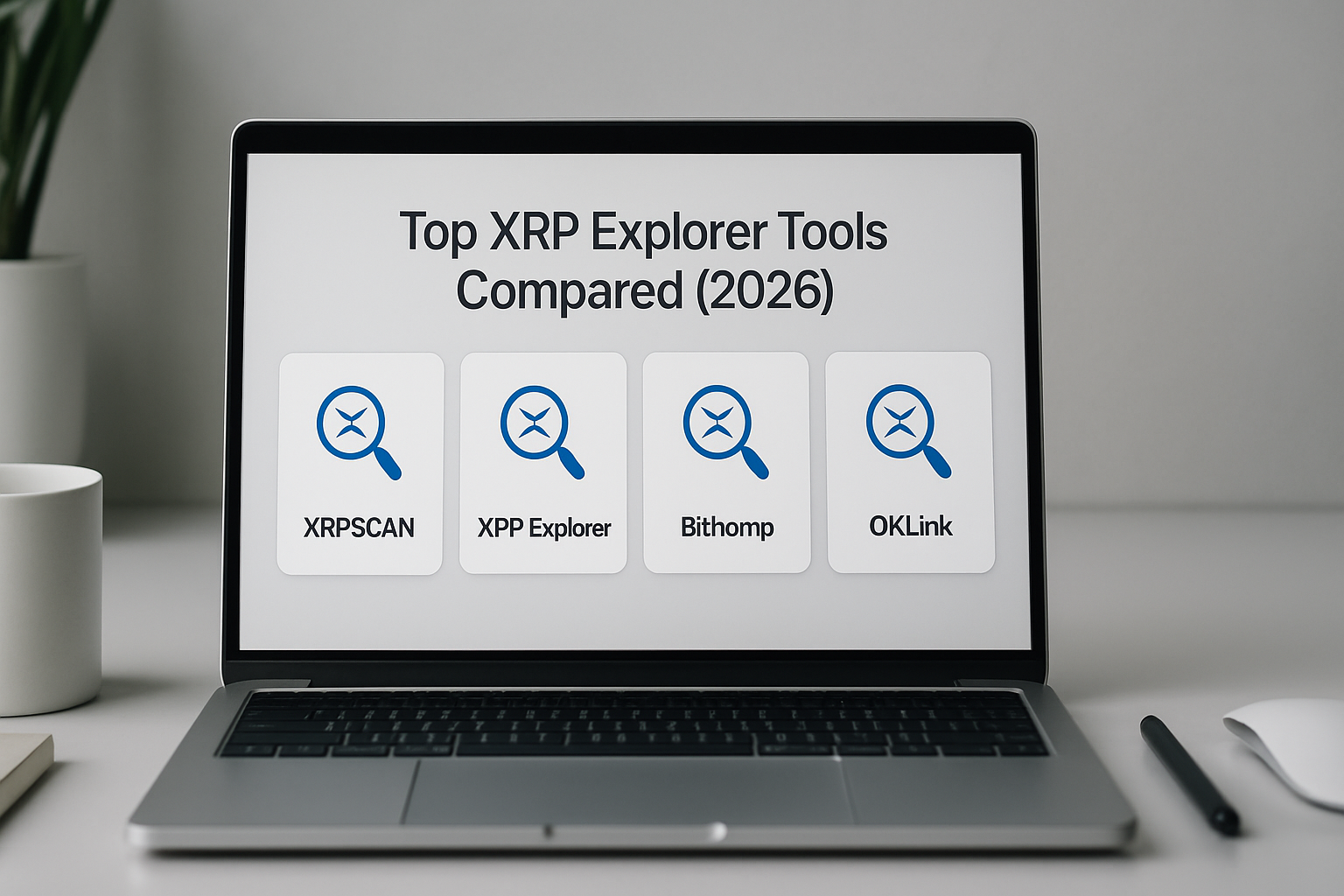
Several explorers dominate the market. Below is a comparison of the most widely used platforms, followed by detailed descriptions. According to on-chain data aggregated across these tools, the XRP Ledger processed over 1.4 million transactions in a single 24-hour window in June 2026.
| Explorer | Key Features | API Access | Token/NFT Support | Network Metrics |
|---|---|---|---|---|
| XRPScan | Rich list, AMM pools, validator registry, advanced search, amendments | Yes (documented API) | Tokens, MPTokens | Real-time TPS, ledger interval, XRP burned |
| Bithomp | Username resolution, NFT viewer, token directory, top transfers, amendment tracking | Yes (Bithomp Pro) | NFTs, tokens, AMM pools | 24h active accounts, transaction counts, top tokens by volume |
| XRPL.org Explorer | Open-source, lightweight, visual transaction shapes (Mainnet / Testnet) | No (casual use) | Basic token view | Quorum, avg tx fee, tx/sec, ledger close time |
| XRPExplorer.com | Network health, validator agreement scores, learning guides | No | No | Peer count, load factor, total and circulating supply |
| BlockExplorer.one | Latest blocks/ledgers, recommended fee tiers (slow/standard/fast) | Yes (via Crypto APIs) | No | Only recent 14 days; market cap and supply data |
XRPScan: The Market Leader
XRPScan, operated by Scrambled Egg Technologies since 2017, is widely regarded as the most feature-rich option available. According to MoonPay’s guide to XRPScan, it offers an advanced search console, documented API endpoints for developers, and a validator registry showing agreement scores. The home page displays live network stats: XRP price ($1.22 as of June 16, 2026), ledger index (104,955,057), 24-hour payments (176,869), and TPS (23.15). It also tracks the all-time XRP burned total, roughly 14.35 million XRP, and lists the latest validated ledgers in real time. Investors rely on the rich list feature; developers rely on the API.
“XRPScan provides the most complete view of the XRP Ledger available to the public, combining real-time network metrics, validator data, and token analytics in a single interface.” – MoonPay Research, 2026
Bithomp: Enterprise-Grade Token and NFT Tracking
Bithomp, founded in 2015 and based in Stockholm, Sweden, positions itself as a deep-data XRPL tool with strong token and NFT support. It reports 1,413,436 total transactions in the past 24 hours, 16,653 active accounts, and 512,945 payments. Its dashboard highlights top transfers, including a $24.6 million transfer between major exchanges, and top AMM pools by total value locked. The XRP/RLUSD pool holds $4.9 million TVL across 1,235 holders. Bithomp also tracks the latest amendments, such as SingleAssetVault v3.1.0 currently in voting, and offers a comprehensive NFT viewer. For enterprises, Bithomp Pro provides subscription-based API access with enriched data including username resolution and NFT metadata.
XRPL.org Explorer: Open-Source Simplicity
The official XRPL.org Explorer is an open-source project hosted on GitHub under the MIT license. It focuses on a clean, visual experience: transactions are color-coded by type (payment, DEX, NFT, account management) and animated with shape legends. As of v1.5.0 in 2026, it displays a quorum of 28 validators, an average transaction fee of 0.00008819 XRP, and an average ledger interval of 3.83 seconds. While it lacks API access and advanced token features, its simplicity makes it a solid choice for learners and node operators who want to run their own instance. It supports Mainnet, Testnet, and Devnet out of the box.
Other Notable Explorers
Beyond the top three, several other tools serve niche needs. XRPExplorer.com focuses on network health: 57 connected validators, an average validator agreement score of roughly 95%, and a load factor indicator. It also hosts an educational guide covering topics from private key security to why transactions fail. BlockExplorer.one displays the latest 14 days of blocks with recommended fee tiers: slow (0.00001 XRP), standard (0.000015 XRP), and fast (0.000025 XRP), alongside market data such as a $75.5 billion market cap. These may not match the depth of XRPScan or Bithomp, but they serve as useful secondary references for specific data points.
Pros and Cons of Using an XRP Blockchain Explorer
Every tool in this category has real strengths and real limitations. Understanding both helps you pick the right one for your workflow.
Pros
- Full transparency: Every transaction on the XRP Ledger is permanently recorded and publicly queryable, with no permission required.
- Real-time data: Ledger close times average 3.84 seconds, meaning explorer data is nearly instantaneous compared to proof-of-work chains.
- Free access: All major platforms offer free basic lookups, with no account registration needed for transaction searches.
- Developer-friendly APIs: XRPScan and Bithomp Pro both offer documented API endpoints, reducing the need to run a full rippled node for most applications.
- Compliance utility: Public address lookups make on-chain reserve verification and fund-flow tracing straightforward for auditors.
Cons
- Phishing risk: Scammers clone legitimate explorer interfaces and promote them through search ads, making URL verification essential.
- Premium API costs: Enriched data access through Bithomp Pro requires a paid subscription, which may not suit individual developers on tight budgets.
- Feature fragmentation: No single tool covers every use case equally. NFT depth, validator data, and token analytics are split across different platforms.
- Privacy limitations: Because all data is public, sophisticated chain analysis can de-anonymize wallet activity, which is a concern for privacy-conscious users.
How to Use an XRP Blockchain Explorer: Step-by-Step
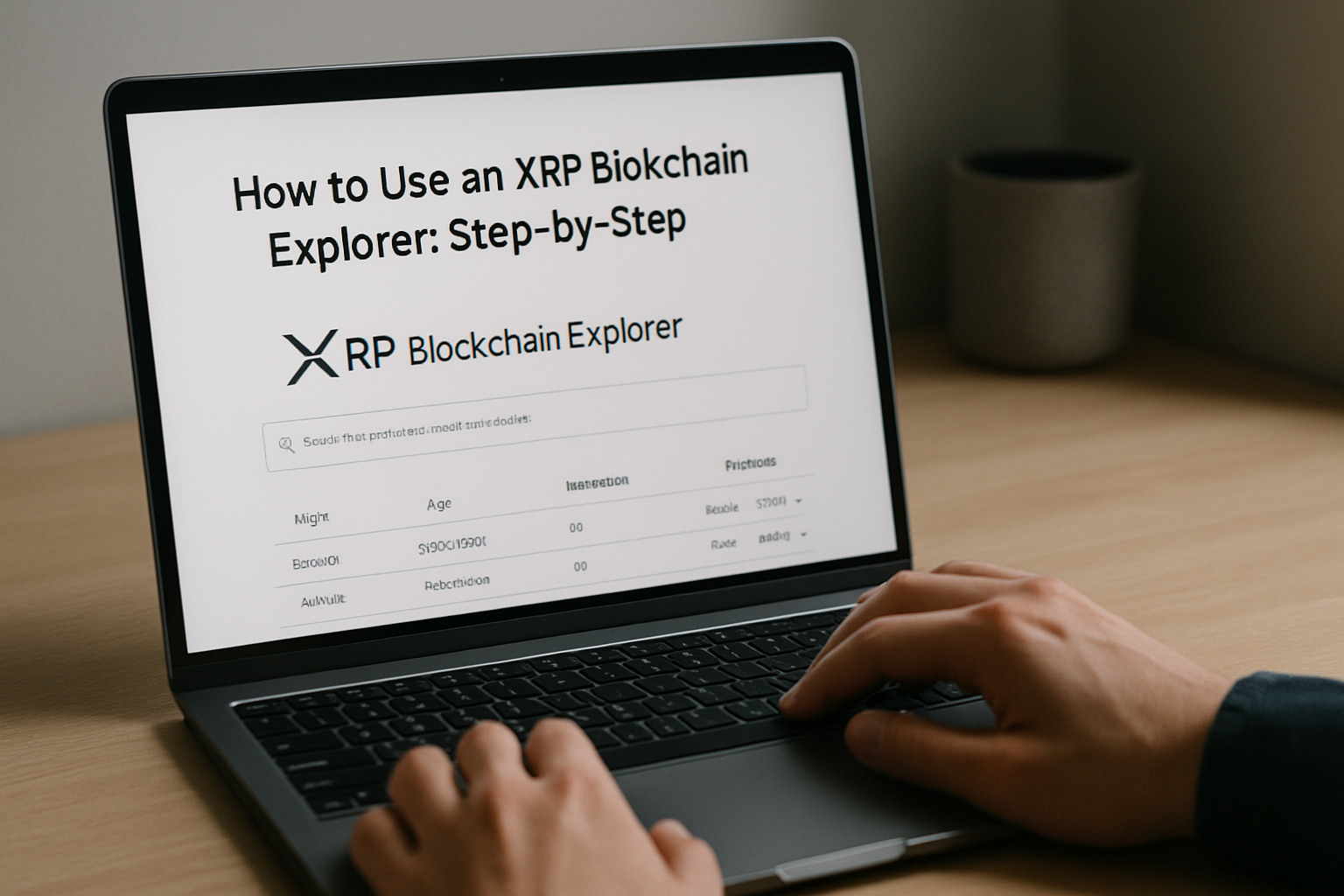
Navigating an xrp blockchain explorer is straightforward once you know what to look for. Follow these steps to track a transaction from start to finish.
Step 1: Access a Reputable Explorer
Open a trusted platform like XRPScan (xrpscan.com), Bithomp (bithomp.com), or the XRPL.org Explorer (livenet.xrpl.org). Type the URL directly rather than clicking search results, and bookmark it immediately to avoid phishing look-alikes.
Step 2: Search by Transaction Hash or Wallet Address
Every XRP transaction generates a 64-character hexadecimal hash. Copy the hash from your wallet or exchange and paste it into the search bar. Alternatively, search by XRP address (starting with ‘r’) to view all associated transactions and balances. The xrp blockchain explorer will resolve the query in under a second given the XRPL’s fast finality.
Step 3: Interpret Transaction Details and Network Metrics
The tool will display the transaction’s status (successful or failed), the amount transferred, the fee (base 0.00001 XRP plus any load adjustment), the originating and destination addresses, and the ledger index where it was recorded. Advanced users can drill into memos, destination tags, and the raw transaction JSON. Most platforms also show real-time network metrics like TPS, ledger close time, and burned fees, giving you a complete picture of network health at the moment of your transaction.
Key Metrics You Can Monitor with an XRP Explorer
A good XRPL explorer is not just a transaction lookup tool. It’s a window into the entire ecosystem, from consensus health to DeFi liquidity.
Real-Time Ledger Statistics and Network Health
When you load the homepage of any major explorer, you see live data: the current ledger index, the number of transactions in the latest ledger, and the average close time, typically around 3.8 seconds. XRPScan shows validated ledgers with per-second updates, while XRPExplorer.com adds a “Network Health” indicator based on load factor and peer count. A load factor above 1.0 signals rising fees. On June 16, 2026, the XRP Ledger handled 316,455 total transactions in 24 hours with a peak rate of 25.111 tx/s per XRPScan data.
Token, AMM Pool, and NFT Tracking
Modern XRPL explorers support both traditional issued tokens (often called IOUs) and the newer multi-purpose token standard (MPTokens). Bithomp’s token directory lists top assets by 24-hour volume, including RLUSD at $1.0004 with $8.5 million in daily volume, and USDC at $0.9988. It also tracks AMM pools: the XRP/RLUSD pool holds $4.9 million in TVL. Most platforms now include NFT viewers that let you verify ownership and metadata of XLS-20 NFTs. XRPScan extends this to MPTokens under the XLS-96 standard, which supports confidential asset issuance. For traders and DeFi participants, robust token support is non-negotiable.
Validator Registry and Consensus Amendments
Validators secure the XRPL, and a solid explorer lists them with uptime and agreement scores. XRPScan’s validator registry shows the Unique Node List (UNL), including well-known validators like xrpscan.com, xrpkuwait.com, and xrpgoat.com, with detailed chain info. Explorers also track protocol amendments. As of June 16, 2026, Bithomp displayed SingleAssetVault (v3.1.0) and LendingProtocol (v3.1.0) as “VOTING,” while PermissionedDEX and TokenEscrow had recently been enabled. Tracking amendments helps users anticipate new features before they go live on Mainnet.
The XRP Rich List
XRPScan’s rich list is one of its most-used features among institutional observers. It ranks wallet addresses by XRP holdings, showing the concentration of supply across the top holders. This data is useful for market analysts assessing sell pressure, for compliance teams flagging large custodial wallets, and for researchers studying token distribution. The rich list updates in real time as ledgers close, making it a reliable snapshot of on-chain wealth distribution at any given moment.
XRP Explorer vs. Other Blockchain Explorers: What Sets Them Apart
Comparing an xrp blockchain explorer with an Ethereum or Bitcoin explorer reveals fundamental architectural differences that matter in practice.
Consensus Mechanism and Data Finality
Unlike proof-of-work blockchains where explorers show block confirmations, the XRPL achieves consensus through a federated agreement process. Once a ledger is validated by a quorum of trusted validators (28 out of 35 proposers on the default UNL), transactions are final and irreversible. XRPL explorers therefore emphasize the validated ledger index rather than “confirmations.” This model delivers higher throughput (tens of transactions per second) and near-instant settlement compared to Bitcoin’s 10-minute block times. According to the XRPL protocol documentation, the ledger has processed over 63 million ledgers since inception, a figure that has since grown past 104 million.
“The XRP Ledger’s federated consensus model means finality is achieved in 3-5 seconds on average, making block explorer data effectively real-time rather than probabilistic.” – XRPL.org Developer Documentation
Unique Metrics: XRP Burn, Account Reserves, and Fee Structures
The XRPL has no mining. Instead, a small amount of XRP is destroyed with every transaction as a deflationary measure. XRPScan tracks the all-time burned total at roughly 14.35 million XRP. Explorers also show account reserve requirements: every new account must lock 1 XRP as a base reserve, plus 0.2 XRP per object such as token trust lines or open offers. Transaction fees follow a base cost of 0.00001 XRP but can surge with network load. The XRPL.org Explorer displays the current load fee in real time. These metrics are unique to this network and underscore why a dedicated tool is necessary rather than a generic block browser.
Advanced Use Cases: Developers, Auditors, and Enterprises
Beyond casual lookups, XRPL explorer infrastructure powers automated systems, regulatory compliance workflows, and custom tooling at scale.
API Access for Automated Monitoring and Trading Bots
XRPScan provides a fully documented API that lets developers query account histories, payment streams, and token balances programmatically. Bithomp’s Pro API expands this with enriched data including usernames and NFT metadata. Quantitative traders can stream real-time ledger data to trigger arbitrage bots on the built-in DEX. Using an explorer API eliminates the need to run a full rippled node for many applications, which meaningfully reduces infrastructure overhead for teams that don’t require a full node’s write capabilities.
Compliance, Audit, and Forensic Analysis
Financial investigators and compliance teams use XRPL explorer data to trace fund flows, verify on-chain reserves, and identify sanctioned addresses. The public nature of the ledger means every transaction is permanently recorded. Tools like Bithomp’s top transfers list highlight high-value movements that may warrant further scrutiny. Auditors can confirm that an exchange’s cold wallet balance matches its publicly disclosed reserves by simply pasting the address into any major explorer. This transparency reduces reliance on costly third-party attestations and speeds up proof-of-reserves verification cycles.
Running Your Own XRP Blockchain Explorer
For organizations that require air-gapped or white-labeled solutions, the open-source code for the XRPL.org explorer is available on GitHub under the MIT license. Clone the repository, configure a rippled node endpoint, and you have a private xrp blockchain explorer running on your own infrastructure. The project uses Vite, supports multiple languages including English, Spanish, French, Japanese, and Korean, and can be pointed to Mainnet, Testnet, or Devnet. Self-hosting ensures data sovereignty and allows custom UI branding for institutional deployments. If you’re building protocol infrastructure, this is the starting point worth exploring before committing to a third-party dependency.
For a broader look at how blockchain infrastructure choices affect protocol design, see our analysis of smart contract platform tradeoffs and our guide to tokenomics design for new protocols.
Testnet Explorer: Testing Before You Deploy
The XRPL Testnet is a fully functional replica of Mainnet that uses valueless test XRP. The XRPL.org Explorer supports Testnet natively: switch the network selector from “Mainnet” to “Testnet” and you get the same interface pointed at test ledgers. This is critical for developers building payment applications, token issuers testing trust line configurations, and teams auditing smart contract-adjacent XRPL hooks before deploying to production. XRPScan also offers a Testnet view, and Bithomp supports Testnet address lookups. Running your integration tests against a Testnet explorer before touching Mainnet is standard practice, not optional.
Security Tips for Every Explorer User
Blockchain explorers are purely read-only tools, but they remain a vector for phishing and social engineering. These practices keep you safe.
Avoiding Phishing Scams and Fake Explorers
Scammers clone legitimate explorer interfaces and promote them through paid search ads. Always type the URL directly, for example xrpscan.com or livenet.xrpl.org, and bookmark the site on first verified use. Check for the padlock icon and valid TLS certificates. Per XRPL.org community guidance, never enter your secret key or seed phrase into any explorer. A real tool never asks for credentials of any kind.
Verifying Transaction Finality and Destination Tags
When sending XRP to an exchange, a destination tag is often required to credit your account correctly. After submitting a transaction, use an explorer to confirm the status reads “tesSUCCESS” (the XRPL success code) and that the destination tag matches what you entered. Even if your wallet shows a pending status, the explorer’s validated ledger view is the ground truth. This dual verification step prevents costly misdirected funds, which are irreversible on the XRPL once a ledger closes.
The Future of XRP Ledger Exploration
Innovation on the XRPL continues at a steady pace, and explorers are evolving to keep up with new protocol capabilities.
Upcoming XRPL Features: Confidential MPT and Lending
Two amendments tracked by every major explorer are Confidential Multi-Purpose Tokens (XLS-96) and the native lending protocol. Once enabled, Confidential MPTs will allow issuers and auditors to decrypt balance amounts off-chain while preserving on-chain privacy. The Ripple-led open-source explorer merged a commit to support ConfidentialMPT in early 2026. The lending protocol will introduce fixed-term loans from pooled vaults, and explorers will need to display vault rankings and interest rates. Staying current with your preferred tool ensures you see these new transaction types as they go live on Mainnet.
AI and Predictive Analytics in Blockchain Exploration
Looking ahead, AI-enhanced explorer dashboards could offer anomaly detection, fee prediction, and smart alerting. An explorer might flag unusually large wallet activations or predict ledger congestion based on historical load patterns. No current tool fully integrates AI yet, but the groundwork is being laid through open APIs and structured data formats. Enterprises already pipe explorer data into machine learning models for fraud detection and liquidity forecasting, treating the public ledger as a real-time data feed rather than a lookup tool.
Choosing the Right XRP Blockchain Explorer
The right choice depends on your use case. XRPScan remains the most complete option with rich metrics, APIs, and a validator registry. Bithomp excels in token, NFT, and enterprise data with its Pro API tier. The XRPL.org Explorer offers an open-source foundation for custom deployments and Testnet work. XRPExplorer.com suits users focused on network health and education. By understanding what each platform does best, and by following the security practices above, you can work with the XRP ecosystem confidently. As the network adds confidential assets and native lending, these tools will continue to evolve alongside the protocol.
If you’re building on the XRP Ledger or designing a token launch that uses XRPL infrastructure, apply to build with us at Digital Blockchains. We work with serious teams at the protocol layer.
Frequently Asked Questions
Which XRP explorer is the most popular?
XRPScan is widely considered the leading xrp blockchain explorer, offering advanced metrics, validator data, and a documented API. Bithomp is also highly popular, particularly for token and NFT tracking among institutional users.
How do I track an XRP transaction?
Copy the 64-character transaction hash from your wallet or exchange, paste it into the search bar of any major XRPL explorer, and review the amount, sender, receiver, fee, and status. A “tesSUCCESS” result confirms the transaction is final and irreversible.
Is using an XRP blockchain explorer free?
Yes, all major platforms are free for basic lookups with no account registration required. Premium features like Bithomp Pro’s enriched API require a paid subscription, which is aimed at developers and institutional users with high query volumes.
Can I see my XRP balance with an explorer?
Yes. Enter your public XRP address (starting with ‘r’) into any major explorer to view your current balance, full transaction history, and token holdings including trust lines and NFTs.
What is the base transaction fee on the XRP Ledger?
The minimum transaction fee is 0.00001 XRP, which at a price of $1.22 per XRP amounts to a fraction of a cent. Fees increase only under heavy network load, and the current load fee is displayed in real time on most explorers.
Do XRP explorers show NFTs?
Bithomp and XRPScan both support XLS-20 NFTs, displaying metadata, ownership history, and transfer records. Not all explorers offer full NFT views; the XRPL.org Explorer provides only basic token data at this time.