Polygon blockchain is a Layer-2 scaling platform for Ethereum that enables fast, low-cost transactions and decentralized applications. It uses a proof-of-stake consensus mechanism and the POL token for staking, governance, and fees.
Key Takeaways
- Polygon blockchain is a leading Layer-2 scaling solution built to improve Ethereum’s speed and reduce transaction costs.
- It uses a modified proof-of-stake consensus, with a block time of approximately 2.3 seconds and average fees under $0.01.
- The native token POL (formerly MATIC) is used for staking, governance, and paying gas fees, with a circulating supply of 10.66 billion.
- Polygon hosts thousands of dApps, including DeFi platforms, NFT marketplaces, and prediction markets like Polymarket.
- Key developments include the AggLayer interoperability protocol, a $640 million community treasury, and enterprise adoption by JPMorgan, Disney, and Fox.
What is the Polygon Blockchain?
The Polygon blockchain is a decentralized, Ethereum-compatible network designed to scale the Ethereum ecosystem. Originally launched as Matic Network in 2017 by Jaynti Kanani, Sandeep Nailwal, Anurag Arjun, and Mihailo Bjelic, the project rebranded to Polygon in February 2021 to reflect its expanded vision of a multi-chain scaling solution. Today, Polygon operates as a Layer-2 sidechain running parallel to Ethereum, offering faster throughput and near-zero fees while inheriting Ethereum’s security and developer tooling.
From Matic to Polygon: A Brief History
The platform began as a straightforward proof-of-stake sidechain called Matic. After an initial exchange offering on Binance in 2020, the team rebranded to Polygon Technology and broadened its scope to include multiple scaling technologies. In 2023, Polygon Labs was formed to lead development, and the Polygon Foundation was established to support research and education. The native token transitioned from MATIC to POL on September 4, 2024, completing a multi-year upgrade cycle. In February 2024, Polygon Labs restructured, reducing staff by roughly 19% as the team refocused on its ZK-powered roadmap.
Core Mission: Scaling Ethereum for Mass Adoption
Polygon aims to solve Ethereum’s biggest challenges: high gas fees and slow transaction speeds. By moving activity off the main Ethereum chain and settling transactions in batches, Polygon achieves throughput of over 83 transactions per second and gas fees as low as 285 Gwei, often less than $0.00001 per transfer. That makes it viable for microtransactions, gaming, and everyday DeFi use. In February 2022, Polygon raised $450 million in a funding round led by Sequoia Capital India, signaling serious institutional confidence in the project’s trajectory.
How Polygon Blockchain Works: Architecture and Technology
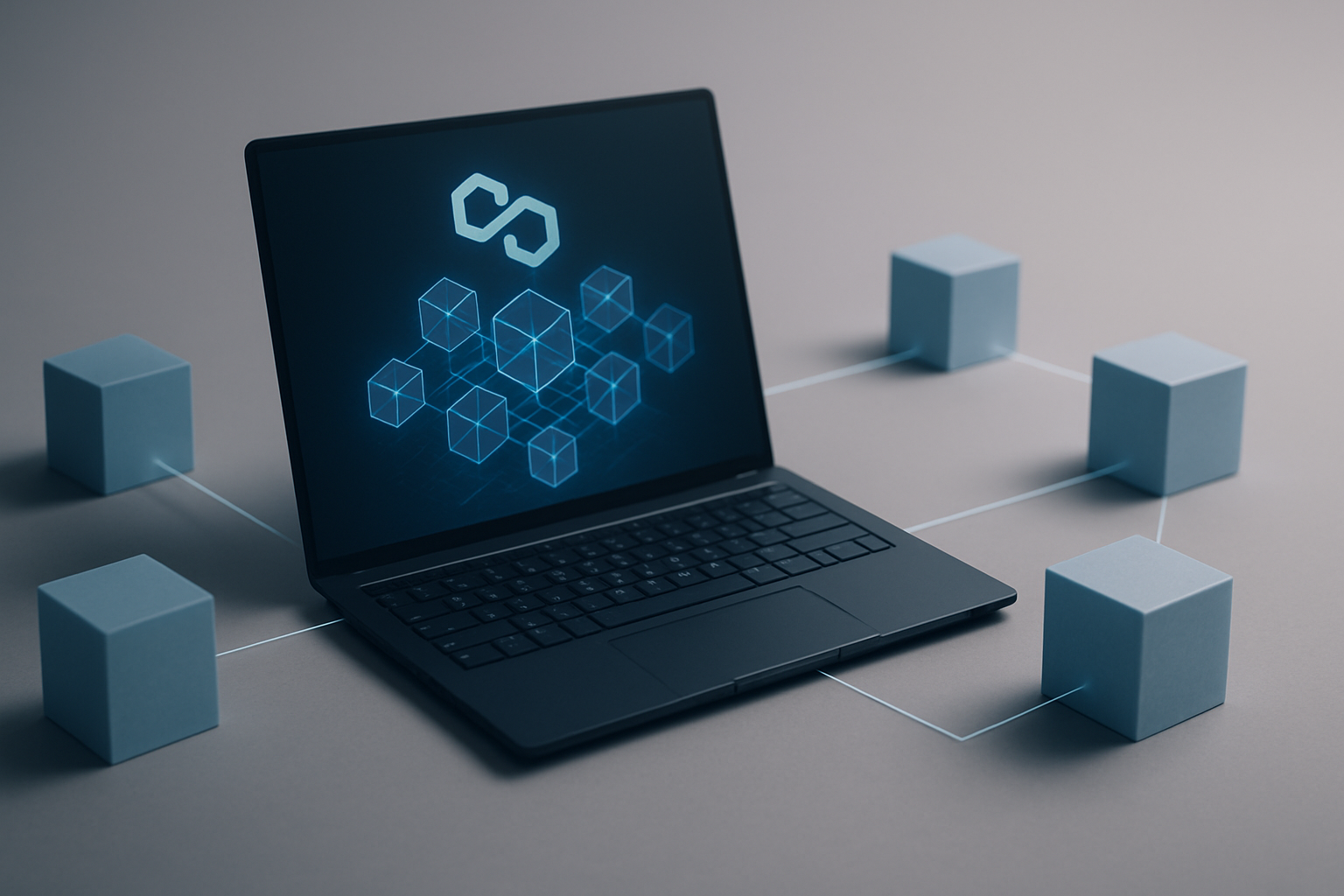
The Polygon blockchain uses a modified proof-of-stake consensus mechanism that allows validators to finalize transactions within a single block. This differs from traditional PoS systems that require multiple blocks for finality. The network’s architecture centers on a set of validator nodes that stake POL tokens, validate transactions, and periodically commit checkpoints – Merkle roots of transaction batches – to the Ethereum mainnet using smart contracts known as Core Contracts.
“Polygon’s architecture is a masterclass in pragmatic scaling: it borrows Ethereum’s security model at the settlement layer while giving developers a fast, cheap execution environment at the application layer.” – Polygon Protocol Documentation, 2024
The Proof-of-Stake Consensus Layer
Polygon’s PoS system relies on both validators and delegators. Validators run full nodes and stake POL to secure the network, earning block rewards and transaction fees. Delegators stake their tokens through trusted validators to share in rewards without operating a node. According to PolygonScan, as of June 2026, the network consistently processes 83.5 TPS with a block time of approximately 1.5 seconds per block, making it one of the fastest EVM-compatible chains available.
Checkpointing and Security on Ethereum
A critical innovation of the Polygon network is its use of periodic checkpoints. Every few minutes, a Merkle root of all Polygon transactions is submitted to Ethereum, anchoring the sidechain’s state to the L1 network. This provides Ethereum-level finality and security for Polygon transactions. Even if the Polygon network were compromised, the state can be recovered from the Ethereum checkpoint, giving developers and users a meaningful safety net.
EVM Compatibility and Developer Tooling
Polygon is fully compatible with the Ethereum Virtual Machine (EVM), meaning developers can deploy existing Ethereum smart contracts on Polygon with minimal changes. Tools like MetaMask, Hardhat, and Remix work natively, and popular dApps from Ethereum can be ported over with minimal friction. This compatibility has attracted thousands of projects, from DeFi protocols like Aave and Uniswap to NFT marketplaces like OpenSea. For a deeper look at how EVM-compatible chains compare, see our breakdown of Ethereum Layer-2 solutions.
POL Token: Utility, Tokenomics, and Staking
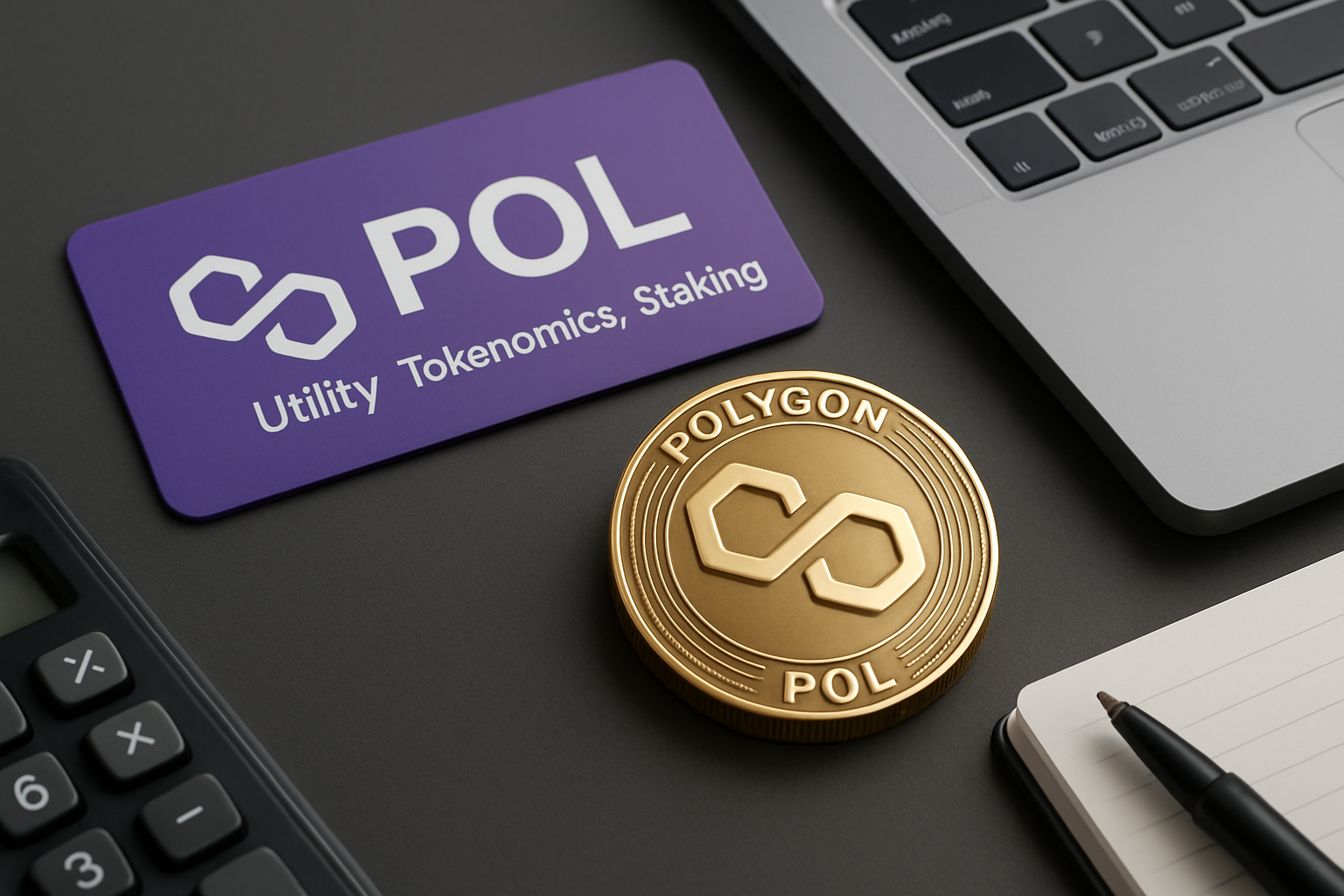
POL is the native cryptocurrency of the Polygon network, upgraded from the former MATIC token in September 2024. As an ERC-20 token, POL is used for paying transaction fees, staking to secure the network, and participating in on-chain governance. According to Blockchain.com, the total supply is capped at 10 billion POL, with a planned yearly emission rate of 1% after the first 10 years.
Token Distribution and Supply Metrics
| Metric | Value |
|---|---|
| Current Circulating Supply | 10.66 billion POL |
| Market Cap (Polygon PoS) | $830,315,656 (as of June 2026) |
| POL Price | $0.0779 |
| 24h Trading Volume | $27.01 million |
| All-Time High | $1.29 |
| Foundation Reserves | ~$640 million allocated to Community Treasury |
Data sourced from PolygonScan and MetaMask. The Community Treasury, approved by governance in January 2024, funds ecosystem grants and developer initiatives.
Staking Rewards and Validator Economics
Staking POL is a primary way to earn passive income on Polygon. Validators must stake a minimum amount of POL and maintain high uptime; in return, they earn protocol emissions and transaction fees. Delegators can stake through validators with a few clicks using wallets like MetaMask. Current staking yields vary but have historically ranged between 5% and 8% annually, subject to network conditions and validator performance.
Governance and Community Voting
POL holders govern Polygon through a decentralized voting process. Proposals include protocol upgrades, treasury allocations, and changes to network parameters. Off-chain discussion on the Polygon forum is followed by an on-chain snapshot vote. The weight of each vote is proportional to the amount of POL staked or delegated, ensuring that those most invested in the network have the greatest say.
Polygon Blockchain Use Cases and Real-World Adoption
The Polygon blockchain has evolved beyond a pure scaling solution and now serves as a hub for decentralized finance, enterprise applications, and Web3 games. Its low fees and fast settlement make it ideal for high-frequency trading, NFT minting, and micropayments.
DeFi and Prediction Markets
Polygon hosts major DeFi protocols like Aave, Uniswap V3, and SushiSwap, offering yield farming and lending with negligible gas costs. As noted on Wikipedia, Polymarket, the world’s largest prediction market, runs entirely on Polygon, handling millions of bets on real-world events with near-instant settlement. The combination of sub-cent fees and EVM compatibility makes Polygon a natural fit for any protocol that needs to process high transaction volumes without pricing out retail users.
Enterprise and Institutional Adoption
Polygon’s enterprise traction is real and documented. In November 2022, JPMorgan Chase executed its first live trade on a public blockchain using Polygon and a modified version of Aave. By 2023, Polygon was working with both Starbucks and Mastercard on blockchain-based loyalty and payment initiatives. The Fox Network launched a blockchain-based project on Polygon in 2023, and in 2025 Disney included Polygon in its acceleration program for augmented reality and AI. These aren’t pilot programs buried in press releases. They’re production deployments on a public chain.
NFTs and Gaming
Polygon’s low minting costs have made it the preferred chain for large NFT collections. In December 2022, former U.S. president Donald Trump launched a series of digital trading cards minted on Polygon, selling for $99 each. Gaming projects like The Sandbox and Decentraland have deployed on Polygon to offer gas-free in-game transactions at scale. For builders exploring NFT infrastructure, our guide on smart contract development covers the technical patterns behind these deployments.
Pros and Cons
Pros
- Ultra-low fees: Transaction costs typically stay below $0.01, often as low as $0.00001, making microtransactions economically viable.
- EVM compatibility: Developers can port Ethereum contracts to Polygon with minimal code changes, using familiar tools like Hardhat and Remix.
- Ethereum security anchor: Periodic checkpoints to Ethereum mainnet provide L1-level finality without requiring users to trust Polygon validators alone.
- Proven enterprise adoption: JPMorgan, Mastercard, Starbucks, and Disney have all deployed or piloted on Polygon, providing real-world validation.
- Rich ecosystem: Thousands of dApps across DeFi, NFTs, gaming, and prediction markets, with deep liquidity on protocols like Aave and Uniswap V3.
- Active development roadmap: AggLayer, Polygon CDK, and the Open Money Stack represent a coherent long-term vision for ZK-powered scaling.
Cons
- Centralization concerns: Governance and staking power remain concentrated among a relatively small number of large validators.
- Ethereum dependency: Any significant disruption to Ethereum mainnet could affect Polygon’s checkpoint submissions and finality guarantees.
- Token price pressure: POL trades well below its all-time high of $1.29, reflecting broader market conditions and competitive pressure from other L2s like Arbitrum and Optimism.
- Security incidents: The 2021 checkpointing vulnerability and the 2026 Polymarket wallet compromise highlight that operational security remains an ongoing challenge.
Getting Started with Polygon Blockchain: A Step-by-Step Guide
Using the Polygon blockchain is straightforward, even for beginners. Below is a simple three-step process to set up a wallet, fund it, and start interacting with dApps.
Step 1: Install a Compatible Wallet
MetaMask is the most popular choice. Download the MetaMask browser extension or mobile app, create a wallet, and securely back up your seed phrase. Coinbase Wallet and Trust Wallet also support Polygon natively.
Step 2: Bridge Assets to Polygon
To move assets from Ethereum to Polygon, use the official Polygon Portal or a third-party bridge. Connect your wallet, select the asset (e.g., USDC or ETH), and confirm the bridge transaction. Bridging typically takes 10 to 30 minutes depending on Ethereum congestion.
Step 3: Swap, Stake, or Use dApps
Once your POL or stablecoins are on Polygon, visit a decentralized exchange like QuickSwap or SushiSwap to trade tokens. To stake, navigate to the Polygon Staking Dashboard, choose a validator, and delegate your POL. Transaction fees will be a fraction of a cent.
Polygon Blockchain Security and Challenges
The Polygon blockchain is battle-tested with six years of 99.9% uptime, but no network is immune to risk. Polygon Labs has continuously improved security, and users should understand the potential vulnerabilities that remain.
Known Security Incidents
In December 2021, a vulnerability in Polygon’s checkpointing mechanism led to the theft of 801,601 MATIC tokens, then worth approximately $2 million. The bug was patched within 24 hours, and the network has since undergone multiple independent audits. In May 2026, blockchain investigator ZachXBT reported a private-key compromise on a Polymarket operations wallet that drained around $520,000 in POL and USDC. The incident affected only an internal wallet, not user funds, but it underscores that key management is a critical operational concern even on a technically secure chain.
“The 2021 Polygon disclosure was a case study in responsible vulnerability handling: the team coordinated a silent patch before public disclosure to prevent exploitation at scale. That kind of operational maturity matters.” – Immunefi Security Research, 2022
Centralization Risks and Dependency on Ethereum
Polygon’s reliance on a defined validator set and its checkpoint system introduces some degree of centralization. Governance power is also concentrated among a few large stakers. Because Polygon ultimately settles on Ethereum, any major Ethereum network disruption could theoretically affect the L2’s finality guarantees.
Ongoing Upgrades and Mitigation
Polygon Labs is actively addressing these challenges through the AggLayer protocol, which aims to connect multiple L2s into a unified security model. The transition to POL also introduced a more flexible utility token that can be used across multiple Polygon chains, further distributing validation responsibilities.
Future Outlook: AggLayer, CDK, and the Open Money Stack
Polygon’s roadmap is among the most ambitious in the blockchain space. The network is evolving into a full-stack scaling ecosystem with tools for developers and enterprises alike, updated for 2026 and beyond.
AggLayer and Cross-Chain Interoperability
Announced in January 2024, AggLayer aggregates zero-knowledge proofs from multiple blockchains to create a unified liquidity and security layer. It allows developers to launch sovereign L2 chains that inherit the security of the parent Polygon network while interacting with other chains. According to Polygon Labs, this architecture is designed to enable scale without sacrificing composability, a problem that has plagued multi-chain ecosystems since the bridge hack era.
Polygon CDK and the ZK-Powered Future
The Polygon Chain Development Kit (CDK) lets projects build custom ZK-powered L2 chains. Combined with the Vaultbridge, which monetizes bridged liquidity, these tools position Polygon as a one-stop shop for launching app-specific rollups. The ecosystem already includes chains like Immutable zkEVM for gaming and Astar zkEVM for enterprise use cases.
The Open Money Stack
Polygon’s enterprise arm has introduced the Open Money Stack, a regulated suite for on-ramps, compliant wallets, and blockchain settlement. This targets financial institutions that want to issue stablecoins, settle real-world assets, or build payment networks on a scalable, battle-tested chain. Given Polygon’s existing relationships with Mastercard and JPMorgan, this isn’t a speculative product category. It’s a direct extension of work already in production.
Frequently Asked Questions
What blockchain is Polygon on?
Polygon is a Layer-2 blockchain that runs alongside Ethereum. It has its own independent validator set but commits checkpoints to Ethereum, making it a direct extension of the Ethereum network rather than a fully independent chain.
What is the difference between MATIC and POL?
MATIC was the original token of the Matic/Polygon network. POL is the upgraded version launched on September 4, 2024, offering enhanced utility for staking, governance, and fee payments across multiple Polygon chains, including those built with the Polygon CDK.
How do I buy Polygon blockchain tokens?
You can buy POL on centralized exchanges like Coinbase or Binance, or swap for it on decentralized exchanges after bridging assets to the Polygon network. Most major wallets, including MetaMask and Coinbase Wallet, support direct POL purchases.
Is Polygon a proof-of-stake blockchain?
Yes. Polygon uses a modified proof-of-stake consensus mechanism where validators stake POL to secure the network and earn rewards. Delegators can also participate without running a node by staking through a trusted validator.
What are the transaction fees on Polygon?
Fees are extremely low, typically less than $0.01 per transaction and often as low as $0.00001 during normal network conditions, according to PolygonScan. This makes Polygon one of the most cost-effective EVM-compatible networks for high-frequency use cases.
What is the Polygon blockchain used for?
Polygon is used for DeFi, NFT marketplaces, gaming, enterprise applications, and prediction markets. It hosts platforms like Polymarket, Aave, and OpenSea, offering Ethereum compatibility with faster speeds and lower fees than transacting directly on L1.