Crypto automated teller machines are physical kiosks that convert cash into cryptocurrency and back, connecting directly to a blockchain wallet instead of a bank account. Over 30,000 operate across the U.S. today, with fees ranging from 7% to 20% per transaction.
Key Takeaways
- teller machines charge 7–20% per transaction, far above online exchange rates, but settle funds almost instantly.
- North America hosts nearly 90% of all Bitcoin ATMs globally, with the U.S. alone accounting for roughly 30,000 machines.
- Scam losses tied to these kiosks exceeded $65 million in just the first half of 2024, a tenfold increase since 2020.
- California’s Digital Financial Assets Law (DFAL) caps daily deposits at $1,000 per person, signaling a broader regulatory shift.
- General Bytes has sold over 18,415 machines across 60+ countries and processed 23.9 million transactions to date.
- Card-only models like the General Bytes BATMSeven are replacing cash-based kiosks in regulated markets.
What Are Crypto Automated Teller Machines?
Definition and Basic Function
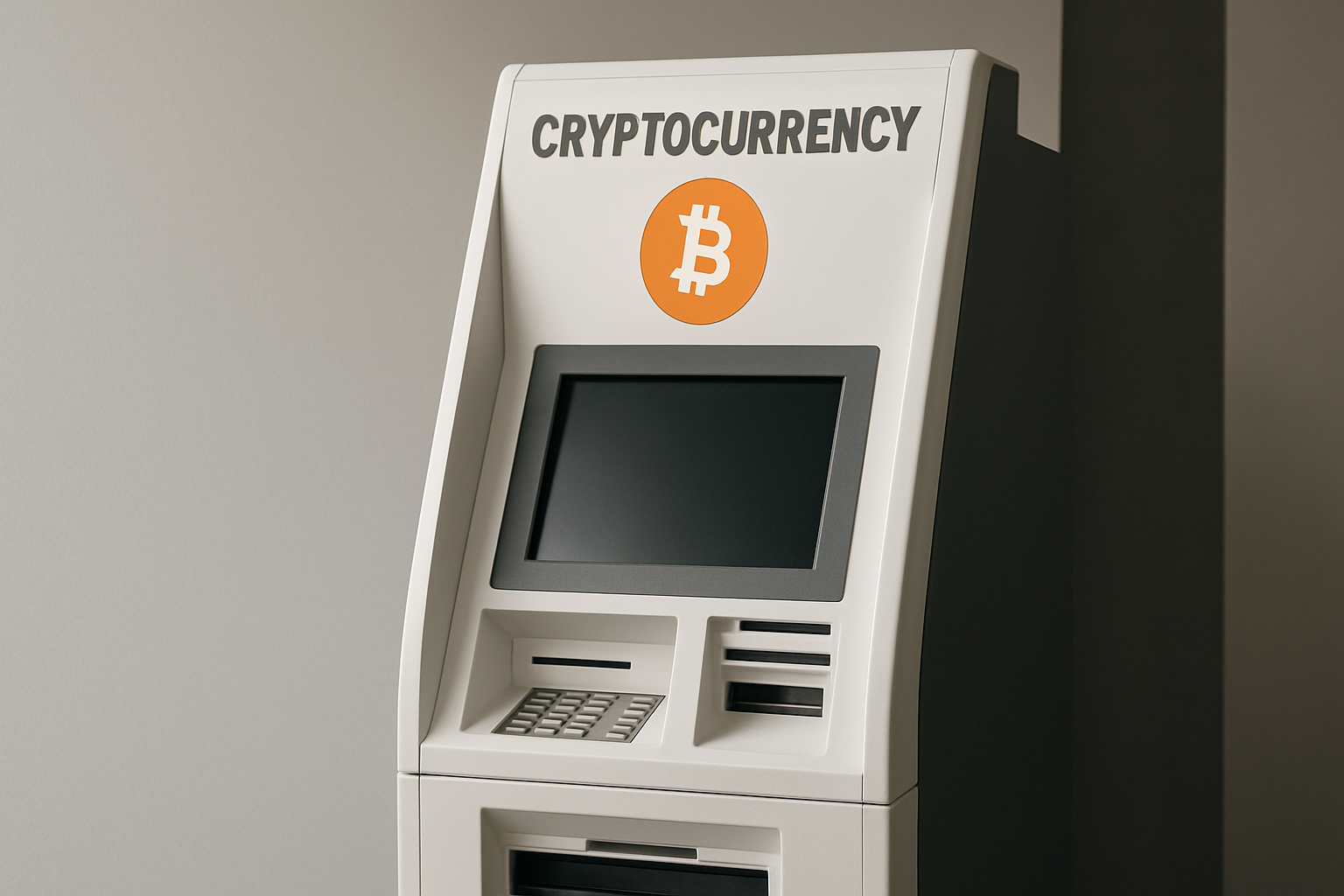
A crypto automated teller machine, commonly called a Bitcoin ATM or BTM, is a physical kiosk that bridges traditional cash and digital currencies. Unlike a conventional ATM tied to a bank account, a BTM connects directly to a cryptocurrency wallet via QR code or manual address entry. Users deposit cash, or use a debit card on newer models, and receive cryptocurrency in their wallet almost instantly. Two-way machines also allow selling crypto for cash. These kiosks serve the unbanked and underbanked, offering an on-ramp to digital assets without requiring a traditional bank account.
A Brief History
The first crypto automated teller machine was a Robocoin unit installed in Vancouver’s Waves Coffee Shop on October 29, 2013, according to Coinbase. Though it ceased operation in 2015 due to regulatory issues, it sparked a global industry. By 2015, manufacturers like General Bytes had shipped their 100th machine. The network grew to tens of thousands of ATMs worldwide, and today North America hosts nearly 90% of all Bitcoin ATMs globally.
Key Terminology
- BTM (Bitcoin Teller Machine): Another term for a crypto ATM, emphasizing its purpose as a teller for digital currency.
- One-Way ATM: Allows only buying crypto with cash – the most common configuration.
- Two-Way ATM: Permits both buying and selling of crypto for cash.
- Card-Only ATM: A newer model that accepts only debit or credit cards, no cash, reducing money-laundering risks (e.g., General Bytes’ BATMSeven).
- CAS (Crypto Application Server): Software that operators use to manage fleets of ATMs, set fees, and handle compliance.
How Do Crypto Automated Teller Machines Work?
The Transaction Process
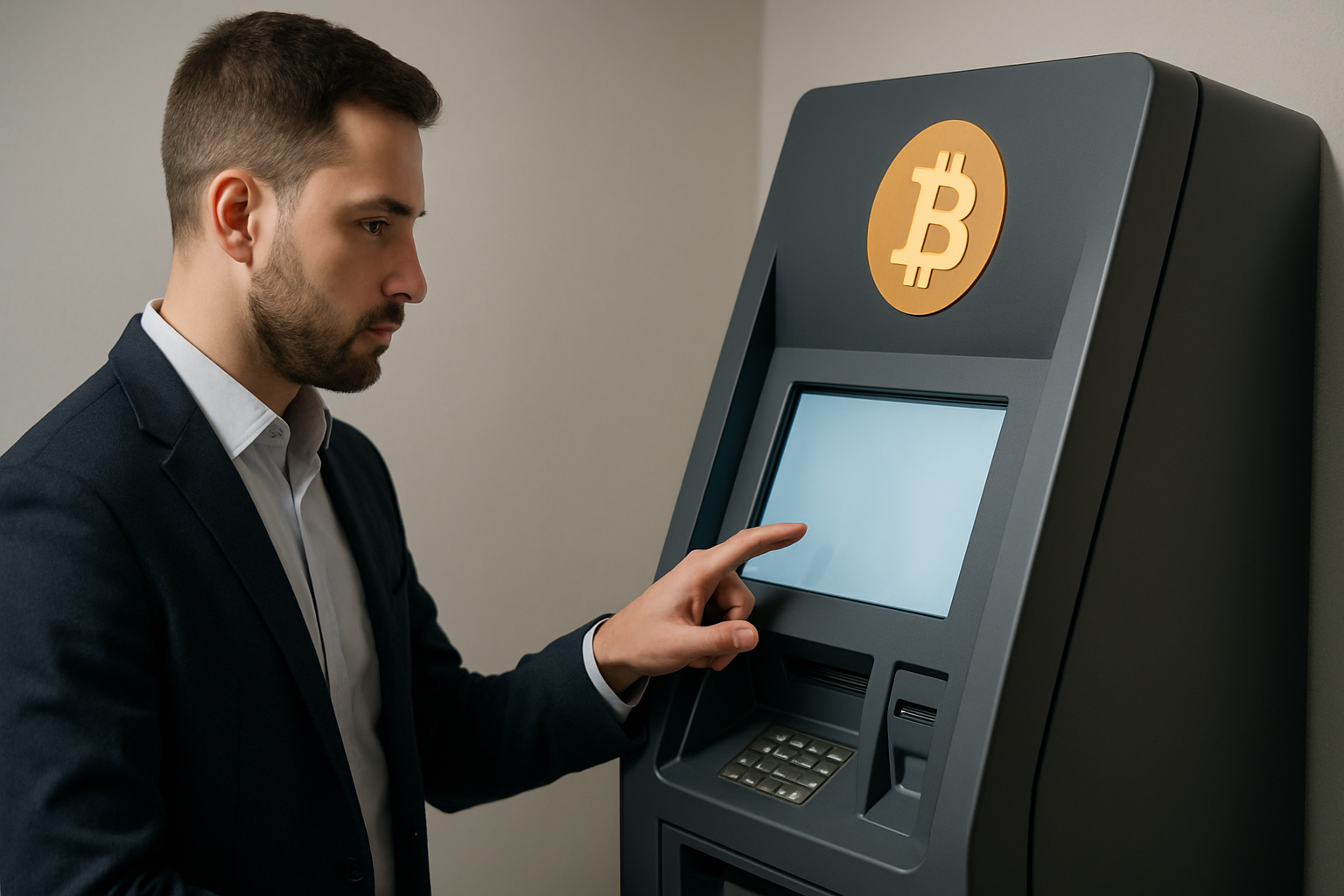
When a user approaches a crypto automated teller machine, the kiosk prompts for identity verification: usually a phone number and SMS code, or a government ID scan for larger amounts. The user selects “Buy Crypto” or “Sell Crypto,” chooses the cryptocurrency (Bitcoin, Ethereum, and others), and scans the QR code of their receiving wallet from a mobile app. For a purchase, they insert cash. The machine converts it to crypto at the current exchange rate plus a fee, then broadcasts the transaction to the blockchain. Settlement is typically instant, though blockchain confirmation may take a few minutes. For sales, the machine dispenses cash after verifying the user’s crypto transfer.
Wallet Integration and QR Codes
A crypto wallet is essential for any BTM transaction. The ATM does not store money; it relays funds between cash and the blockchain. The QR code contains the wallet’s public address. Advanced ATMs can also read NFC from a mobile wallet. Scammers frequently trick victims into scanning a QR code that routes funds directly to the scammer’s wallet, making the transaction irreversible. Always verify the destination address on screen before confirming any transaction.
Fees and Limits
this type of machines charge fees considerably higher than online exchanges: typically 7% to 20% per transaction. This covers the machine operator’s costs, compliance overhead, and the convenience of instant cash conversion. Daily limits vary significantly. Coinme’s Coinstar machines allow up to $5,000 per day, while California law caps kiosk deposits at $1,000 per person per day under the Digital Financial Assets Law (DFAL). Always check the fee displayed on the machine and review the full breakdown before inserting cash.
Types of Crypto Automated Teller Machines
One-Way vs. Two-Way Machines
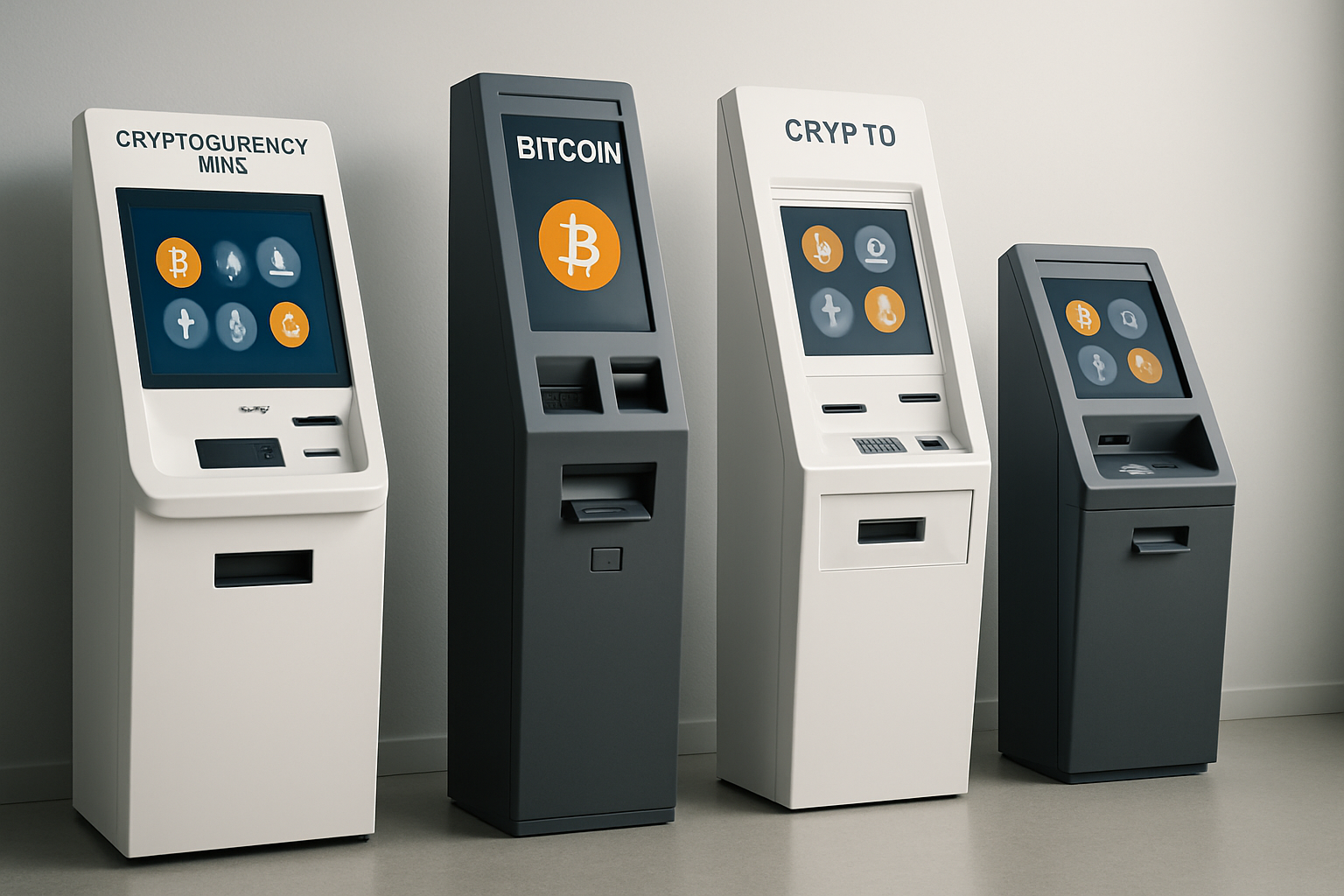
One-way machines support only buy transactions and account for the majority of installations worldwide. Two-way machines let users sell crypto for cash, but they require more operator liquidity and are less common. According to General Bytes, their two-way models, including the BATMThree and BATMFour, are deployed in high-traffic retail areas.
Card-Only Crypto ATMs: The Cashless Future
In 2025, General Bytes launched the BATMSeven, the first payment card-only, one-way crypto automated teller machine. By eliminating cash entirely, these machines reduce money-laundering risk and simplify compliance with anti-money laundering (AML) regulations. Expect more operators to adopt cashless models, especially in regions with mature digital payment infrastructure. This shift also addresses the $1.3 billion market projected by 2032.
Hybrid Models and Advanced Features
Some machines integrate additional services: bill payment, smart safe functionality for retailers, and external payment gateway support. KIOSK‘s units offer lease-to-own financing, making it easier for operators to enter the market without large upfront capital. Features like NFC card readers and Liquid Network support for faster Bitcoin settlements are becoming standard across premium hardware lines.
Where to Find Crypto Automated Teller Machines
Geographic Distribution
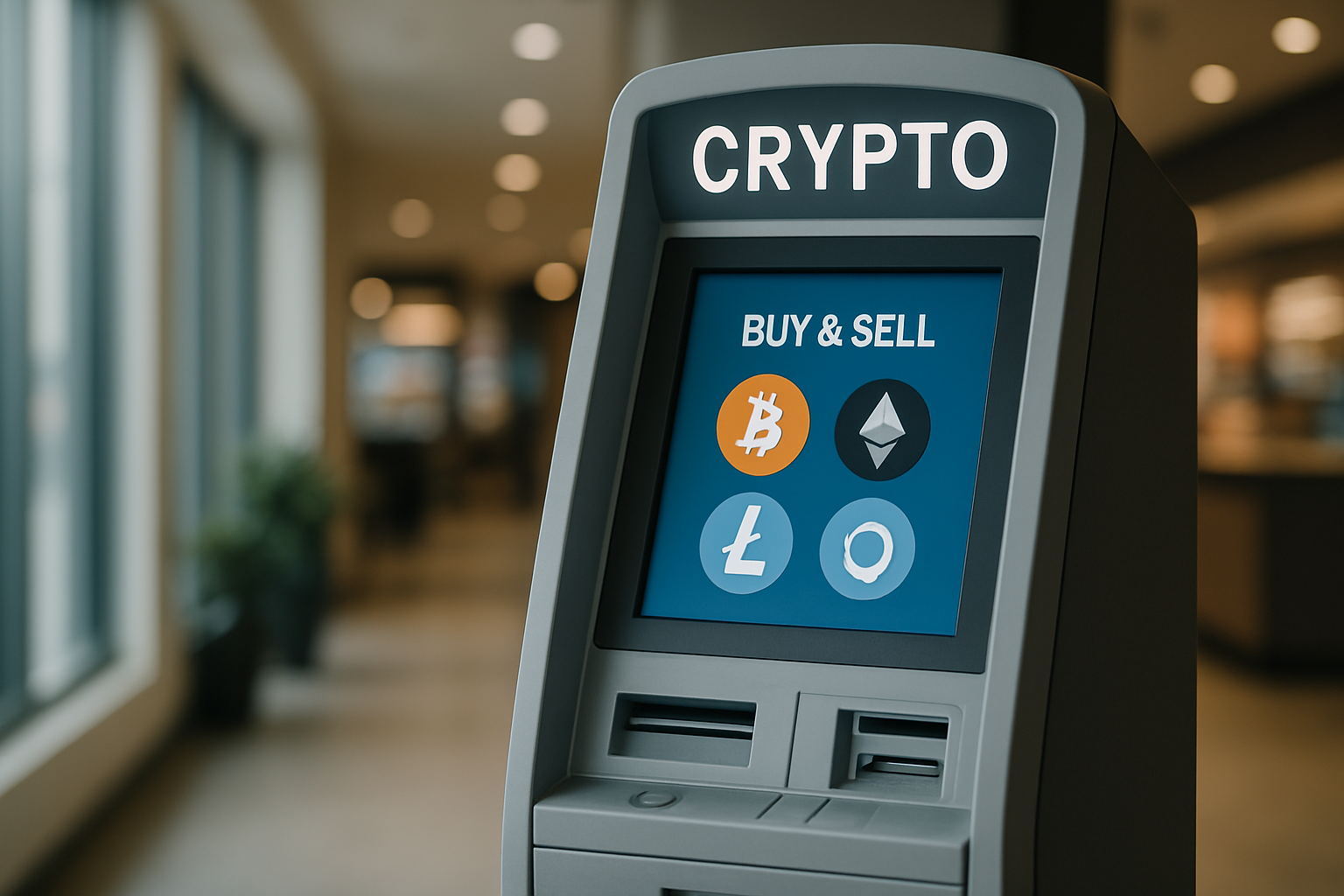
The United States dominates the global market with an estimated 30,000 crypto automated teller machines out of roughly 34,000 worldwide. Concentration is highest in urban centers: Los Angeles, Houston, Atlanta, and Chicago lead in machine density. States with lighter regulatory frameworks often show higher kiosk counts, but California’s regulatory clampdown is already reshaping distribution patterns. Internationally, Canada, the U.K., and Switzerland have notable deployments, while some countries have banned them outright.
Using Location Maps and Apps
CoinATMRadar.com provides a real-time map and live rates from thousands of machines globally, making it the most reliable tool for comparing fees before you travel to a location. Coinme’s app and website list 40,000+ locations powered by their network, including 6,000 Coinstar-enabled Bitcoin ATMs. General Bytes’ Bitcoin ATM Locator covers 12,000+ spots. Always confirm a machine is operational before heading out, since some units are temporarily disabled for maintenance or compliance reviews.
Retail Locations and Partnerships
Crypto automated teller machines are typically placed in convenience stores, gas stations, grocery chains (through Coinstar kiosks in supermarkets like Kroger and Safeway), pharmacies, and shopping malls. Retailers benefit from increased foot traffic and a share of transaction fees. Operators lease space or partner with store owners under a revenue-sharing model that requires minimal effort from the host location.
Scams and Security Risks
Common Scam Tactics
Scammers impersonate government agencies, tech support teams, or romantic interests, manufacturing fake emergencies that demand immediate payment via a crypto automated teller machine. They guide victims over the phone to deposit cash and scan a QR code that sends coins directly to the scammer’s wallet. Once transferred, the funds are irretrievable. According to WCF Financial Bank, losses reported to the FBI showed a tenfold increase in such scams since 2020, with total losses exceeding $65 million in just the first half of 2024. The median loss per victim reached $10,000 during that same period.
Who Is Most at Risk?
Older adults are the primary targets. Adults over 60 are more than three times as likely to suffer a crypto ATM scam, and they account for roughly $2 out of every $3 lost. Scammers exploit unfamiliarity with digital currencies and apply extreme urgency tactics to prevent victims from pausing to think. Romance scams and fake lottery notifications are two of the most common entry points that drive older victims to these kiosks.
How to Protect Yourself
No legitimate entity will ever ask you to deposit cash into a crypto automated teller machine to resolve an issue or protect your money. If you receive such a request, treat it as a scam.
- Pause before acting on unexpected calls or messages demanding immediate payment.
- Verify independently by contacting the organization through official, publicly listed numbers.
- Never share your wallet’s private key or seed phrase with anyone.
- Use machines that display clear scam warnings and always read the on-screen prompts carefully.
- Report suspected scams to the FTC, FBI, or state agencies like California’s DFPI.
“Crypto ATM fraud has become one of the fastest-growing financial crime vectors targeting consumers. The combination of irreversible transactions and social engineering makes these scams particularly devastating.” – Financial Crimes Enforcement Network (FinCEN) consumer advisory guidance
Regulations and Compliance in 2026
KYC and AML Requirements
All legitimate crypto automated teller machines now enforce Know Your Customer (KYC) and Anti-Money Laundering (AML) protocols. Users must verify identity via SMS, ID scan, or biometrics for large amounts. In the U.S., FinCEN requires operators to register as Money Services Businesses (MSBs) and maintain detailed transaction records. These requirements apply regardless of machine size or operator scale.
State-Level Laws: California’s DFAL
California’s Digital Financial Assets Law (DFAL), effective since 2024, is one of the toughest state-level frameworks in the country. It prohibits a kiosk operator from accepting more than $1,000 per person per day, mandates clear fee disclosure at the point of transaction, and requires state licensing. Operators violating DFAL face fines and license revocation. This law directly targets the epidemic of scam losses, though critics argue it may push some operators to less-regulated states.
Future Regulatory Trends
As of 2026, more states are expected to follow California’s lead with transaction caps and mandatory fee disclosures. FinCEN is considering lowering the customer identification threshold from $3,000 to $250 for certain transaction types. Globally, the EU’s Markets in Crypto-Assets (MiCA) regulation will impose uniform standards across member states, potentially harmonizing ATM compliance requirements by 2027. Operators who build compliance infrastructure now will have a significant advantage as these rules take effect.
How to Use a Crypto Automated Teller Machine: Step-by-Step
Preparation Steps
- Choose a reputable ATM location using a tool like CoinATM Radar or the Coinme app.
- Have your cryptocurrency wallet address ready: either a printed QR code or a mobile wallet app.
- Ensure your phone can receive SMS verification codes before you arrive.
- Check the machine’s fee and exchange rate before starting; most display a full breakdown on screen.
The Purchase Process
- At the machine, select “Buy Crypto” and choose the cryptocurrency (e.g., Bitcoin).
- Enter your phone number to receive a verification code via SMS.
- Input the code on the machine to confirm your identity.
- Scan your wallet’s QR code using the machine’s scanner. Double-check the address displayed on screen.
- Insert cash bills. Most machines accept $5 to $100 denominations, typically up to 50 notes per session.
- Review the transaction details: amount of crypto received, fee charged, and exchange rate applied. Confirm to proceed.
- The machine will print a receipt. The crypto appears in your wallet once the blockchain transaction confirms, usually within minutes.
After the Transaction
- Keep the receipt and note the transaction ID for any future disputes.
- If selling crypto, wait for cash dispensing and never leave until the transaction fully completes.
- Be aware that some machines require multiple blockchain confirmations before dispensing cash, which can take 10–30 minutes depending on network congestion.
Pros and Cons of Crypto Automated Teller Machines
Pros
- Instant settlement: Transactions settle almost immediately, compared to 3+ business days for some online exchange withdrawals.
- No bank account required: Serves the unbanked and underbanked population with direct cash-to-crypto access.
- Wide availability: Over 30,000 machines across the U.S. in everyday retail locations.
- Supports multiple coins: Most modern machines support Bitcoin, Ethereum, Litecoin, and other major assets.
- Privacy at lower amounts: Phone-only verification for small transactions offers more privacy than full exchange onboarding.
Cons
- High fees: At 7–20% per transaction, costs are significantly higher than online exchanges charging under 1%.
- Scam vector: Irreversible transactions and cash anonymity make these machines a primary tool for social engineering fraud.
- Daily limits: Regulatory caps like California’s $1,000/day DFAL limit restrict large purchases.
- Limited coin selection: Many machines only support Bitcoin, excluding DeFi tokens and newer assets.
- Increasing surveillance: Tightening KYC requirements are reducing the privacy advantages that once made BTMs attractive.
Provider Comparison and Fee Overview
| Provider / Type | Network Size (approx.) | Fees | Daily Limit | KYC Method |
|---|---|---|---|---|
| Coinme (via Coinstar) | 6,000+ locations | 8–10% | $5,000 | SMS, ID for large amounts |
| General Bytes (hardware for operators) | 18,415+ globally | Operator-set, typically 5–15% | Varies by operator (up to $25,000) | ID scan, biometrics optional |
| KIOSK (premier hardware supplier) | 1,000+ units deployed | Operator-set | Depends on software | Integrated KYC/AML |
| Independent Single-Site Operator | 1–2 machines | Often 15–20% | Usually $500–$2,000 | Phone SMS or ID |
The Future of Crypto Automated Teller Machines
The crypto ATM industry is maturing fast. With the market projected to reach $1.3 billion by 2032, competition among manufacturers like General Bytes and KIOSK will drive hardware and software innovation. Card-only machines and integrated compliance tools will become the norm, sidelining cash-based models in regulated markets. For consumers, improved KYC procedures will enhance security but reduce anonymity: a trade-off that may shift some users back to online exchanges. Crypto automated teller machines will remain a critical bridge between fiat and digital assets, but only if operators can balance accessibility, compliance, and user experience.
If you’re building infrastructure in this space or exploring token-based financial access models, the Digital Blockchains studio works with founders at the protocol and application layer. You can also explore our thinking on tokenomics and Web3 infrastructure for related technical context.
Ready to build in the crypto access layer? Apply to the Genesis Cohort at digitalblockchains.com and work with a team that deploys before it publishes.
Frequently Asked Questions
Are crypto automated teller machines safe to use?
Yes, when used at reputable, licensed kiosks with clear KYC procedures. Avoid machines that skip identity checks entirely, and never transact under pressure from a stranger on the phone. Read the on-screen warnings and only send funds to wallets you personally control.
What are the typical fees for a crypto ATM transaction?
Fees range from 7% to 20%, depending on the operator. Coinstar-based Coinme machines charge around 8–10%, while independent kiosks often charge toward the higher end. Always verify the full rate breakdown on screen before inserting cash.
Can I sell cryptocurrency for cash at a crypto ATM?
Only at two-way machines, which are less common than one-way buy-only kiosks. These allow you to send crypto from your wallet and withdraw cash immediately. Check the operator’s limits and fees before making the trip.
Do I need an ID to use a crypto automated teller machine?
Almost all machines now require phone-based verification via SMS, and larger transactions typically demand a government-issued ID scan. This complies with KYC and AML laws enforced by FinCEN across U.S. jurisdictions.
Where can I find a crypto automated teller machine near me?
Use CoinATM Radar, Coinme’s website, or General Bytes’ Bitcoin ATM Locator. These tools show live availability, supported coins, and current rates so you can compare before visiting a location.
What should I do if I suspect a scam involving a crypto ATM?
Stop the transaction immediately and do not insert any more cash. Report the incident to local law enforcement, the FTC, and state agencies like California’s DFPI. Keep all receipts, messages, and phone numbers involved, as funds sent via crypto are rarely recoverable.