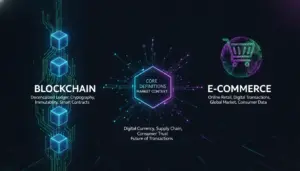
The blockchain market is the global industry built around distributed ledger platforms, services, and applications that enable decentralized, transparent transactions. It’s valued at roughly $54.08 billion in 2026 and expected to scale dramatically by the early 2030s.
Key Takeaways
- The blockchain market is estimated at USD 54.08 billion in 2026, with a forecast CAGR of 62.4% through 2031, according to MarketsandMarkets.
- North America holds a 34.8% share, while Asia Pacific is the fastest-growing region.
- Services lead the offering segment; private networks dominate by type; cloud deployment is growing at a 63.3% CAGR.
- Key verticals include BFSI, retail and eCommerce (70.2% CAGR), and supply chain.
- Major players span incumbents like IBM, AWS, and Oracle alongside crypto-native firms like Coinbase, Binance, and ConsenSys, plus infrastructure startups like Alchemy and Kaleido.
- Growth drivers include DeFi, CBDCs, AI convergence, smart contracts, and asset tokenization.
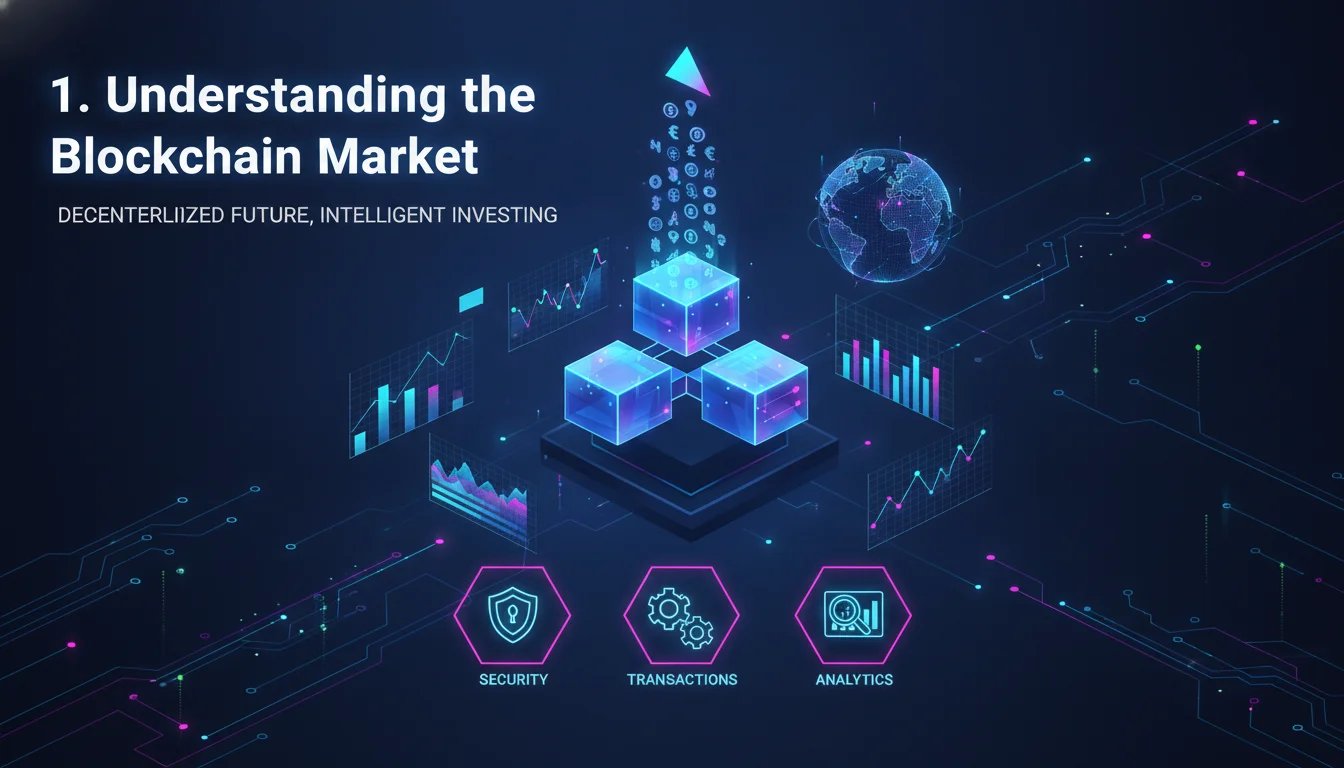
1. Understanding the Blockchain Market
Definition and Scope
The blockchain market covers the full ecosystem of platforms, services, and applications built on distributed ledger technology (DLT). According to Investopedia, a blockchain is a decentralized, immutable digital ledger that records transactions across a peer-to-peer network. This space spans cryptocurrencies, smart contracts, decentralized finance, tokenization, supply chain tracking, and identity verification. That broad scope is exactly why we treat it as foundational infrastructure for the next generation of internet and finance, not a niche vertical.
Evolution of Blockchain Technology
The technology emerged with Bitcoin in 2009 and has since moved through three distinct phases: digital currency (Blockchain 1.0), smart contracts (Blockchain 2.0), and decentralized applications (Blockchain 3.0). We’re now entering a phase defined by enterprise-grade platforms converging with AI, IoT, and early quantum-resistant cryptography research. This shift from speculative trading to institutional infrastructure is well documented. Deloitte notes that blockchain-enabled business models are reshaping commerce across nearly every industry, driven by a new generation of founders pairing with industry veterans to build differently than legacy players ever did.
“Right now, someone, somewhere, is creating a blockchain solution to drive innovation and disruption of traditional business models. This is occurring in virtually every industry and in most jurisdictions globally,” Deloitte’s blockchain research team writes in its analysis of market disruptors.
Why It Matters
This industry matters because it offers a new model for trust and efficiency in multiparty transactions. By cutting out intermediaries and providing tamper-proof shared records, distributed ledgers reduce costs and fraud while opening new revenue paths. For enterprises, that’s a strategic edge. For governments, it’s a tool for secure digital identity and central bank digital currencies. The growth trajectory here signals a real shift in how value gets exchanged and recorded globally, not just another tech cycle.
2. Blockchain Market Size and Growth Forecast
What Is the Blockchain Market Worth in 2026?
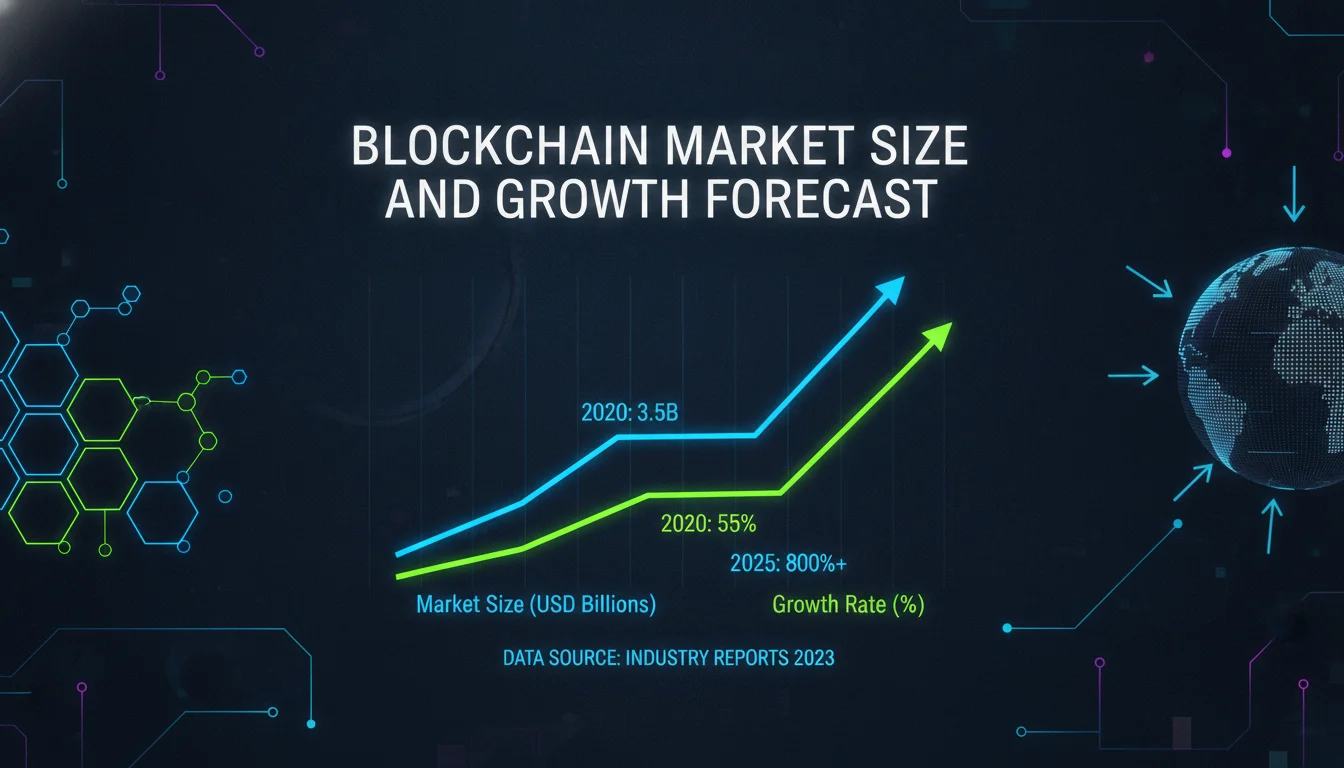
As of 2026, the global blockchain market is valued at approximately USD 54.08 billion, according to MarketsandMarkets. That figure rolls up spending on platforms, middleware, services, and related applications. The number reflects accelerated enterprise adoption and increasingly favorable regulatory conditions in major economies this year.
Future Projections Through 2031 and Beyond
MarketsandMarkets projects this space to reach USD 610.96 billion by 2031, a CAGR of 62.4%. Other research houses land on similarly bullish, if divergent, numbers: GM Insights pegs the 2025 baseline at USD 29.8 billion and forecasts USD 1.41 trillion by 2034 at a 52.3% CAGR. The spread between these two outlooks isn’t a red flag, it’s a reflection of how differently each firm scopes the industry, and how sensitive the space is to adoption velocity and regulatory clarity.
Comparing Major Market Reports
| Report Source | Base Year & Size | Forecast Year | Forecast Size | CAGR |
|---|---|---|---|---|
| MarketsandMarkets | 2026: $54.08B | 2031 | $610.96B | 62.4% |
| GM Insights | 2025: $29.8B | 2034 | $1.41T | 52.3% |
Differences here come down to scope definitions, geographic inclusions, and methodology, not disagreement on direction. Both reports confirm the same trajectory: tens of billions today scaling into hundreds of billions, possibly trillions, within a decade.
3. Key Drivers Propelling Growth
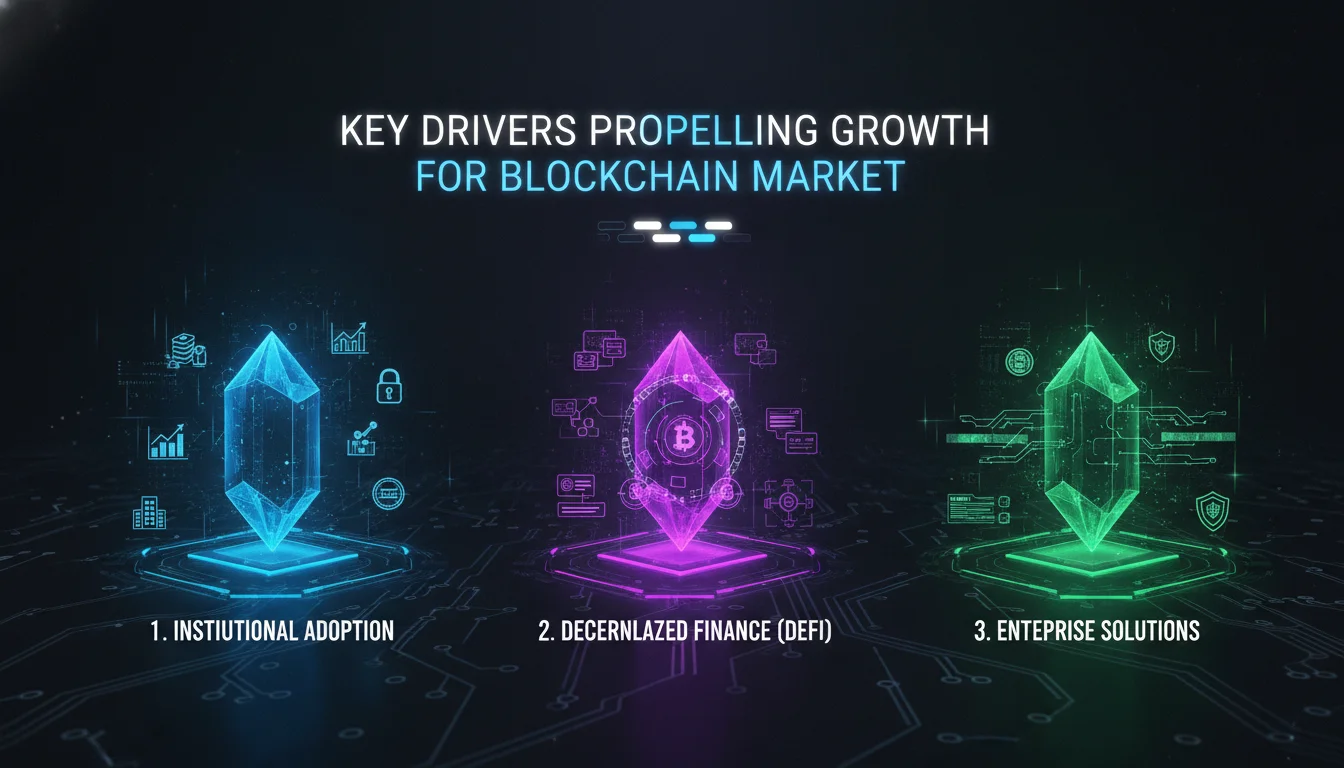
Enterprise Adoption for Transparency and Efficiency
Enterprises are adopting distributed ledgers primarily to streamline operations, cut fraud, and enable real-time auditing. PwC frames it well: blockchain can radically lower the “cost of trust” by providing a permanent, shared ledger accessible to all parties. That’s especially valuable in supply chain management, cross-border payments, and regulatory compliance, where reconciliation costs have historically eaten into margins.
Rise of DeFi and Tokenization
DeFi protocols, offering lending, borrowing, and trading without traditional intermediaries, have become a major growth engine. On-chain data from DeFi analytics platforms shows total value locked has remained in the tens of billions of dollars, a sign that smart-contract-based financial products have earned real user trust rather than just speculative attention. Tokenization of real-world assets, real estate, art, commodities, is another engine here, unlocking fractional ownership and liquidity that traditional structures can’t easily offer.
Integration with AI, IoT, and Cloud
Convergence with AI is improving on-chain analytics and smart contract automation, while IoT integration secures device data streams at the edge. Cloud-based Blockchain-as-a-Service from AWS, Microsoft Azure, and IBM is accelerating enterprise experimentation across this space. These combinations are creating genuinely new use cases: AI-driven decentralized marketplaces, verifiable edge computing, and automated compliance workflows that didn’t exist five years ago.
4. Segmentation Breakdown
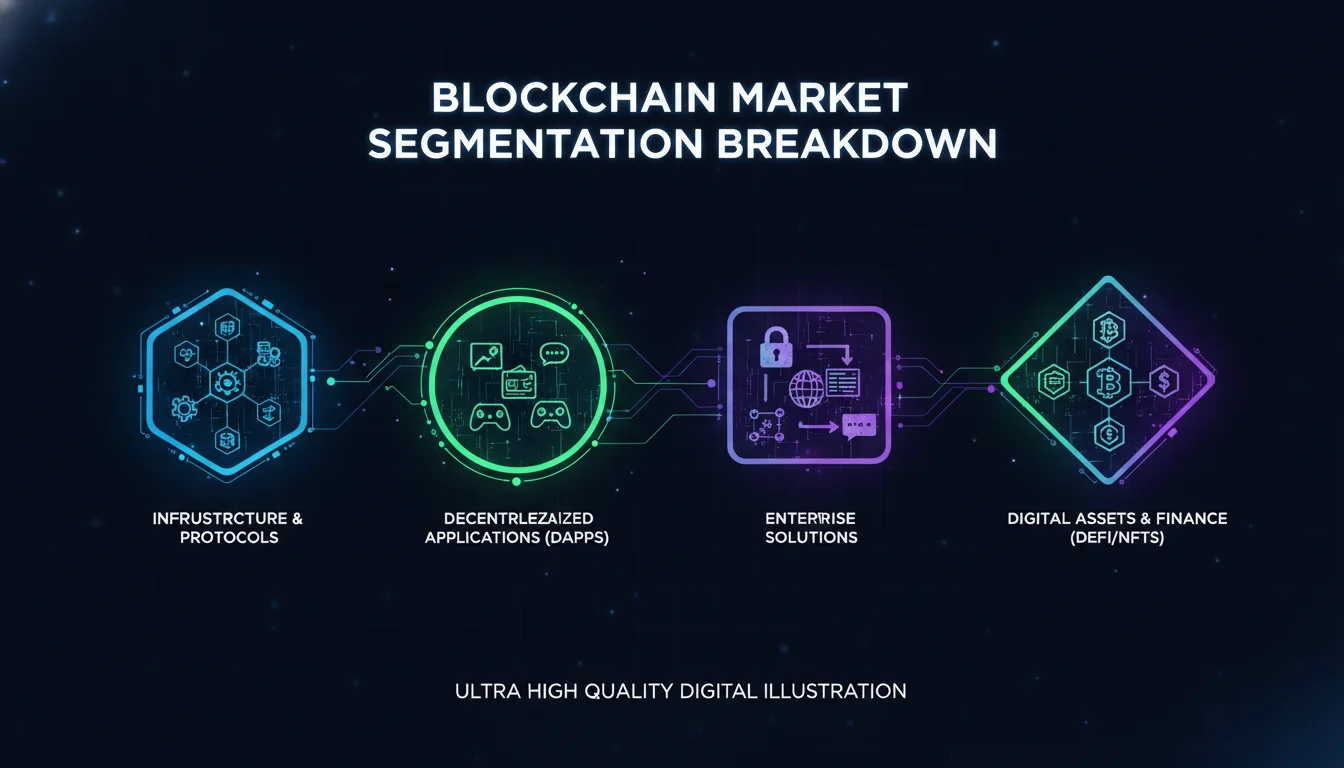
By Offering: Platforms, Services, Middleware
This industry splits into three main offering categories: platforms/infrastructure, services, and middleware or Web3 infrastructure. Per MarketsandMarkets, the services segment is expected to dominate in 2026, reflecting heavy demand for consulting, integration, and ongoing support. Middleware, including APIs and node management tools, remains critical for connecting legacy enterprise systems to distributed networks.
By Type: Public, Private, Hybrid, Consortium
Private networks lead due to enterprise demand for permissioned access and data privacy controls. That said, public chains like Ethereum and Solana are growing fast on the back of layer-2 scaling solutions that finally make them viable for high-throughput use cases. Hybrid and consortium models, think Hyperledger or Corda, compete hardest in supply chain and financial services, where governance needs to be shared among known, vetted participants.
By Deployment: Cloud vs. On-Premise
Cloud-based deployment is registering a 63.3% CAGR as businesses gravitate toward scalable, pay-as-you-go models. BaaS platforms simplify node provisioning and smart contract deployment, lowering the upfront investment barrier for teams entering this space. On-premise deployments remain relevant for heavily regulated industries that need full control over their data residency.
5. Regional Analysis
North America’s Dominant Position
North America held a 34.8% share of this industry in 2026. The U.S. leads on venture capital deployment, patent filings, and enterprise pilots turned production systems. Favorable regulatory frameworks for digital assets, combined with the concentration of major tech firms like IBM, Microsoft, and Coinbase, underpin that lead.
Asia Pacific: The Fastest-Growing Region
Asia Pacific is growing faster than any other region, driven by government-led initiatives in China, Singapore, and India. CBDC pilots and digital identity projects across Vietnam, Japan, and South Korea are accelerating adoption. MarketsandMarkets attributes the region’s outsized CAGR to large-scale financial inclusion efforts that Western markets simply don’t have the same policy appetite for.
Europe and Emerging Markets
Europe is betting on regulatory harmonization through MiCA (Markets in Crypto-Assets), positioning itself as a blockchain-friendly jurisdiction with clear rules of engagement. Meanwhile, Latin America and Africa are using distributed ledgers for remittances and land registries, carving out niche segments with real utility. These regions show meaningful upside as mobile penetration keeps climbing.
6. Competitive Landscape
Established Tech Giants
IBM, AWS, Oracle, and Microsoft provide enterprise-grade platforms and BaaS offerings. IBM’s Blockchain Platform and Microsoft’s Azure Blockchain Service target supply chain and financial use cases specifically. These incumbents dominate through existing client relationships and deep compliance expertise that startups simply can’t replicate overnight.
Blockchain-Native Startups and Established Crypto Firms
Coinbase, Binance, ConsenSys, and Ripple are driving a lot of the innovation happening at the protocol and application layer. Startups like Alchemy and Kaleido provide critical Web3 developer infrastructure that lowers the barrier to building. Per MarketsandMarkets, these companies focus on scalable, API-driven solutions that simplify Web3 integration, which is expanding the addressable pool of builders entering the space.
Collaborations and Strategic Partnerships
One trend worth watching closely: traditional enterprises teaming up with crypto-native firms. JPMorgan’s Onyx unit, for example, builds on Ethereum-compatible infrastructure. These alliances are accelerating institutional DeFi and tokenization, and honestly, blurring the line between legacy finance and digital assets faster than most people expected even two years ago.
7. Industry Verticals in Transformation
Banking and Financial Services (BFSI)
BFSI remains the largest vertical by spend. Applications span cross-border payments (RippleNet), trade finance (we.trade, Marco Polo), and securities settlement. Blockchain can compress settlement times from days to minutes and meaningfully cut operational costs, according to industry estimates cited by PwC, though exact savings vary widely by institution and use case.
Retail and eCommerce
Retail and eCommerce is projected to grow at a 70.2% CAGR during the forecast period, the fastest of any vertical tracked. Distributed ledgers improve product provenance for luxury goods, enable loyalty programs with tokenized rewards, and support decentralized marketplaces. Brands including LVMH and Walmart are already using the technology for authenticity verification at scale.
Supply Chain and Healthcare
In supply chain, blockchain delivers end-to-end visibility, cutting counterfeits and improving recall efficiency when something goes wrong. In healthcare, it secures patient data and enables interoperable health records across providers. Both sectors remain key contributors here, though early consortiums like IBM-Maersk’s TradeLens (since discontinued) taught the industry hard lessons about incentive alignment that newer projects are actively building around.
8. Challenges Facing the Industry
Scalability and Interoperability Issues
Scalability remains a real constraint. Ethereum historically processed only 15 to 30 transactions per second on its base layer, though layer-2 rollups and the shift to Proof-of-Stake have meaningfully improved throughput. Interoperability between chains is still a hurdle, with projects like Polkadot and Cosmos working to stitch together a genuine multi-chain ecosystem rather than isolated silos.
Regulatory Uncertainty
Divergent regulations across jurisdictions create real compliance complexity for anyone operating globally. The U.S. still lacks a unified federal framework, while the EU’s MiCA regulation provides far more clarity for builders and institutions alike. That uncertainty continues to slow institutional capital deployment and mainstream adoption in certain markets.
Security and Privacy Concerns
The base layer itself is generally secure, but applications built on top, smart contracts, bridges, custody solutions, have been exploited repeatedly. Hacks and exploits have cost the ecosystem real money over the years, eroding trust even as the underlying technology matures. Balancing transparency with data privacy requirements like GDPR also remains a genuinely hard technical problem, not just a policy one.
Energy Consumption and Sustainability
Proof-of-Work networks like Bitcoin still draw scrutiny over energy usage, though the broader picture has shifted meaningfully since Ethereum’s transition to Proof-of-Stake. That single upgrade, known as the Merge, cut Ethereum’s energy footprint dramatically by eliminating mining entirely in favor of validator staking. Newer chains are increasingly launching PoS-native from day one specifically to sidestep this criticism, which matters for institutional ESG mandates.
9. How Businesses Can Get Started: A Step-by-Step Approach
Step 1: Identify High-Impact Use Cases
Start by auditing processes that rely on multiple parties and require trust or provenance. Common use cases include supply chain traceability, credentialing, and intercompany settlement. Prioritize areas where a shared ledger can reduce reconciliation costs or unlock value nobody’s currently capturing.
Step 2: Select the Right Platform
Choose between public (Ethereum, Solana), private (Hyperledger Fabric, R3 Corda), or hybrid ledgers based on your governance needs. For enterprise deployments, BaaS from AWS or IBM can minimize setup complexity considerably. Evaluate developer tooling and community support closely before you commit to a stack, since migration later is expensive.
Step 3: Prototype, Pilot, and Scale
Start with a proof of concept in a sandbox environment. Get stakeholders involved early to make sure incentives are aligned before you build anything permanent. Once validated, pilot in a live but limited setting, then scale gradually across departments or partners, staying alert to evolving standards and interoperability protocols along the way.
“Collaborative technology, such as blockchain, radically lowers the cost of trust,” PwC notes in its analysis of enterprise adoption patterns, framing the technology as next-generation business process infrastructure rather than a speculative asset class.
Pros and Cons
Pros
- Reduces reconciliation costs and intermediary fees across multiparty transactions
- Provides tamper-proof, auditable records that improve regulatory compliance
- Enables new business models like fractional ownership and tokenized rewards
- Strong institutional momentum with major banks and tech firms building production systems
Cons
- Regulatory fragmentation across jurisdictions slows cross-border deployment
- Smart contract and bridge exploits remain a persistent security risk
- Interoperability between chains is still immature despite years of development
- Public chain throughput and fee volatility can limit certain enterprise use cases
This is exactly the kind of infrastructure gap we built Digital Blockchains to close. If you’re a builder working on protocol infrastructure, tokenomics design, or enterprise blockchain integration, apply to the Genesis Cohort at digitalblockchains.com. We work with serious teams ready to ship, not just talk about Web3.
Frequently Asked Questions
What is a blockchain market?
It refers to the global industry surrounding distributed ledger technology, including platforms, services, and applications that enable decentralized, transparent record-keeping and transactions. This spans everything from enterprise middleware to consumer-facing DeFi apps.
How big is the blockchain market today?
As of 2026, it’s estimated at USD 54.08 billion, with MarketsandMarkets projecting growth to USD 610.96 billion by 2031 at a 62.4% CAGR. Other research firms like GM Insights offer different baselines but agree on the same aggressive growth direction.
What drives the growth of the blockchain market?
Key drivers include enterprise demand for efficiency and trust, the rise of DeFi and tokenization, integration with AI and IoT, and government-backed CBDC projects. Cloud-based deployment models are also lowering the barrier to enterprise experimentation.
Which region dominates the blockchain market?
North America holds a 34.8% share as of 2026, while Asia Pacific is the fastest-growing region due to large-scale government adoption and financial inclusion initiatives. Europe is carving out its own advantage through regulatory clarity via MiCA.
What are the main challenges for the blockchain market?
Scalability limits, interoperability between networks, regulatory fragmentation, and security vulnerabilities in applications built on top of base layers pose the most significant challenges. Energy consumption concerns persist too, though Proof-of-Stake adoption has eased much of that criticism.