- Blockchain and e commerce integration moves beyond crypto payments into supply chain traceability, identity management, and automated contracts.
- According to BigCommerce, Statista projects the blockchain technology market to grow from $17 billion in 2023 to over $943 billion by 2032.
- Decentralized ledgers reduce chargeback fraud, data breaches, and intermediary fees, but scalability and regulatory clarity remain barriers.
- Smart contracts enable automatic payment release, royalty distribution, and loyalty rewards without manual reconciliation.
- Retailers building blockchain and e commerce pilots should start with supply chain tracking and identity verification before expanding into tokenized programs.
Blockchain and e commerce are the pairing of distributed ledger infrastructure with online retail operations to secure payments, verify products, and automate contracts. This piece breaks down how that pairing changes payments, data security, traceability, and operating costs for online retailers as of 2026.
Key Takeaways
- Blockchain and e commerce convergence now spans payments, supply chain provenance, digital identity, and tokenized loyalty, not just crypto checkout.
- Statista projects the blockchain technology market to climb from $17 billion in 2023 to over $943 billion by 2032, according to BigCommerce’s citation of that data.
- Smart contracts can automate escrow, royalty splits, and inventory triggers, but unaudited code introduces irreversible-error risk.
- Public blockchains still face throughput limits during peak retail traffic; consortium and layer-2 models offer a practical middle ground.
- Legal treatment of crypto payments, smart contract liability, and consumer refunds is still catching up across most jurisdictions.
- A phased pilot, not a full platform swap, is the lowest-risk path into blockchain and e commerce deployment.
Blockchain and E Commerce: Core Definitions and Market Context
What Is Blockchain Technology?
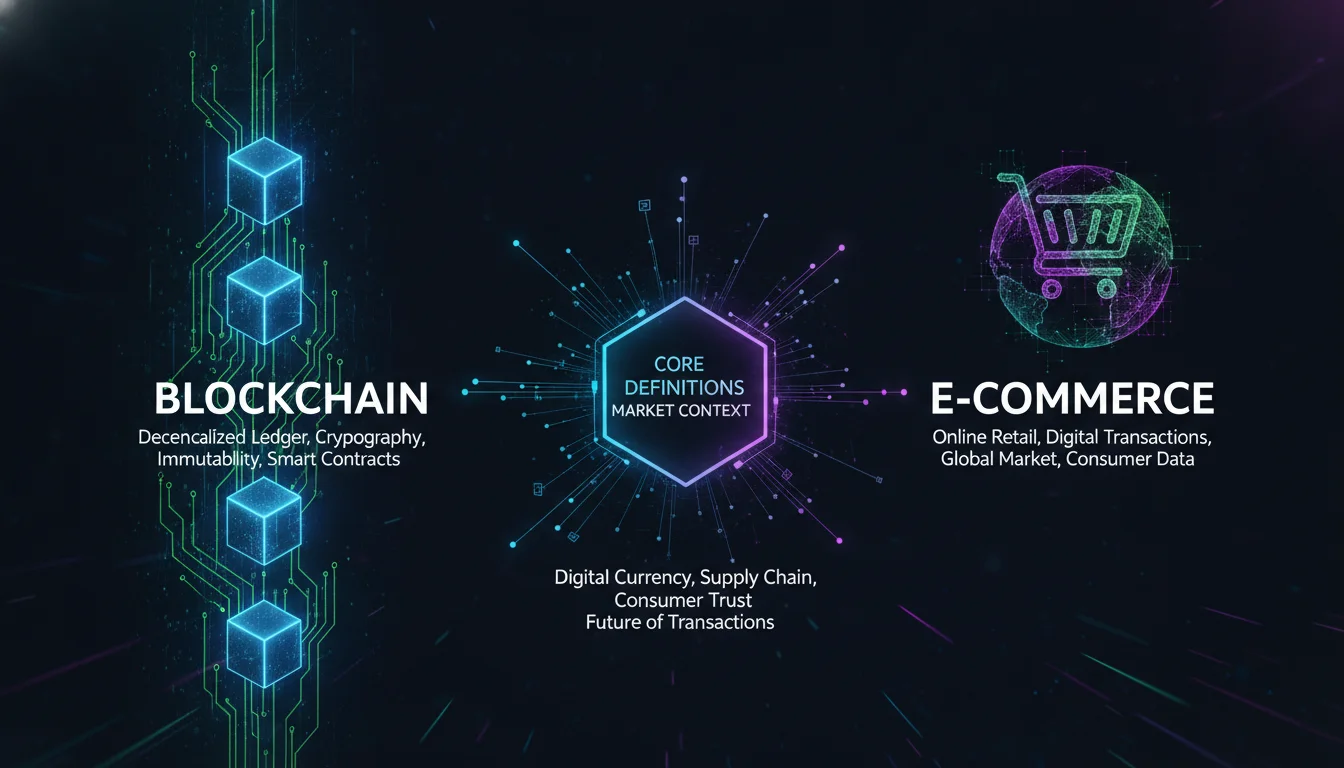
Blockchain is a decentralized digital ledger that records transactions across multiple computers so records can’t be altered retroactively. Each transaction groups into a block and links to the previous block using cryptographic hashes, creating an immutable chain. The technology removes the need for a central authority because network consensus validates new entries. Originally built to support Bitcoin, blockchain now serves broader commercial purposes, including identity management, supply chain tracking, and automated contracts. According to the MDPI review, blockchain maintains transactions on encrypted databases distributed among many computer networks, functioning as digital ledgers for online transactions. This distributed structure is exactly what makes blockchain and e commerce a natural fit for operations that process sensitive customer data every day.
In practice, a blockchain network can be public, private, or consortium-based. Public blockchains offer open participation and strong censorship resistance, while private and consortium networks give greater control over permissions and data visibility. E-commerce enterprises often explore consortium models because they can share order and inventory data with logistics partners without exposing proprietary pricing. The core architectural principle stays consistent: data replicates across nodes, and any change requires network consensus. That reduces the risk of one hacked database compromising an entire customer file.
What Is E-Commerce and Where Does Blockchain Fit?
E-commerce is the buying and selling of goods or services over the internet, spanning retail marketplaces, B2B portals, subscription services, and direct-to-consumer storefronts. Traditional e-commerce depends on centralized platforms that process payments, manage inventory, and store customer profiles. Those platforms create efficiency but also introduce single points of failure: a payment processor outage, a database breach, or a marketplace policy change can disrupt trade. Blockchain fits into this stack by adding a trust layer that doesn’t depend on a single company or bank. In a blockchain-enabled e-commerce model, a shopper, merchant, logistics provider, and payment processor can all write to a shared ledger with cryptographic verification, cutting the need for separate reconciliation systems.
This convergence isn’t limited to cryptocurrency payments. Blockchain and e commerce integration can cover order provenance, warranty records, digital identity, and royalty distribution. Because every transaction gets recorded and stays immutable, retailers gain an auditable trail from order placement to delivery. That trail supports dispute resolution, returns processing, and regulatory compliance. The shift is architectural: instead of asking multiple parties to trust a central database, the network itself provides verifiable proof of what happened and when.
Market Trajectory and a Feature Comparison
Multiple research sources point to sustained growth in blockchain adoption for commerce. According to Synoptek, Statista predicted the global blockchain technology market would grow to $2.3 billion by 2021, while Gartner projected blockchain’s business value-add would exceed $360 billion by 2026. More recent figures cited by BigCommerce show Statista estimating the blockchain technology market will grow from $17 billion in 2023 to over $943 billion by 2032. These projections reflect enterprise appetite, but retail-specific deployment remains uneven. Decision-makers should treat these figures as directional evidence of adoption pressure, not as guaranteed return on investment.
The table below compares traditional e-commerce systems with blockchain-enabled e-commerce across key operational dimensions.
| Dimension | Traditional E-Commerce | Blockchain-Enabled E-Commerce |
|---|---|---|
| Trust model | Central platform or bank verifies transactions | Distributed consensus verifies transactions |
| Data control | Single company stores customer data | Users control access via cryptographic keys |
| Fraud exposure | Chargebacks and database breaches | Immutable records reduce tampering and chargeback abuse |
| Settlement time | Days for bank transfers and reconciliation | Minutes for crypto or stablecoin settlement |
| Supply chain visibility | Fragmented across logistics systems | Shared ledger with end-to-end traceability |
| Intermediary fees | Payment processing and marketplace commissions | Lower fees via peer-to-peer rails, though network fees may apply |
Blockchain’s defining e-commerce contribution is replacing institutional trust with cryptographic verification. A decentralized ledger removes single points of failure that expose customer data and introduces automated enforcement of commercial terms.
Payment Security, Smart Contracts, and Fraud Reduction
Decentralized Payment Rails and Cryptocurrency Checkout
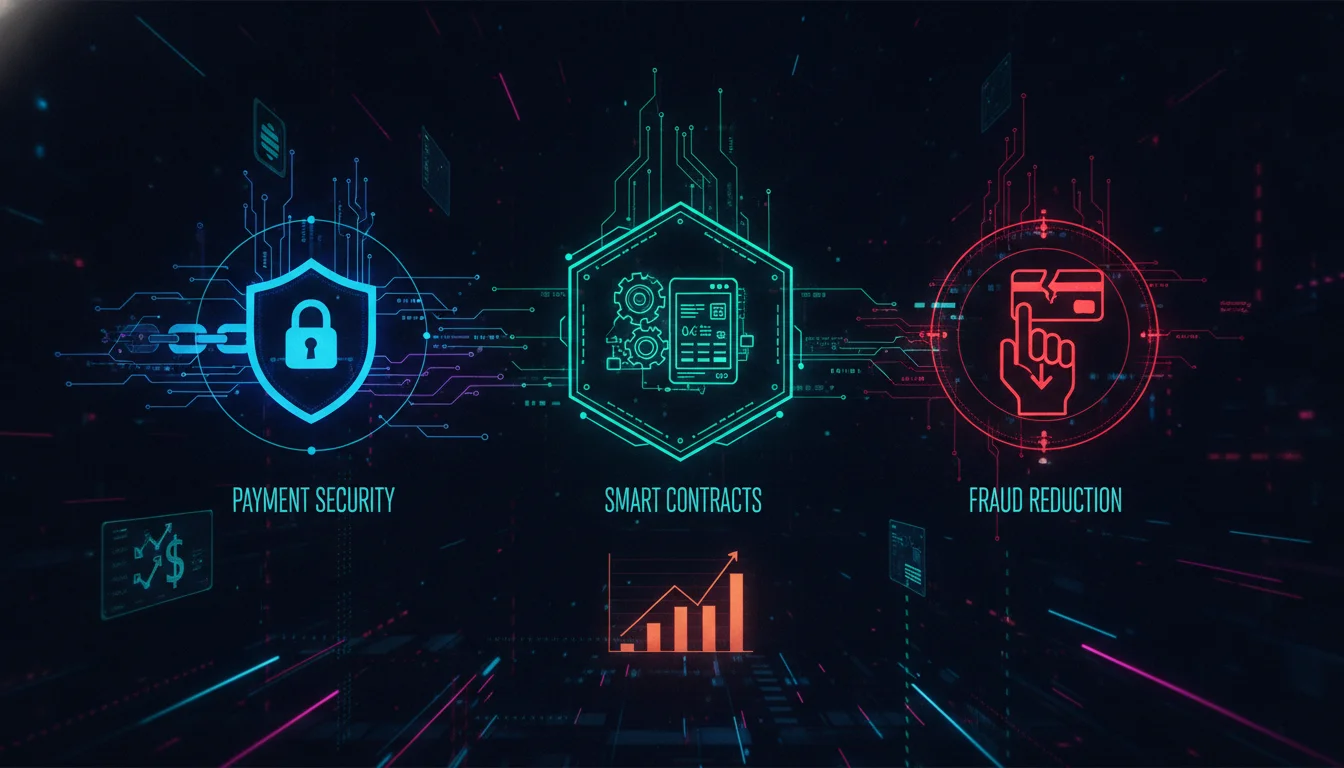
Payment processing is one of the most visible applications where blockchain and e commerce meet in online retail. Traditional checkout flows rely on card networks, acquiring banks, and payment gateways, each adding latency and fees. Cryptocurrency payment rails powered by blockchain let merchants accept Bitcoin, Ethereum, stablecoins, and other digital assets directly from a customer wallet. According to Synoptek, e-commerce sellers can rely on blockchain-led bitcoins and other cryptocurrencies to get cost-effective digital payment solutions. Because a distributed network verifies the transaction rather than a card issuer, merchants may cut processing fees and avoid some chargeback liability.
Stablecoins have become particularly relevant for e-commerce because they minimize price volatility while keeping blockchain settlement benefits. A stablecoin pegged to a fiat currency can transfer in seconds and settle on-chain, giving both merchant and consumer a predictable unit of account. Regulatory treatment of stablecoins varies by jurisdiction though, so retailers must confirm compliance with local payment laws before enabling crypto checkout. Integrating these rails into existing e-commerce platforms often happens through payment processors that convert crypto to fiat automatically, shielding the merchant from direct custody risk.
Chargeback Prevention and Immutable Transaction Records
Chargeback fraud, sometimes called friendly fraud, happens when a customer disputes a legitimate transaction after receiving goods or services. In card networks, the merchant often bears the burden of proof and may lose both product and revenue. Blockchain-based payments change this dynamic because transactions get recorded on an immutable ledger. Once a payment confirms on-chain, a customer or bank can’t reverse it unilaterally. That reduces the financial incentive for false disputes and provides a cryptographically verifiable record for legitimate refund cases.
Immutable records also help e-commerce platforms detect fraudulent patterns earlier. Because network participants can inspect transaction histories without exposing sensitive card numbers, they can apply risk scoring across addresses and wallet behaviors. According to Bulldog Law, each transaction is verified by a network, which helps detect fraudulent activity early. That capability matters especially in cross-border e-commerce, where traditional fraud checks run slower and less standardized.
Smart Contracts for Automated Settlement
Smart contracts are self-executing agreements where the terms are written directly into code and execute automatically when specific conditions are met. In e-commerce, smart contracts can automate payment release, inventory holds, royalty splits, and refund eligibility. For example, a smart contract can escrow a customer’s payment until a logistics provider confirms delivery on-chain, then release funds to the merchant automatically. That removes the need for manual reconciliation and shrinks the window for payment disputes.
A minimal escrow-release pattern might look like this in Solidity:
function confirmDelivery(uint256 orderId) external onlyOracle {
    Order storage order = orders[orderId];
    require(order.status == Status.Shipped, "not shipped");
    order.status = Status.Delivered;
    payable(order.merchant).transfer(order.amount);
    emit DeliveryConfirmed(orderId);
}
Smart contracts also support multi-party marketplace models. A single sale on a multi-vendor platform may involve the merchant, the platform operator, a logistics partner, and a content creator receiving an affiliate commission. A smart contract can distribute revenue to all parties in real time according to predefined percentages. According to Bulldog Law, smart contracts can automate payment release and inventory management. Retailers should still audit smart contract code before deployment, since bugs or incorrectly encoded terms can cause irreversible errors.
Supply Chain Transparency and Product Authentication
End-to-End Traceability from Source to Doorstep
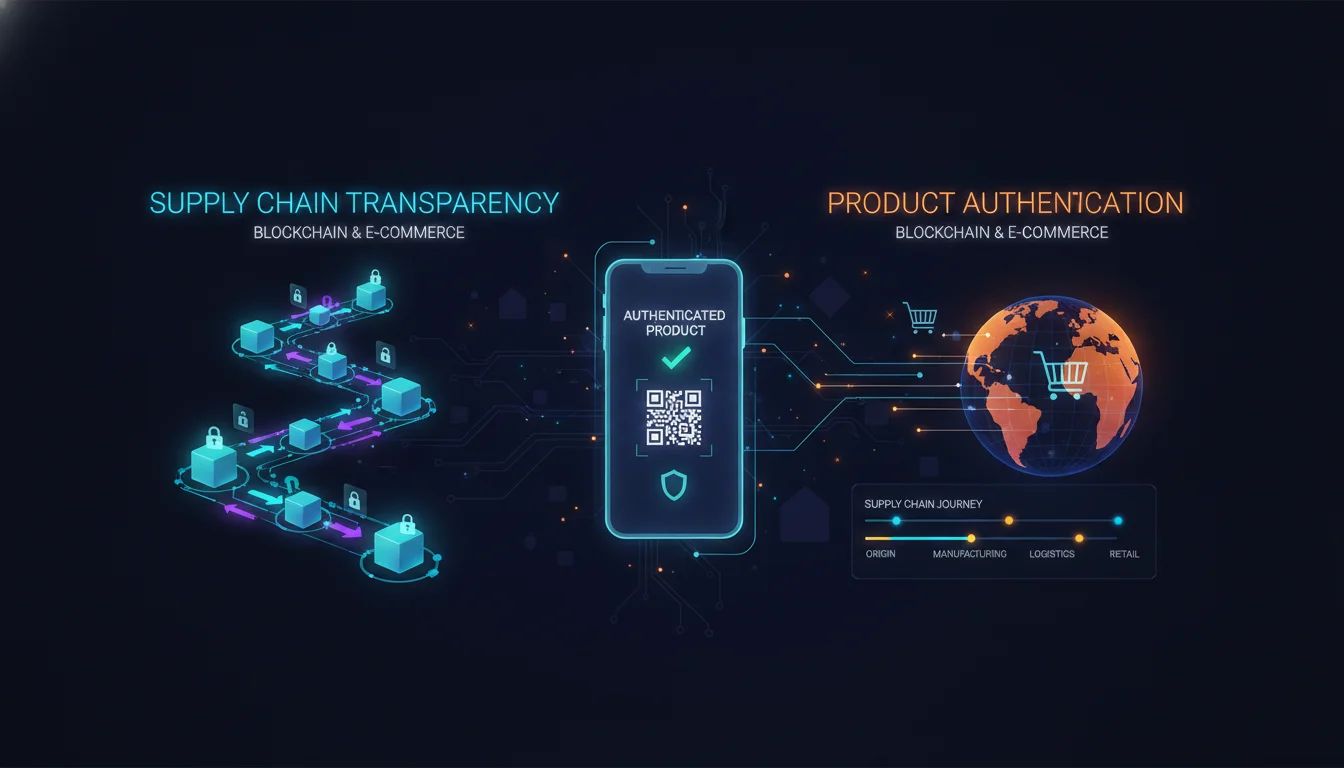
Supply chain traceability is a persistent challenge for e-commerce because products often pass through multiple suppliers, warehouses, customs checkpoints, and last-mile carriers. Each party maintains its own database, creating blind spots and delays. Blockchain offers a shared, tamper-evident record where each transfer of custody gets logged and timestamped. A retailer can verify when a product left a factory, which batch it belongs to, and whether it was stored under required conditions. This end-to-end visibility reduces disputes between trading partners and simplifies recall management.
In food and pharmaceutical e-commerce, traceability carries direct safety implications. If a contaminated batch turns up, a blockchain ledger can pinpoint the affected orders in minutes instead of days. Because records are append-only, no party can quietly alter shipment dates or origin documentation. The result is a stronger audit trail for regulators, insurers, and consumers. For merchants selling high-value goods, this transparency can become a competitive advantage by demonstrating authenticity and responsible sourcing.
Counterfeit Prevention and Authenticity Verification
Counterfeit goods cost brands revenue and erode customer trust, especially in luxury goods, electronics, and branded apparel. Blockchain-based product authentication assigns each physical item a unique digital identity, often linked to a QR code, NFC tag, or serial number. As the product moves through the supply chain, its digital identity updates on the ledger, including manufacturing details, inspections, and ownership transfers. A customer scanning the tag can verify authenticity without contacting the brand or relying on a third-party database.
This approach also supports resale and secondary markets. A pre-owned luxury handbag with a verifiable on-chain history is more valuable than one with uncertain provenance. Brands can encode warranty terms and service records into the same record, creating a lifetime product passport. While not foolproof, cryptographic linking between physical tags and digital records makes counterfeiting significantly harder. According to the MDPI review, blockchain’s potential includes establishing a decentralized marketplace for internet retailers, where sensitive information transfers with stronger integrity guarantees. This is one more reason blockchain and e commerce keep showing up together in enterprise roadmaps: authenticity has become a retention lever, not just a compliance box.
Inventory and Logistics Synchronization
E-commerce inventory management suffers when warehouse systems, marketplace listings, and logistics providers disagree on stock levels or shipment status. Blockchain can serve as a shared source of truth for these systems, reducing overselling and improving order accuracy. When a warehouse confirms a pick, the ledger updates, and all connected parties see the new inventory level without batch synchronization jobs. This real-time synchronization cuts manual reconciliation and customer service tickets about out-of-stock items.
Logistics providers can also use blockchain to streamline proof of delivery. Instead of relying on paper signatures or proprietary portals, a carrier can issue a cryptographically signed delivery receipt to the ledger. Smart contracts can then trigger payment release or customer notifications automatically. That reduces administrative overhead and provides a neutral, auditable record if a customer claims non-delivery. The integration requires collaboration among supply chain partners, but consortium blockchains are built for exactly this use case.
Customer Data Privacy and Digital Identity
Reducing Data Breach Exposure
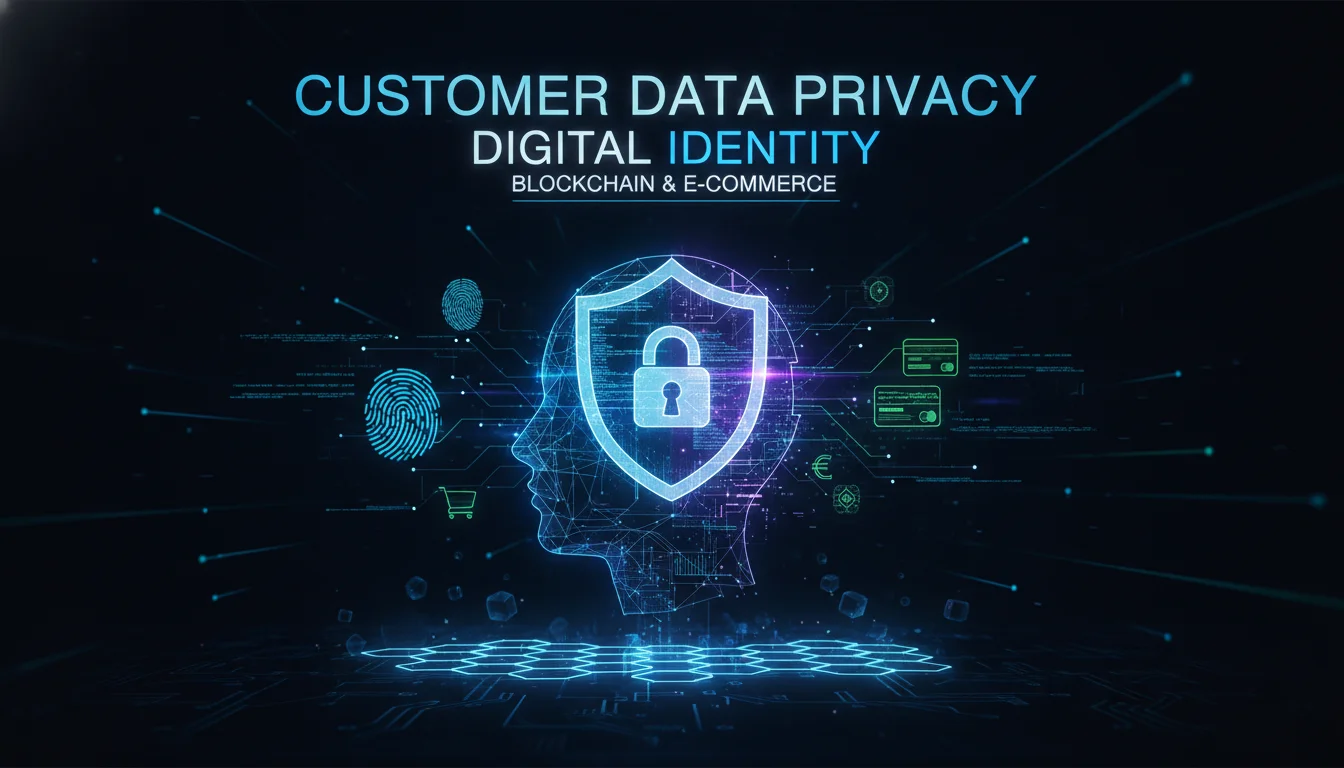
E-commerce platforms store vast amounts of personally identifiable information: names, addresses, payment details, and purchase histories. A single data breach can expose millions of records and cause significant financial and reputational damage. Blockchain reduces this exposure by minimizing the sensitive data stored in a central repository. Instead of storing full customer profiles on a merchant server, blockchain systems can store cryptographic references or hashes while actual data stays under user control. According to Synoptek, blockchain offers a level of security that e-commerce retailers can’t afford to skip, built on distributed ledger technology that provides among the highest security available for online database platforms.
The distributed nature of a blockchain network also means there’s no single honeypot for attackers. To alter a record, an attacker would need to compromise a majority of nodes simultaneously, which is computationally and economically impractical on large public networks. In private or consortium settings, access controls limit which parties can view or write data. This architecture helps retailers demonstrate compliance with data protection regulations such as the General Data Protection Regulation in the European Union and the California Consumer Privacy Act in the United States, though deletion rights require careful design.
Self-Sovereign Identity for Shoppers
Self-sovereign identity is a model where individuals control their own digital credentials without depending on a centralized identity provider. In e-commerce, a shopper could use a blockchain-anchored identity to prove age, address, or membership status without revealing unnecessary personal details. The merchant receives only the specific attribute needed to complete the transaction, reducing the data it must protect. That’s a sharp contrast to traditional account creation, where customers often hand over more information than strictly necessary.
For high-risk transactions, such as age-restricted goods or cross-border sales, verifiable credentials streamline compliance. A customer can present cryptographic proof that they’re over 18 or that their shipping address matches a verified record, without exposing a copy of an ID document. Because the blockchain anchors the credential’s validity, the merchant can verify it without contacting a third party. That cuts friction and improves privacy by design, though widespread adoption depends on interoperability among identity providers and e-commerce platforms.
Consent-Based Personalization
Personalization drives conversions, but it often relies on collecting and analyzing detailed browsing behavior across sites. Blockchain can support a consent-based model where customers grant and revoke access to their preference data through cryptographic keys. A merchant or advertising network can use only the data a user explicitly authorizes, and the user can audit how that data gets accessed. This shifts control toward the consumer while still enabling tailored product recommendations.
A practical implementation might store a customer’s loyalty status, size preferences, and favorite categories as verifiable credentials on a blockchain. When the customer visits a partner store, they can share those attributes selectively. The store gets useful personalization signals without building a shadow profile. Because the ledger records consent grants, businesses can demonstrate compliance with privacy regulations more easily. The challenge is integrating these systems with existing e-commerce platforms that rely on conventional cookies and login accounts.
Decentralized Marketplaces, Tokenized Loyalty, and Operational Efficiency
Peer-to-Peer Commerce Without Intermediaries
A blockchain-powered e-commerce platform is a secure, transparent, trusted online marketplace that removes the need for intermediaries, according to the IEEE conference paper on blockchain-powered e-commerce platforms. Instead of a central company matching buyers and sellers, a decentralized marketplace lets participants transact peer-to-peer using smart contracts. The platform itself may exist as a set of protocols rather than a single corporation, cutting the fees and policies imposed by traditional marketplaces.
In practice, decentralized marketplaces still require user-friendly interfaces, dispute resolution mechanisms, and customer support. Early examples have focused on digital goods, such as NFTs representing digital art or in-game assets, because they can be delivered entirely on-chain. Physical goods marketplaces face additional challenges around shipping, returns, and quality assurance. Hybrid models are emerging though, in which a decentralized protocol handles payments and listings while off-chain service providers manage logistics and adjudication.
Tokenized Rewards and Loyalty Programs
Loyalty programs suffer from fragmentation: customers earn points that expire, can’t transfer, or get locked to a single brand. Tokenized loyalty rewards solve many of these problems by representing points as fungible tokens on a blockchain. Customers can hold, transfer, or redeem tokens across participating brands, and the ledger prevents double-spending. Because tokens are programmable, merchants can create rules such as automatic discounts at checkout or bonus tokens for social referrals.
Tokenized loyalty also enables secondary markets for points, which can increase perceived value. A customer who rarely shops with a brand might sell or swap tokens to another user, while the brand benefits from broader circulation of its rewards. Smart contracts can enforce expiration dates, transfer restrictions, and partner redemption rules without manual administration. For e-commerce platforms with multiple brands or partner networks, a shared loyalty token can increase cross-selling and retention. The key design challenge is making sure token value doesn’t become a speculative asset subject to securities regulation.
Disintermediation, Cost Reduction, and Workflow Automation
Blockchain and e commerce integration can strip out intermediary layers that add cost and delay. Traditional business models have middlemen who charge a hefty percentage of earnings in the selling process, according to Synoptek. By removing middlemen from the payment process, blockchain eliminates transaction and processing fees, letting retailers reach cost-effectiveness. Synoptek notes that blockchain can help some enterprises minimize cost implications by up to 90% savings in specific back-office contexts, though such figures depend heavily on implementation scope and should be validated per use case.
Workflow automation through smart contracts extends cost reduction beyond payments. A contract can automatically reorder inventory when stock falls below a threshold, release payment to a supplier upon delivery confirmation, and update accounting ledgers in real time. These automations reduce headcount pressure in reconciliation, accounting, and customer service. Operational efficiency gains show up most when blockchain integrates with existing management systems such as enterprise resource planning platforms. According to Intexsoft, blockchain provides a secure system that enhances operational performance and builds consumer trust, though the description of centralization differs among vendors and must be assessed against the underlying network design.
Pros and Cons
Pros
- Immutable records cut chargeback fraud and give merchants a verifiable audit trail for disputes.
- Shared ledgers reduce reconciliation overhead across suppliers, warehouses, and logistics partners.
- Smart contracts automate payment release, royalty splits, and inventory triggers without manual intervention.
- Product-level digital identities make counterfeiting significantly harder and support resale provenance.
- Consent-based data models reduce the sensitive information retailers must store and protect.
Cons
- Public blockchain throughput can bottleneck during flash sales or holiday peaks without layer-2 support.
- Regulatory treatment of crypto payments, smart contract liability, and refunds is still unsettled in most jurisdictions.
- Key management failures can permanently lock customers out of loyalty tokens or purchase proof.
- Integrating blockchain with legacy e-commerce platforms adds engineering complexity and cost.
- Proof-of-work networks carry a real energy footprint that clashes with sustainability positioning.
Challenges, Limitations, and Regulatory Considerations
Scalability and Transaction Throughput
Scalability is the biggest technical constraint on blockchain and e commerce integration at retail volume. Public blockchains have historically struggled with transaction throughput. Bitcoin processes a limited number of transactions per second, while Ethereum has faced congestion and high gas fees during peak demand. E-commerce platforms need to handle thousands of orders per minute during flash sales and holiday peaks. Layer 2 scaling solutions, such as rollups and sidechains, address some of these bottlenecks by batching transactions off-chain and settling periodically on the main chain. Integrating these solutions adds complexity though, and may require specialized technical expertise.
Private and consortium blockchains can hit higher throughput by limiting the number of validators, but they sacrifice some decentralization and censorship resistance. Retailers must match blockchain architecture to their performance requirements and trust assumptions. For high-volume, low-value transactions, a hybrid approach where only settlement happens on-chain may work better than writing every product view or inventory change to a public ledger. The scalability question isn’t whether blockchain can eventually handle e-commerce volume, it’s which architecture delivers the right balance of speed, cost, and trust for a given retailer.
Legal Uncertainty and Consumer Protection
Blockchain-based e-commerce operates in a legal gray area in many jurisdictions. Consumer protection laws often assume a central intermediary exists that can reverse charges, mediate disputes, and provide refunds. In a peer-to-peer transaction settled by smart contract, the customer may have no clear path to recourse if the product never arrives or isn’t as described. Courts are still developing frameworks for recognizing on-chain records as legal evidence and for assigning liability when smart contract code behaves unexpectedly.
Tax treatment of cryptocurrency payments also varies. In some countries, using crypto to buy goods triggers capital gains obligations, which complicates simple purchases. Cross-border transactions may involve conflicting rules on money transmission, sanctions compliance, and data localization. According to Bulldog Law, the intersection of blockchain technology and intellectual property law is also growing, as businesses explore how blockchain can protect copyrights, verify digital ownership, and combat counterfeiting. E-commerce legal teams need to track evolving guidance from regulators in the United States, European Union, and Asia-Pacific.
Energy Consumption and Sustainability
Proof-of-work blockchains, such as Bitcoin, require substantial electricity for mining and transaction validation. That energy profile has drawn criticism from sustainability-focused consumers and regulators. E-commerce brands marketing themselves as environmentally responsible may face reputational risk if they adopt energy-intensive blockchain solutions without mitigation. Many modern blockchain networks use proof-of-stake or other consensus mechanisms that consume far less energy though. Ethereum’s transition to proof-of-stake in 2022 reduced its energy use substantially, though exact figures vary by source and we won’t cite a specific number here without direct verification.
Retailers should evaluate the consensus mechanism of any blockchain they consider. A proof-of-stake network or a private consortium chain may align better with corporate sustainability goals. Blockchain’s ability to reduce waste in supply chains by preventing counterfeit goods and optimizing inventory can also generate environmental benefits that offset the ledger’s operational footprint. The key is running a lifecycle assessment rather than treating all blockchains as equally energy-intensive.
How to Pilot Blockchain and E Commerce: A Five-Step Roadmap
Follow a Five-Step Pilot Framework
The fastest way to test blockchain and e commerce integration is a scoped pilot, not a full system replacement. A structured approach reduces risk and generates measurable evidence before scaling. The following five-step process is adapted from common enterprise deployment patterns.
- Step 1: Define the problem. Identify a specific operational pain point, such as counterfeit risk, chargeback fraud, or supply chain opacity. Blockchain isn’t a general-purpose upgrade; it suits problems involving multiple parties who don’t fully trust each other.
- Step 2: Map the data flow. Document which parties currently touch an order, what data each one records, and where discrepancies arise. This map reveals whether a shared ledger would reduce reconciliation effort.
- Step 3: Choose the network. Select a public, private, or consortium blockchain based on trust requirements, transaction volume, and data privacy needs. Evaluate consensus mechanisms, smart contract capabilities, and existing integration tooling.
- Step 4: Build a minimal viable use case. Start with one product line or one supplier relationship. Encode a simple smart contract, such as automatic payment release upon delivery confirmation, and run it in parallel with existing systems.
- Step 5: Measure and expand. Track metrics like settlement time, dispute rate, manual reconciliation hours, and customer trust scores. If the pilot shows clear gains, extend the approach to additional products, partners, or regions.
Common Pitfalls to Avoid
Many blockchain e-commerce pilots fail because they treat the technology as a solution in search of a problem. Teams sometimes try to replace entire payment stacks or inventory systems without understanding data governance implications. A more effective approach keeps existing e-commerce platforms and adds blockchain as a verification or settlement layer. This minimizes disruption and allows fallback to conventional systems if the chain goes down.
Another common pitfall is underestimating key management. In blockchain systems, private keys control access to funds and data. If a customer loses a wallet key, they may lose access to loyalty tokens or proof of purchase. Retailers must design recovery mechanisms or use custodial services that balance security with usability. Regulatory compliance should get assessed before launch, especially for crypto payments, because violations can lead to fines or forced rollbacks.
Teams that succeed with blockchain and e commerce pilots treat the ledger as a verification layer bolted onto existing systems, not a replacement for them. The ones that fail try to rebuild the entire stack on day one.
The Future of Blockchain and E Commerce
AI, Autonomous Agents, and Programmable Commerce
The next wave of e-commerce may involve AI agents that shop on behalf of consumers, negotiating prices, comparing options, and executing purchases automatically. These agents will need a machine-readable, verifiable transaction layer to settle obligations without human intervention. Blockchain provides that layer through smart contracts and tokenized payments. An AI agent could hold a budget in stablecoins, purchase a product when conditions are met, and record the receipt on-chain, creating a new form of autonomous commerce.
Agent-based commerce raises questions about authority and accountability. If an AI agent makes an unauthorized purchase, who’s liable? Smart contracts can encode spending limits, whitelisted merchants, and approval thresholds to mitigate risk. Blockchain and e commerce will likely converge around these programmable transaction protocols, especially as large language models and e-commerce platforms publish open APIs for agent-driven shopping. According to EcomChain, agentic commerce protocols built for AI agents are already emerging, although market maturity is still low as of 2026.
Interoperability and Cross-Chain Standards
Today’s blockchain landscape is fragmented across multiple networks with different consensus rules, token standards, and smart contract languages. For e-commerce to benefit fully, systems need to interoperate across chains so a payment made on one network can settle on another without friction. Cross-chain bridges and interoperability protocols attempt to solve this problem, but they’ve introduced their own security risks. Standards bodies and industry groups are working toward common formats for product identity, payment messages, and loyalty tokens.
Interoperability also matters between blockchain systems and legacy e-commerce platforms. A merchant using Shopify, BigCommerce, or Magento should be able to integrate blockchain proofs without rewriting their entire stack. Middleware providers and API gateways are filling this gap by translating between on-chain events and conventional order management systems. As standards mature, retailers will be able to adopt blockchain incrementally, cutting the need for big-bang migrations.
The Path to Mainstream Adoption
Mainstream adoption of blockchain and e commerce will depend on three factors: user experience, regulatory clarity, and demonstrable cost savings. Customers shouldn’t need to understand hash functions or manage seed phrases to benefit from blockchain-based checkout, loyalty, or product verification. Wallets and payment processors must become as smooth as credit cards, with familiar interfaces and solid customer support. Regulatory frameworks for stablecoins, digital identity, and smart contract liability will give businesses the confidence to invest at scale.
Early adopters are already testing blockchain for supply chain traceability in luxury goods, digital collectibles, and cross-border payments. As more case studies document measurable reductions in fraud, dispute time, and intermediary fees, the business case will get stronger. The technology isn’t a replacement for e-commerce fundamentals: catalog quality, pricing, fulfillment, and customer service still drive sales, but blockchain can become the trust infrastructure underneath those operations. Blockchain and e commerce are no longer separate domains this year; they’re converging into shared infrastructure for trust, automation, and transparency in online retail. Builders exploring this space in depth can review our smart contract audit guide and our breakdown of tokenomics design fundamentals for adjacent technical grounding.
If you’re a founder or engineering lead evaluating a blockchain and e commerce pilot, our studio works directly with teams on protocol architecture and tokenomics design. Apply to the Genesis Cohort at digitalblockchains.com to build with us.
Frequently Asked Questions
What is blockchain in e-commerce?
Blockchain in e-commerce is a decentralized ledger technology that records transactions, payments, and supply chain events across multiple computers, making records immutable and transparent without a central intermediary.
How does blockchain improve e-commerce payment security?
Blockchain improves payment security by eliminating single points of failure, verifying transactions through distributed consensus, and creating immutable records that reduce chargeback fraud and data breaches.
Can blockchain help prevent counterfeit products in e-commerce?
Yes, blockchain can assign unique digital identities to physical products, letting customers and retailers verify authenticity and trace each product’s journey from source to delivery.
What is a smart contract in e-commerce?
A smart contract is a self-executing agreement with terms written in code. It automatically releases payments, updates inventory, or issues refunds when predefined conditions are met.
What are the main challenges of using blockchain in e-commerce?
Main challenges include scalability limits on public networks, legal uncertainty around consumer protection and crypto taxes, key management risks, and energy concerns for proof-of-work systems.
Is blockchain the same as cryptocurrency payments?
No, blockchain is the underlying technology that powers cryptocurrencies, but it also supports supply chain transparency, digital identity, loyalty tokens, and smart contracts beyond payments.