The Pantera Blockchain Summit Ripple CEO moment everyone is talking about: Brad Garlinghouse declared, “This represents the future re-wiring of the financial system,” at the 2025 New York gathering. That single line captures where serious blockchain capital is focused right now.
Key Takeaways
- At the Pantera Blockchain Summit, Ripple CEO Brad Garlinghouse called for a fundamental rewiring of global financial infrastructure.
- The 2025 summit marked the tenth gathering in Pantera’s series, held at The Plaza in New York City.
- Standard Chartered’s research predicts $1 trillion could migrate from emerging market banks into stablecoins within roughly three years.
- The convergence of on-chain agents and AI trading infrastructure is creating entirely new market structures.
- Pantera Capital’s summit has tracked the crypto market from a $2 billion industry in 2013 to over $4 trillion today.
Overview of the Pantera Blockchain Summit

The Pantera Blockchain Summit is a curated, invite-only gathering that Pantera Capital has hosted since 2013, bringing together founders, investors, regulators, and protocol builders to advance serious discussion around blockchain technology.
History and Evolution
The summit started as a small gathering at Pantera founder Dan Morehead’s house in Lake Tahoe in 2013, when the total crypto market sat at roughly $2 billion. Early attendees included figures like Gavin Andresen, Jesse Powell, Brad Garlinghouse, and Jed McCaleb. That 2013 gathering became the basis for Nathaniel Popper’s book Digital Gold.
From those early Lake Tahoe sessions, the event expanded globally. Pantera took the summit to Singapore in 2022, tapping into Asia’s growing crypto ecosystem. By 2023, the San Francisco edition was running at the Ritz-Carlton. The 2025 edition moved to The Plaza in New York City, the first major summit in the hub of global finance. That progression mirrors the industry itself: from a niche technical community to a multi-trillion-dollar global ecosystem.
According to the official Pantera summit site, the 2025 New York event was the tenth in the series. The crypto market cap at that point had crossed $4 trillion, compared to $2 billion when the first summit convened.
Key Themes and Discussions
The 2025 summit organized discussions around three major threads: the future of stablecoins, blockchain’s intersection with AI, and the regulatory environment shaping both. The stablecoin panel featured Daniel Vogel (CEO of Bitso), Spencer Spinnell from Circle, and Harrison Mann from OpenFX. The AI and blockchain session brought in Sean Ren, cofounder and CEO of Sahara, alongside Oleg Golev, head of product at Sentient.
The Pantera Blockchain Summit Ripple CEO session was hosted by Dan Morehead himself, giving it a different weight than a standard keynote. Morehead and Garlinghouse have shared stages before, including at Ripple Swell 2024, so the conversation carried real depth rather than surface-level talking points.
Impact on the Financial System
Garlinghouse’s framing at the Pantera Blockchain Summit, Ripple CEO perspective included, was not about incremental improvement. Re-wiring implies replacing the underlying infrastructure, not patching it. That distinction matters for anyone building on these rails.
“This represents the future re-wiring of the financial system.” – Brad Garlinghouse, CEO of Ripple, at Pantera Blockchain Summit 2025
Brad Garlinghouse’s Insights at the Summit

Brad Garlinghouse’s remarks at the Pantera Blockchain Summit covered three interconnected areas: stablecoin adoption at scale, the AI-crypto convergence, and the regulatory clarity the industry still needs.
The $1 Trillion Stablecoin Shift
Garlinghouse addressed the stablecoin sector directly, and the timing was deliberate. Ripple operates RLUSD, its own USD-backed stablecoin, putting the company squarely in the middle of this market shift. Standard Chartered’s research, published around the time of the summit, projects that a boom in USD-backed stablecoins could pull $1 trillion worth of deposits out of emerging market banks over roughly three years.
The Standard Chartered report states: “We see the potential for $1 trillion to leave emerging market banks and move into stablecoins in the next three years or so.” That is not a fringe prediction. It comes from one of the largest international banks by assets, and it aligns with what on-chain data already shows about stablecoin supply growth.
For builders and investors, this matters at the protocol level. If that capital migration happens, the demand for stablecoin infrastructure, settlement rails, and compliance tooling will scale accordingly. Ripple’s positioning with RLUSD is a direct bet on capturing part of that flow.
Convergence of AI and Blockchain
The AI-blockchain session at the summit was not theoretical. Pantera Capital noted that while the application layer of crypto AI remains early, on-chain agents and autonomous trading infrastructure represent an entirely new market structure. This convergence is pulling talent from AI, fintech, and consumer tech into the same room, blurring industry lines that were distinct just two years ago.
Garlinghouse acknowledged the nascent state of the application layer while pointing to the structural opportunity. On-chain agents that can execute trades, manage treasury positions, or settle cross-border payments without human intermediaries are not science fiction. They are engineering problems being solved right now.
Regulatory Landscape
Regulatory clarity remains the variable that most affects institutional adoption timelines. Garlinghouse has been vocal about this across multiple venues, including his appearance at the Economic Club of New York, where he discussed stablecoin regulation, bank partnerships, and institutional adoption in detail. The consistent message: the industry needs workable frameworks, not enforcement-by-ambiguity.
The Pantera Blockchain Summit gave that conversation a more technical audience than a congressional hearing would. Builders and investors who attended are the ones who will actually implement whatever compliance architecture emerges.
Pantera Capital’s Role in Blockchain Development
Pantera Capital has been one of the most consistent institutional voices in crypto since 2013, operating through multiple market cycles without abandoning its core thesis that blockchain infrastructure will eventually replace legacy financial rails.
Investment and Innovation
Pantera runs several fund structures covering early-stage tokens, liquid tokens, Bitcoin, and venture positions. Their portfolio spans protocol infrastructure, DeFi, and now tokenized real-world assets. According to Pantera’s own blockchain letter from July 2025, more than $24 billion in real-world assets now exist on public blockchains, up more than 3x since the start of 2023, with nearly 200 issuers including BlackRock, Franklin Templeton, Siemens, and J.P. Morgan having placed real capital on-chain.
That data point from Pantera’s “Great Onchain Migration” letter is significant. It shows the summit’s themes are not aspirational. They reflect capital flows that are already happening.
Community Building
The invite-only format of the Pantera Blockchain Summit is intentional. It keeps the signal-to-noise ratio high. Attendees range from protocol engineers and regulators to lawyers and leading entrepreneurs. The goal, as Pantera describes it, is to uncover valuable insights and advance the entire network, not to generate press coverage.
That approach has produced real outcomes. The 2013 Lake Tahoe gathering included people who went on to build some of the most significant blockchain businesses in existence. The network effects from those early conversations compound over time.
“Through multiple bull markets, bear markets, and rebuilding cycles, Pantera has continued convening the people shaping crypto’s future.” – Pantera Capital, official summit site
Future Initiatives
The next Pantera Blockchain Summit is scheduled for San Francisco in 2026, according to the official summit registration page. The focus will continue tracking where capital and technology intersect, with tokenization, AI agents, and stablecoin infrastructure likely to dominate the agenda given current trajectory.
Pros and Cons
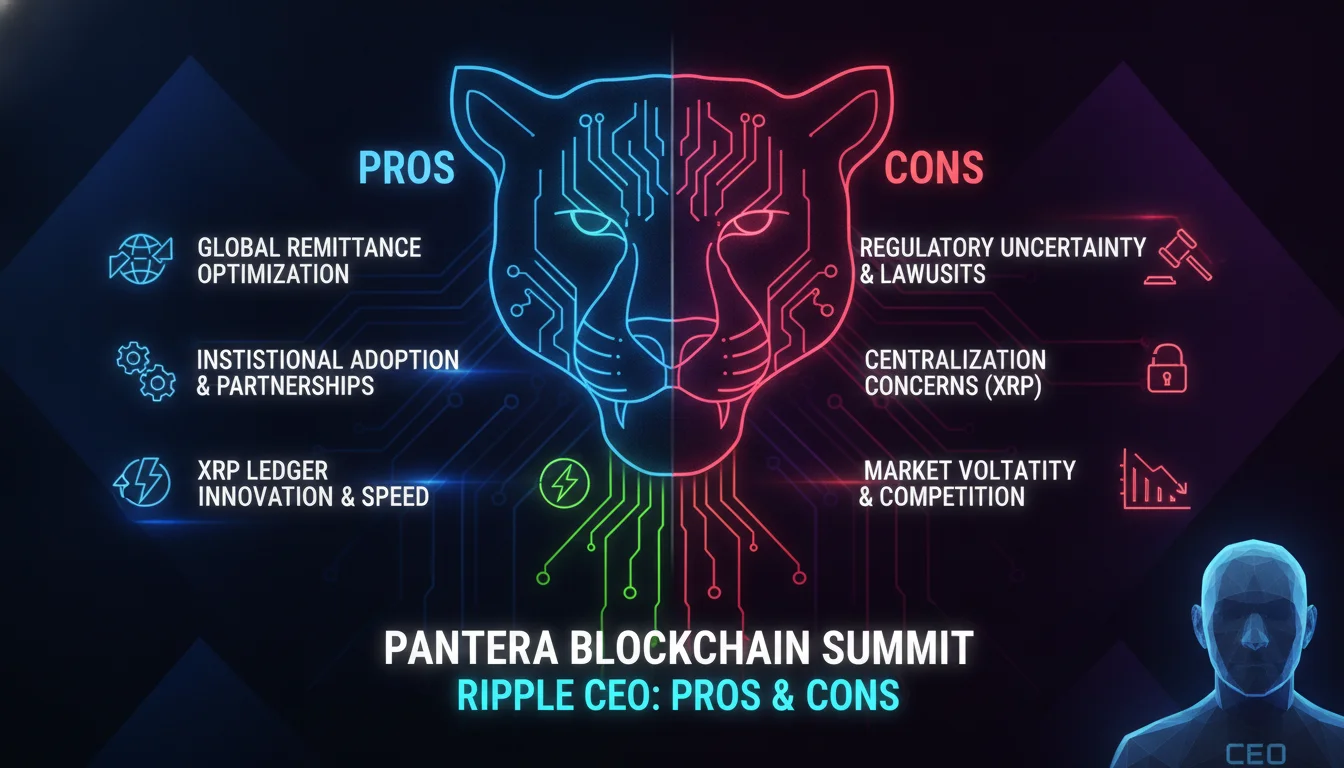
Pros
- High-signal environment: The invite-only format filters for serious builders and institutional capital, making conversations more substantive than open conferences.
- Track record of accuracy: Summit themes from 2013 through 2025 have consistently anticipated major market shifts, from DeFi to tokenization.
- Cross-industry convergence: Bringing AI, fintech, and blockchain builders into the same room accelerates practical collaboration that siloed events cannot produce.
- Institutional credibility: Pantera’s fund structure and decade-plus track record gives the summit weight that newer event organizers lack.
Cons
- Access is restricted: The invite-only model means most builders and developers cannot attend, limiting direct knowledge transfer to the broader community.
- Geographic concentration: Despite the Singapore 2022 edition, the summit has been primarily US-focused, underrepresenting builders from Asia, Africa, and Latin America where adoption is often fastest.
- Lag between discussion and documentation: Summit insights filter out slowly through blog posts and letters rather than live-streamed sessions, reducing real-time impact.
Comparative Analysis of Blockchain Events
| Event | Year Established | Focus Areas | Notable Speakers |
|---|---|---|---|
| Pantera Blockchain Summit | 2013 | Blockchain, Stablecoins, AI Integration | Brad Garlinghouse, Dan Morehead |
| Consensus | 2015 | Blockchain Technology, Cryptocurrency | Vitalik Buterin, Elizabeth Stark |
| Devcon | 2014 | Ethereum Development, Smart Contracts | Joseph Lubin, Vitalik Buterin |
| Blockchain Expo | 2017 | Enterprise Blockchain Solutions | Various Industry Leaders |
What the Pantera Blockchain Summit Ripple CEO Session Signals for Builders
The Pantera Blockchain Summit Ripple CEO conversation is worth reading carefully if you are building infrastructure, not just trading assets. Garlinghouse’s framing of financial system re-wiring is a product thesis, not a marketing line. Ripple has been building cross-border payment rails for years. RLUSD is the stablecoin layer on top of those rails. The regulatory work Garlinghouse keeps pushing for is the compliance wrapper that makes institutional adoption possible.
For developers building on EVM-compatible chains or exploring Ripple’s XRP Ledger, the signal from the summit is consistent with what on-chain data shows: stablecoin volume is growing, real-world asset tokenization is accelerating, and the infrastructure layer is where durable value accrues. If you want to understand how serious capital thinks about these trends, the Pantera blockchain letter series is required reading alongside the summit highlights.
If you are building in this space and want to connect with a network that takes these questions seriously, explore what Digital Blockchains is doing at the protocol and tokenomics layer.
Frequently Asked Questions
What is the Pantera Blockchain Summit?
The Pantera Blockchain Summit is an invite-only annual event that Pantera Capital has hosted since 2013, bringing together founders, investors, regulators, and protocol builders to discuss the most important developments in blockchain technology. The 2025 edition was held at The Plaza in New York City and marked the tenth summit in the series.
What did Ripple CEO Brad Garlinghouse say at the Pantera Blockchain Summit?
At the Pantera Blockchain Summit, Ripple CEO Brad Garlinghouse stated, “This represents the future re-wiring of the financial system,” in a fireside conversation hosted by Pantera founder Dan Morehead. He also addressed the $1 trillion stablecoin migration thesis and the convergence of AI with blockchain infrastructure.
Who is Pantera Capital and what do they do in crypto?
Pantera Capital is an institutional asset manager focused exclusively on blockchain and digital assets, operating since 2013 across multiple fund structures including venture, early-stage tokens, liquid tokens, and Bitcoin. They are one of the longest-running dedicated crypto investment firms and host the annual Pantera Blockchain Summit to advance industry discussion.
What did Standard Chartered predict about stablecoins?
Standard Chartered published research predicting that a boom in USD-backed stablecoins could pull $1 trillion worth of deposits out of emerging market banks over roughly three years. The bank stated directly: “We see the potential for $1 trillion to leave emerging market banks and move into stablecoins in the next three years or so.”
How has the blockchain industry grown since the first Pantera summit?
When Pantera hosted its first summit in Dan Morehead’s Lake Tahoe house in 2013, the total crypto market was approximately $2 billion. By the time of the 2025 New York summit, the market had grown to over $4 trillion, reflecting more than a decade of infrastructure development, institutional adoption, and protocol maturation.