Key Takeaways
- The Malta Blockchain Summit debuted on November 1–2, 2018, at the InterContinental Hotel in St. Julian’s, Malta.
- Founded by Eman Pulis, the event attracted over 8,500 attendees and featured speakers including John McAfee and the Winklevoss twins.
- In 2019, it expanded into the Malta AI & Blockchain Summit with two editions, each expecting more than 10,000 visitors and 400 exhibitors.
- The 2018 summit generated over €100 million in deals and hosted an ICO pitch competition won by AEToken for €25,000.
- The event evolved into AIBC World, which now runs larger summits globally, including AIBC Rome 2026 with 30,000 delegates.
The Malta Blockchain Summit is a blockchain and cryptocurrency conference held in Malta from 2018 to 2019, founded by Eman Pulis. It evolved into the AIBC World summit series, with the next edition scheduled for Rome, Italy, from November 2–5, 2026.
What Was the Malta Blockchain Summit?
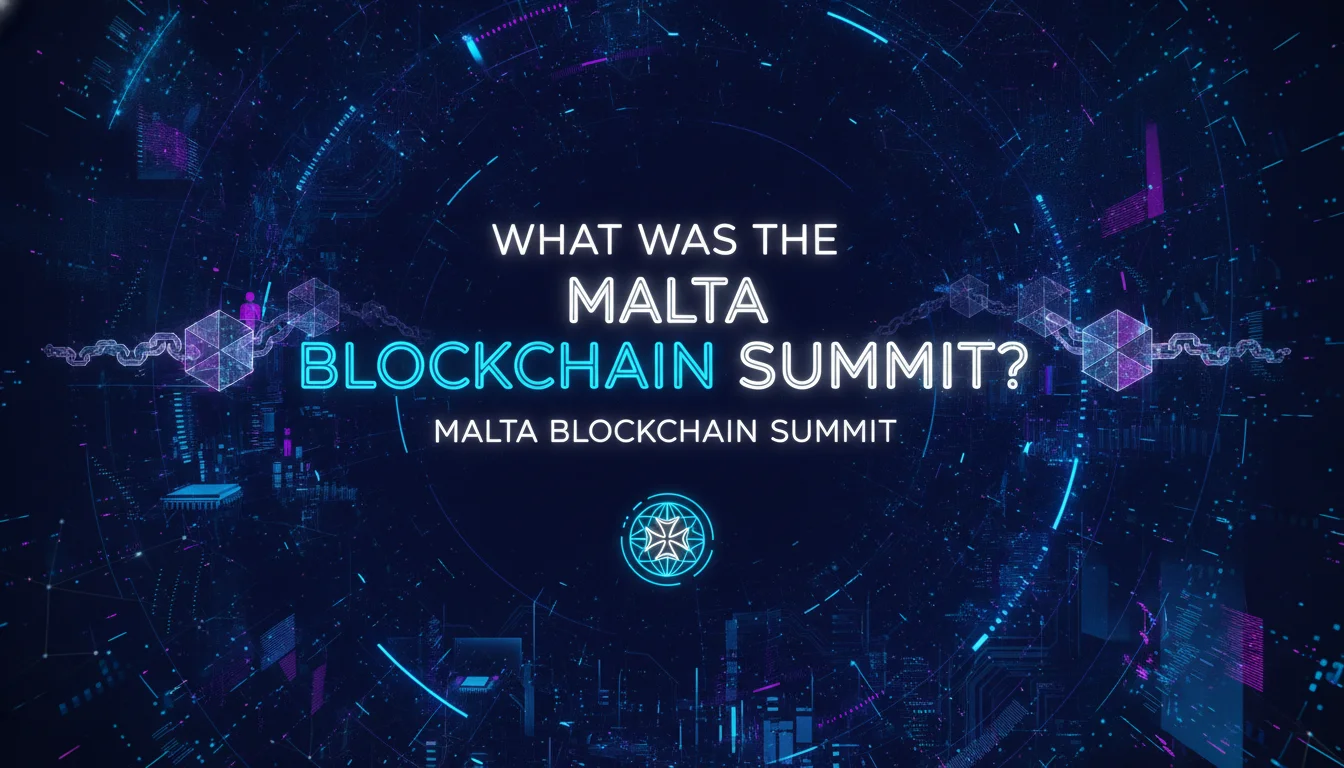
The blockchain summit was a conference that positioned Malta as a global hub for blockchain and cryptocurrency innovation. It brought together developers, investors, regulators, and entrepreneurs to discuss distributed ledger technology and its real-world applications. Held on the island, the event combined technology exhibitions, regulatory discussions, and investment opportunities under one roof.
Origins and Founder
Eman Pulis, a Maltese entrepreneur also known for founding the SiGMA conference, one of the world’s largest iGaming events, created the summit. According to the Digital Watch Observatory, the this type of summit was “one of the biggest and most important events on issues of blockchain technology and cryptocurrency.” Pulis used Malta’s pro-blockchain regulatory environment to build an event that drew international attention from both the crypto community and traditional finance.
2018 Edition Highlights
The inaugural this kind of summit took place on November 1–2, 2018, at the InterContinental Hotel in St. Julian’s. It featured a keynote by Malta’s then-Prime Minister Joseph Muscat and speakers from more than 200 prominent companies. The two-day program included workshops, a blockchain hackathon, and an ICO competition. The hackathon started on October 31, 2018, one day before the main event. Actual attendance exceeded 8,500 delegates, surpassing the initial projection of 5,000 delegates reported by BlockchainEvent.com. That turnout cemented the event’s status as a must-attend for serious blockchain builders.
Malta AI & Blockchain Summit 2019: Expansion and Growth
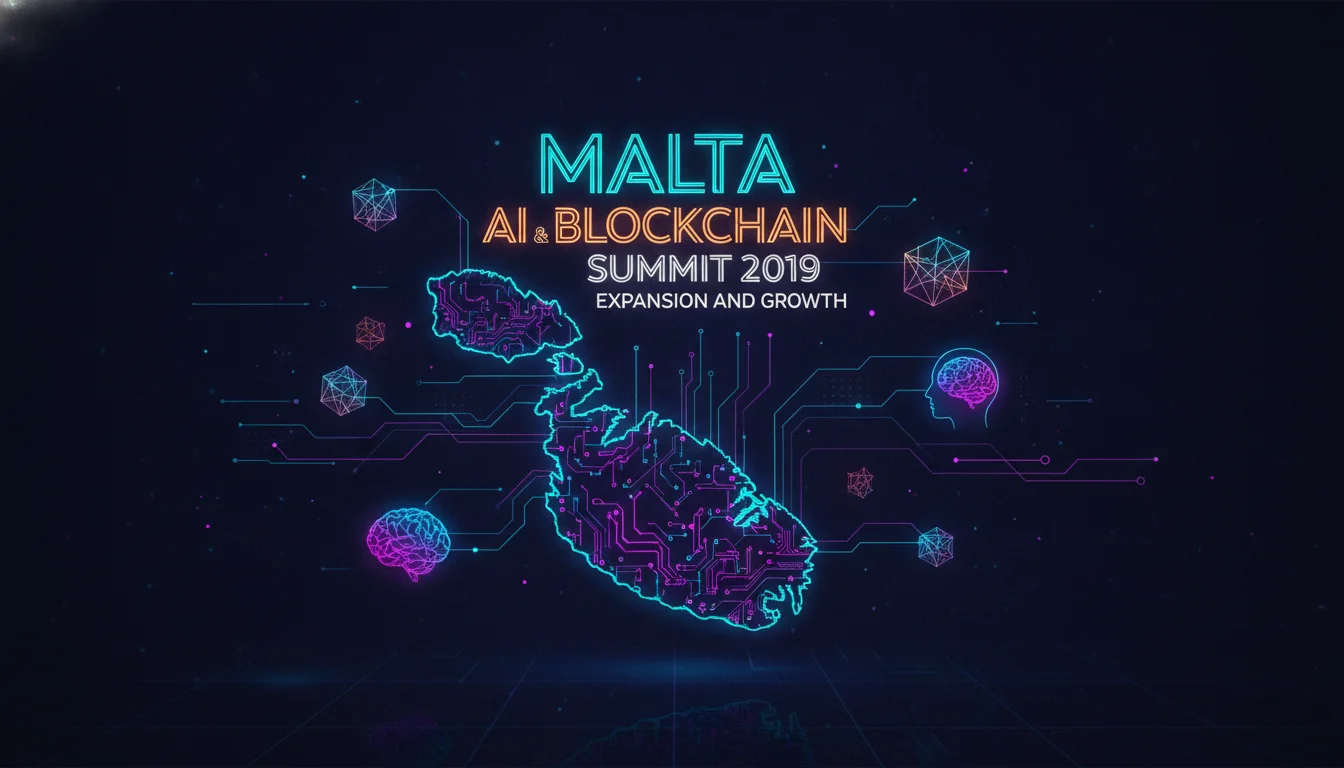
After the success of 2018, the event was rebranded as the Malta AI & Blockchain Summit and expanded in both size and scope. The integration of artificial intelligence into the program reflected the growing convergence of two frontier technologies that were increasingly sharing infrastructure, tooling, and investor attention.
Spring and Autumn Editions
In 2019, the summit ran two editions. The spring edition took place May 23–24, 2019, at the Hilton Malta in St. Julian’s. A second edition followed on November 7–8, 2019. According to WorldCoinIndex, each 2019 event expected more than 10,000 visitors, 400 exhibitors, and 1,000 investors, reflecting accelerated interest in both AI and blockchain. Running two annual editions signaled Malta’s ambition to become a permanent fixture on the global tech calendar.
Attendance and Deal Flow
The 2018 summit generated deals surpassing €100 million, according to event organizers. That deal flow demonstrated Malta’s ability to attract serious blockchain investment and convert networking into tangible business outcomes. The 2019 editions aimed to build on that momentum with larger exhibition spaces, dedicated investor lounges, and structured matchmaking. The expansion also coincided with Malta’s implementation of its Virtual Currency Act, which provided regulatory clarity for crypto exchanges, wallet providers, and token issuers, further boosting investor confidence.
How the Malta Blockchain Summit Became AIBC World
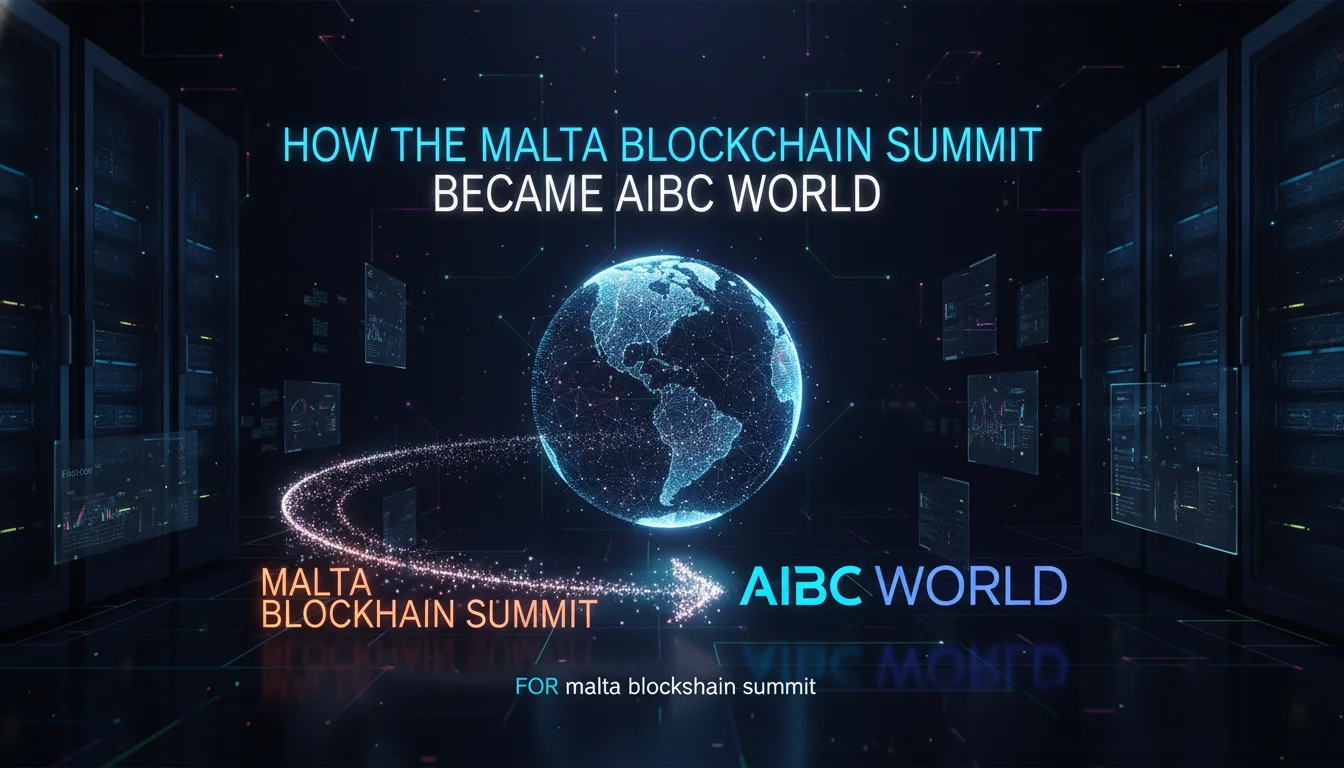
The malta blockchain did not remain a standalone event. Its organizer, Eman Pulis, integrated the summit into the larger SiGMA Group portfolio, eventually rebranding the blockchain and AI conference series as AIBC World. Today, AIBC World operates as a global brand hosting events across Europe, Asia, and the Middle East, carrying forward the original Malta summit’s DNA.
The SiGMA Connection
SiGMA Group, best known for its iGaming conferences, expanded into frontier technologies by launching AIBC (AI and Blockchain) summits. The Malta events served as the foundation. The rebranding from blockchain summit to Malta AI & Blockchain Summit was the first step. Eventually, the event moved beyond Malta entirely, adopting the AIBC World name to reflect its international scope. Eman Pulis’s dual leadership of SiGMA and AIBC ensured cross-pollination between gaming, fintech, AI, and blockchain audiences, a differentiator that few other event organizers can replicate.
AIBC World Rome 2026
The next major AIBC World event is scheduled for November 2–5, 2026, in Rome, Italy. According to the official AIBC World website, the Rome summit will feature 1,000 exhibitors, 300 speakers, and 30,000 delegates. Confirmed speakers include Tim Draper (founder of Draper Associates), Reeve Collins (co-founder of STBL and WeFi), Kenneth Brincat (CEO of Malta Digital Innovation Authority), and Charlie Lee (creator of Litecoin). This scale shows how the this type of summit’s original concept has grown into a massive multi-industry event covering AI, gaming, fintech, and digital marketing.
Pros and Cons of Attending a Malta Blockchain Summit-Style Event
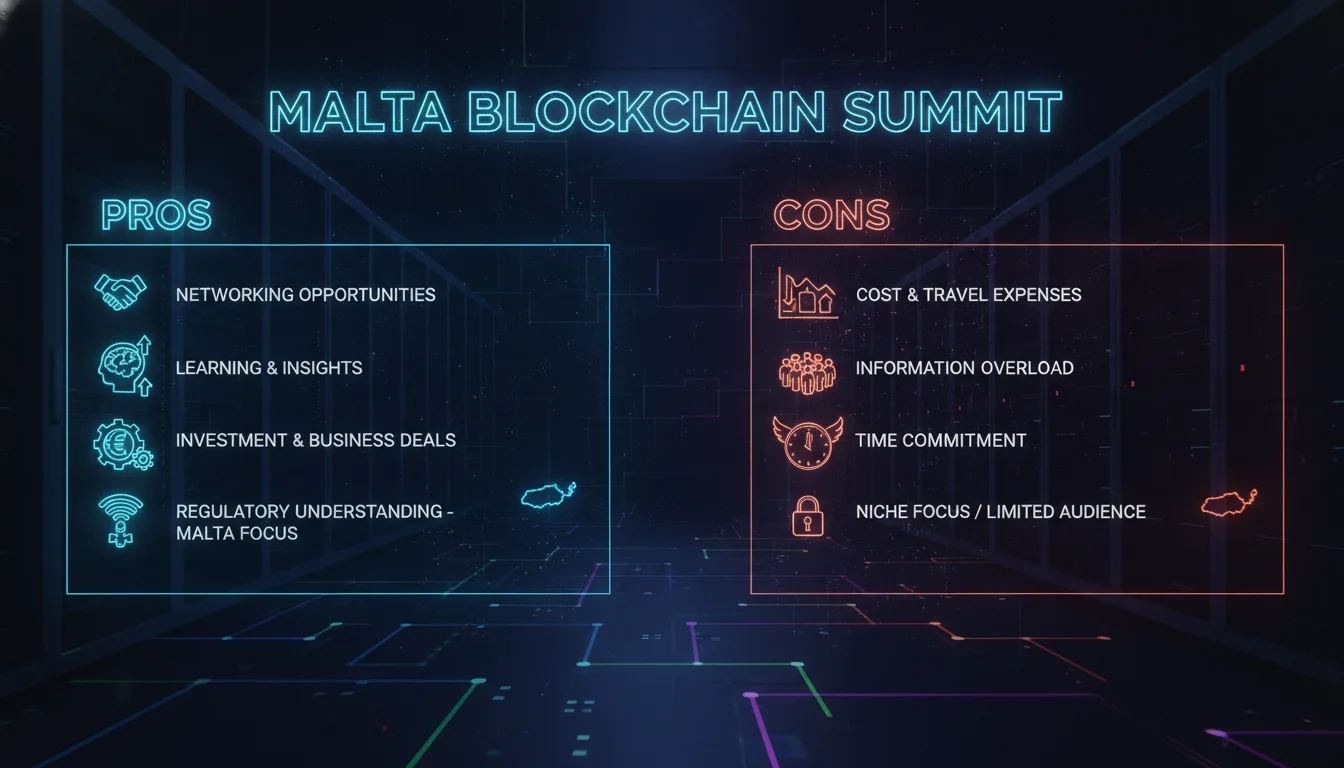
Deciding whether to attend AIBC World or a similar large-scale blockchain summit requires an honest look at what these events deliver and where they fall short.
Pros
- Deal flow at scale: The 2018 Malta event generated over €100 million in deals. Large summits concentrate capital and decision-makers in one place, compressing months of outreach into two days.
- Regulatory access: Events like the this kind of summit consistently feature regulators from bodies like the MFSA and MDIA, giving builders direct access to the people shaping the rules.
- Cross-industry exposure: AIBC World combines blockchain, AI, gaming, and fintech under one roof, creating serendipitous connections that single-track conferences cannot replicate.
- Startup launchpad: The ICO pitch competition format, where 19 startups competed for real capital in 2018, gives early-stage projects a credible stage and investor eyeballs.
- Speaker quality: From blockchain co-inventors like Dr. W. Scott Stornetta to venture capitalists like Tim Draper, the speaker lineups attract genuine domain experts, not just promotional voices.
Cons
- Signal-to-noise ratio: At 30,000 delegates, AIBC Rome 2026 is enormous. Meaningful one-on-one conversations require advance scheduling and a clear targeting strategy, or you’ll spend two days in hallway traffic.
- Cost barrier: Travel, accommodation, and ticket costs for flagship European summits add up quickly, particularly for early-stage founders without a travel budget.
- Broad scope dilutes depth: Combining gaming, fintech, AI, and blockchain in one event means no single track gets the deep technical treatment that a protocol-focused conference would offer.
- Hype cycles: Large crypto conferences historically attract promotional noise alongside genuine builders. Filtering signal from marketing requires discipline and pre-event research.
High-Profile Speakers and Companies at the Malta Summits
One of the main draws of the malta blockchain was its ability to attract high-profile speakers from both the crypto world and traditional institutions. These lineups gave attendees direct access to decision-makers and genuine thought leaders.
2018 Speaker Lineup
The 2018 blockchain summit featured a who’s-who of crypto pioneers. Confirmed speakers included John McAfee, the Winklevoss twins (founders of Gemini), and Dr. W. Scott Stornetta, a co-inventor of blockchain technology. Prime Minister Joseph Muscat delivered the opening keynote, underscoring government support for the sector. The speaker roster also included representatives from over 200 companies, according to the Digital Watch Observatory, providing a broad cross-section of industry expertise.
2019 and 2026 Speakers
In 2019, the speaker list expanded to include AI leaders, regulators, and enterprise executives. The 2026 AIBC Rome edition lists over 300 speakers, including Tim Draper, Reeve Collins, Dr. Marwan Alzarouni (CEO of Dubai Blockchain Center), and Arthur Breitman (co-founder of Tezos). The presence of regulators like Christopher Aquilina from the Malta Financial Services Authority (MFSA) and Kenneth Brincat from the MDIA reflects the event’s ongoing policy relevance. Past speakers at AIBC World events have included European Parliament President Roberta Metsola, entrepreneur Gary Vaynerchuk, and musician Akon, demonstrating the brand’s ability to attract mainstream attention alongside technical depth.
“The this type of summit is one of the biggest and most important events on issues of blockchain technology and cryptocurrency.” – Digital Watch Observatory
Inside the Malta Blockchain Summit: Hackathons and ICO Pitches
Beyond keynote sessions, the this kind of summit was known for its competitive and hands-on programming, including a blockchain hackathon and an ICO pitch competition that awarded real funding. ICO stands for Initial Coin Offering, a fundraising method in which new cryptocurrency projects sell tokens to investors in exchange for capital.
Blockchain Hackathon
A hackathon is an event where developers collaborate intensively on software projects, often over 24–72 hours. The 2018 malta blockchain included a blockchain hackathon that started on October 31, one day before the main conference. Participants built decentralized applications (dApps), smart contracts, and blockchain-based tools, competing for prizes and recognition. Smart contracts are self-executing agreements with terms written directly into code on a blockchain, eliminating the need for intermediaries. The hackathon tradition continues in AIBC World events, which often feature developer tracks and startup showcases.
ICO Pitch Competition
The ICO pitch competition was a highlight of the 2018 event. Nineteen blockchain startups competed head-to-head for two cheques worth €25,000 each. According to Jason Fernandes, a co-founder of winning startup AEToken, the judges were led by investor Mark Hamade. AEToken won for its blockchain-based affiliate marketing platform, which addressed systemic problems including delayed payments, fraud, and high minimum payouts. The competition showed the summit’s role as a launchpad for real-world blockchain businesses, turning pitches into funded projects.
“AEToken won the best ICO pitch competition at the blockchain summit… the ICO pitch contest saw 19 blockchain startups in a head to head battle for two cheques, each worth 25,000€.” – Jason Fernandes, AEToken Co-Founder
Malta’s Regulatory Framework and the Blockchain Island
Malta earned the nickname “Blockchain Island” due to its forward-thinking regulatory approach, which directly influenced the summit’s creation and success. The country’s willingness to pass crypto-specific legislation before most other EU member states made it a magnet for blockchain companies seeking legal certainty.
The Virtual Currency Act
Malta passed the Virtual Currency Act in 2018, one of the first comprehensive legal frameworks for cryptocurrencies and ICOs in Europe. The act defined virtual currencies, established licensing requirements for exchanges and wallet providers, and created a regulatory sandbox for innovative projects. The Facebook event page for the summit noted that it was “inspired by the recent launch of the Virtual Currency Act,” confirming the law’s direct role in attracting the event. This legislation provided legal certainty that many other jurisdictions lacked at the time.
MDIA and Ongoing Supervision
The Malta Digital Innovation Authority (MDIA) was established to oversee innovative technology arrangements and certify blockchain platforms. Kenneth Brincat, CEO of MDIA, is a recurring speaker at AIBC events, including Rome 2026. The Malta Financial Services Authority (MFSA) also plays a key role in fintech supervision, and its Head of FinTech Supervision, Christopher Aquilina, appears at the summits. This dual regulatory structure, MDIA for technology and MFSA for financial services, is a key differentiator that made Malta an attractive home for blockchain companies and a natural host for the summit.
Comparison: Malta Blockchain Summit vs Other Major Blockchain Events
Understanding how the this type of summit compares to other blockchain conferences helps attendees choose the right event for their goals. Below is a comparison of three major events, including the DC Blockchain Summit and AIBC World Rome.
| Event | Location & Dates | Scale | Focus | Notable Speakers |
|---|---|---|---|---|
| this kind of summit (2018) | St. Julian’s, Malta, Nov 1–2, 2018 | 8,500+ attendees, 200+ companies | Blockchain, crypto, ICOs | Joseph Muscat, John McAfee, Winklevoss twins |
| Malta AI & Blockchain Summit (2019) | Hilton Malta, May 23–24 & Nov 7–8, 2019 | 10,000+ visitors expected, 400 exhibitors | AI and blockchain convergence | Scott Stornetta, industry leaders |
| AIBC World Rome 2026 | Rome, Italy, Nov 2–5, 2026 | 1,000 exhibitors, 300 speakers, 30,000 delegates | AI, blockchain, gaming, fintech | Tim Draper, Reeve Collins, Kenneth Brincat |
| DC Blockchain Summit 2027 | Washington DC, April 6–7, 2027 | Not specified | Policy and regulation | Paul Atkins, Cynthia Lummis, Richard Teng |
Malta vs DC Blockchain Summit
The DC Blockchain Summit, organized by the Digital Chamber, focuses on U.S. policy and regulatory dialogue, while the malta blockchain historically emphasized investment, technology demonstration, and European regulatory leadership. For businesses seeking government engagement and U.S. policy influence, the DC summit is a better fit. For deal-making, startup exposure, and cross-border networking, the Malta/AIBC lineage is stronger.
Malta vs AIBC Rome
AIBC World Rome is the direct successor to the Malta event, but at a much larger scale. Where the 2018 Malta summit drew 8,500 attendees, AIBC Rome 2026 expects 30,000 delegates. The Rome edition combines AI, gaming, fintech, and digital marketing, expanding beyond a blockchain-only focus. Attendees interested in cross-industry collaboration and large-scale exhibitions should choose Rome, while those seeking a more intimate, regulation-focused event might prefer a smaller policy summit.
How to Attend the Malta Blockchain Summit Successor: AIBC World 2026
Since the original blockchain summit no longer runs as a standalone event, the best way to experience its legacy is to attend an AIBC World event. Here is a step-by-step guide to planning your participation.
Step 1: Choose Your Event and Location
Review AIBC World’s upcoming events, including Rome (November 2–5, 2026) and other editions in Eurasia and Dubai. Determine whether your primary interest is blockchain, AI, gaming, or fintech, and select the event that aligns with your goals. The Rome event is the flagship European summit, offering the broadest cross-industry agenda.
Step 2: Register and Secure Tickets
Visit the official AIBC World website (aibc.world) to purchase tickets. Early bird discounts are often available. For the 2019 Malta events, a 25% discount code was offered through partners like WorldCoinIndex; similar promotions may exist for 2026. Consider platinum tickets if you want access to exclusive networking events, such as the golf tour at Marco Simone Golf and Country Club listed in the Rome agenda.
Step 3: Plan Your Agenda and Networking
Use the official event app to schedule meetings, select conference tracks, and register for workshops. Arrive on the designated arrival day (Monday, November 2) to settle in and attend informal networking meet-ups. Prioritize visiting the exhibition floor to meet exhibitors and participating in startup pitch sessions if you are an investor looking for deal flow.
The Enduring Legacy of the Malta Blockchain Summit
The this type of summit was more than a conference. It was a catalyst that helped establish Malta as a global blockchain hub. Its evolution into AIBC World shows the scalability of the original vision and the enduring relevance of its core themes: regulation, investment, and cross-industry collaboration.
Key Lessons
The summit’s success came down to three factors: a clear regulatory framework in the Virtual Currency Act, high-profile speakers who drew serious capital, and tangible investment outcomes like the €25,000 ICO pitch prize and over €100 million in deals. These elements remain central to AIBC World events today, proving that a well-executed summit can accelerate an entire ecosystem.
Future Outlook
As blockchain technology matures and converges with AI, the need for cross-industry summits grows. The this kind of summit’s legacy lives on through AIBC World, which continues to attract tens of thousands of delegates globally. For anyone researching the Malta Blockchain Summit, the key takeaway is that its ecosystem has expanded far beyond Malta, and the next opportunity to engage is AIBC Rome 2026, a direct descendant of the original Malta event.
If you’re building at the protocol layer or designing tokenomics for a new project, events like these are where your next co-founder, investor, or regulatory ally is standing. Apply to the Genesis Cohort at Digital Blockchains and connect with a network that takes infrastructure seriously.
Frequently Asked Questions
What is the Malta Blockchain Summit?
The Malta Blockchain Summit was a blockchain and cryptocurrency conference held in Malta in 2018 and 2019, founded by Eman Pulis. It later evolved into the AIBC World summit series, which now hosts events globally.
When did the Malta Blockchain Summit take place?
The inaugural event took place November 1–2, 2018, at the InterContinental Hotel in St. Julian’s, Malta. In 2019, it expanded to two editions on May 23–24 and November 7–8.
Who founded the Malta Blockchain Summit?
Eman Pulis, a Maltese entrepreneur and founder of SiGMA Group, founded the Malta Blockchain Summit. He also created the AIBC World brand as an evolution of the original event.
How many people attended the Malta Blockchain Summit?
The 2018 event attracted over 8,500 attendees, surpassing initial projections of 5,000. The 2019 editions each expected more than 10,000 visitors, reflecting rapid growth in interest across both AI and blockchain.
Is the Malta Blockchain Summit still happening in 2026?
No standalone Malta Blockchain Summit is scheduled for 2026. The event evolved into AIBC World, which hosts larger summits globally, including AIBC Rome from November 2–5, 2026.
What was the ICO pitch competition at the Malta Blockchain Summit?
In 2018, 19 startups competed for two €25,000 prizes. AEToken won best ICO pitch for its blockchain-based affiliate marketing platform, judged by a panel led by investor Mark Hamade.