- Speed and cost: Solana supports over 50,000 peak TPS with average fees of 0.000005 SOL, according to Boosty Labs.
- Definition: A Solana blockchain development company builds dApps, tokens, smart contracts, and DeFi platforms on Solana’s proof-of-stake network.
- 2026 builder shift: Teams are prioritizing production-ready architecture, cross-chain integration, and performance stability over speculative launches.
- Services: Typical offerings include smart contracts, tokenization, NFT marketplaces, wallets, exchanges, and lending platforms.
- Selection: Evaluate companies by technical depth in Rust, C, and C++, security audits, delivered projects, and pricing transparency.
A Solana blockchain development company designs, builds, and deploys decentralized applications, smart contracts, and token systems on Solana’s high-throughput proof-of-stake network. These firms handle everything from architecture to launch.
Key Takeaways
- Solana handles over 50,000 peak TPS with sub-cent fees, which is why builders keep choosing it for high-volume applications.
- A dedicated Solana shop differs from a generalist agency by depth in Proof of History, Sealevel, Tower Consensus, and the Anchor framework.
- 2026 builder behavior favors production-ready systems and cross-chain thinking over speculative token launches.
- Security audits, fuzzing, and formal verification are non-negotiable given Solana’s history of network outages under heavy load.
- Pricing ranges roughly $51 to $150 per hour depending on region and specialization, so match rate to delivered scope.
- Rust is the primary language for Solana programs, with C and C++ used for performance-critical modules.
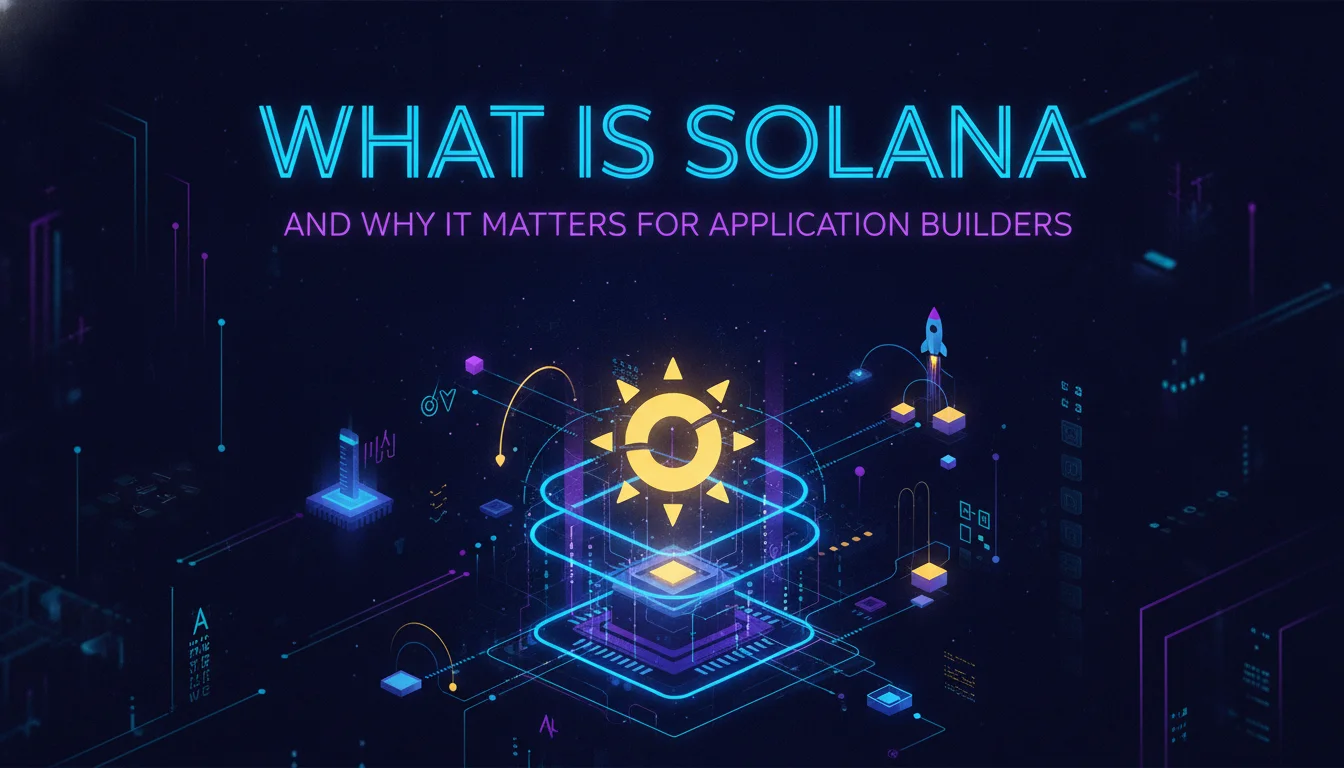
What Is Solana and Why It Matters for Application Builders
Solana’s Origins and Network Launch
Solana is a public blockchain platform built on a proof-of-stake consensus mechanism with smart contract functionality baked into its base layer. According to Wikipedia, the network was founded in 2018 by Anatoly Yakovenko and Raj Gokal, and launched in March 2020 by their San Francisco-based company, Solana Labs. Anatoly Yakovenko, a former Qualcomm engineer, began exploring scalable blockchain architecture back in 2017, as noted by BSEtec. The platform’s native cryptocurrency is SOL, and its code repository ships under the Apache 2.0 license.
Proof of Stake and Smart Contract Capability
Solana pairs a proof-of-stake model with native smart contract functionality to support decentralized applications at high transaction volume. This positioning made Solana a genuine competitor to Ethereum, especially during the NFT expansion in 2021. For application builders, the protocol combines fast finality, low fees, and a growing developer ecosystem. A development company leverages this architecture to build products that need high transaction volumes without sacrificing decentralization.
Solana in the Broader Blockchain Ecosystem
The 2026 ecosystem feels less speculative and more execution-driven than prior cycles. According to Aria Quinn’s 2026 research on Medium, serious builders now prioritize Solana blockchain app development over quick launches, and cross-chain thinking extends to Ethereum, Polygon zkEVM, and modular ecosystems. This shift means a this type of company has to understand not just Solana’s runtime but interoperability with Ethereum, Polkadot and Parachains, Avalanche Subnets, Arbitrum Orbit, and zkSync Hyperchains.
What a Solana Blockchain Development Company Does
From Protocol Understanding to Production Deployment
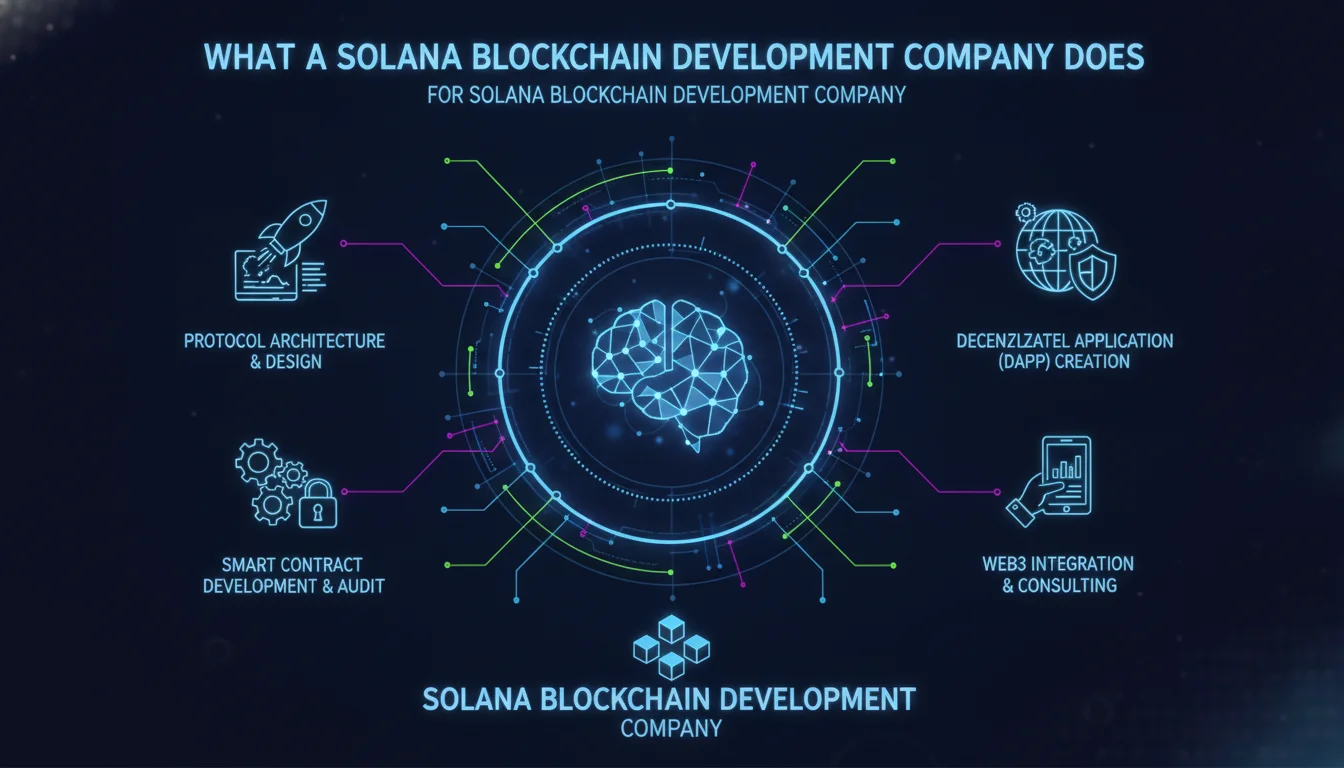
A this kind of development company is a specialized service provider that designs, builds, deploys, and maintains decentralized applications, tokens, and infrastructure on Solana. The scope goes well beyond writing smart contracts. It covers backend systems, token logic, scalable infrastructure, analytics dashboards, admin tooling, and enterprise UX layers. According to Accubits, end-to-end services can span Solana development, tokenization, and custom dApp development for startups, Fortune 500 businesses, and federal agencies.
The Difference Between General Blockchain Agencies and Solana Specialists
General blockchain agencies often offer Solana as one of many chains on a menu. A dedicated the blockchain development company differs in its depth on Solana-specific architecture: Sealevel parallel execution, Proof of History, Tower Consensus, and the Anchor framework. 2026 research identified teams like Ment Tech Labs, HashCash Consultants, and LeewayHertz as mature Solana development companies because they deliver full Solana software development solutions rather than surface-level features. These firms treat Solana as infrastructure, not just an app layer.
“The strongest teams aren’t chasing trends. They’re building scalable systems that work,” wrote Aria Quinn after reviewing who’s actually building on Solana in 2026.
Why Execution-Driven Teams Are Choosing Solana in 2026
The current builder landscape rewards production-ready systems built for scale, performance, and cross-chain relevance. A company that combines performance, security, and long-term scalability tends to be the preferred partner for teams migrating from EVM-based systems. Performance stability now matters more than raw TPS claims, and serious teams are choosing durable architecture over short-term hype.
Core Solana Architecture and Performance Characteristics
Proof of History and Tower Consensus
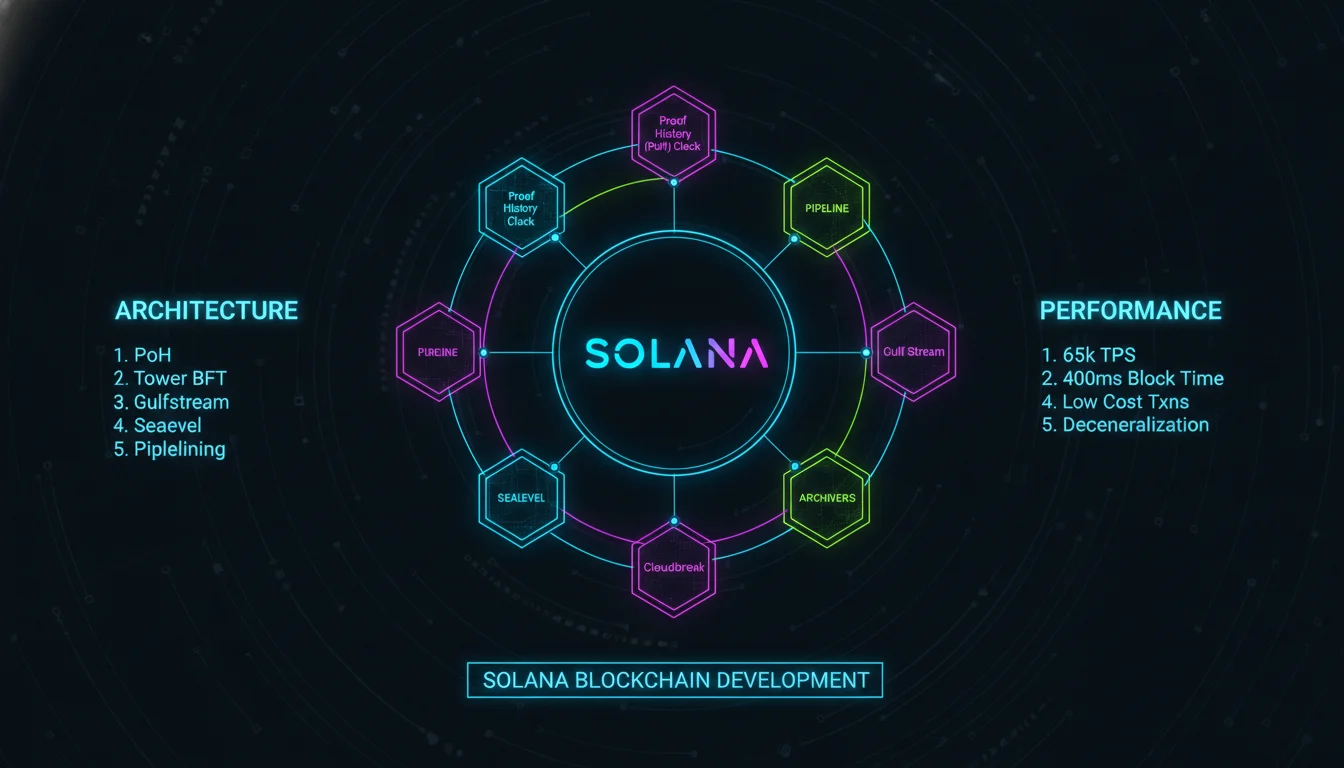
Proof of History is a mechanism that gives the blockchain a global source of time by generating a chronicle of previous events. According to Boosty Labs, Solana’s proof-of-stake system is backed by Tower Consensus, a variant of Practical Byzantine Fault Tolerance that uses this synchronized clock to cut the processing power required to validate transactions. This design lets the network reach consensus without recomputing timestamps on every prior transaction.
Sealevel and Parallel Execution
Sealevel is a transaction parallelization technology that enables a parallel smart contract execution environment. It optimizes resource use and lets Solana scale horizontally across processors and SSDs. A solana blockchain needs to understand Sealevel deeply because it directly shapes smart contract design, state isolation, and performance under concurrent load.
Throughput, Fees, and Validator Decentralization
Solana supports over 50,000 transactions per second at peak load, making it one of the fastest blockchains currently in operation. According to Boosty Labs, this is almost 1,000 times faster than Bitcoin’s roughly 5-7 TPS and over 3,000 times faster than Ethereum’s roughly 15 TPS. Average block time runs between 400 and 800 milliseconds, and the average transaction fee sits at 0.000005 SOL, a tiny fraction of one cent. The network has nearly 1,000 validators, and anyone can run one provided their hardware meets minimum specifications.
Core Services of a Solana Blockchain Development Company
Smart Contract and Token Development
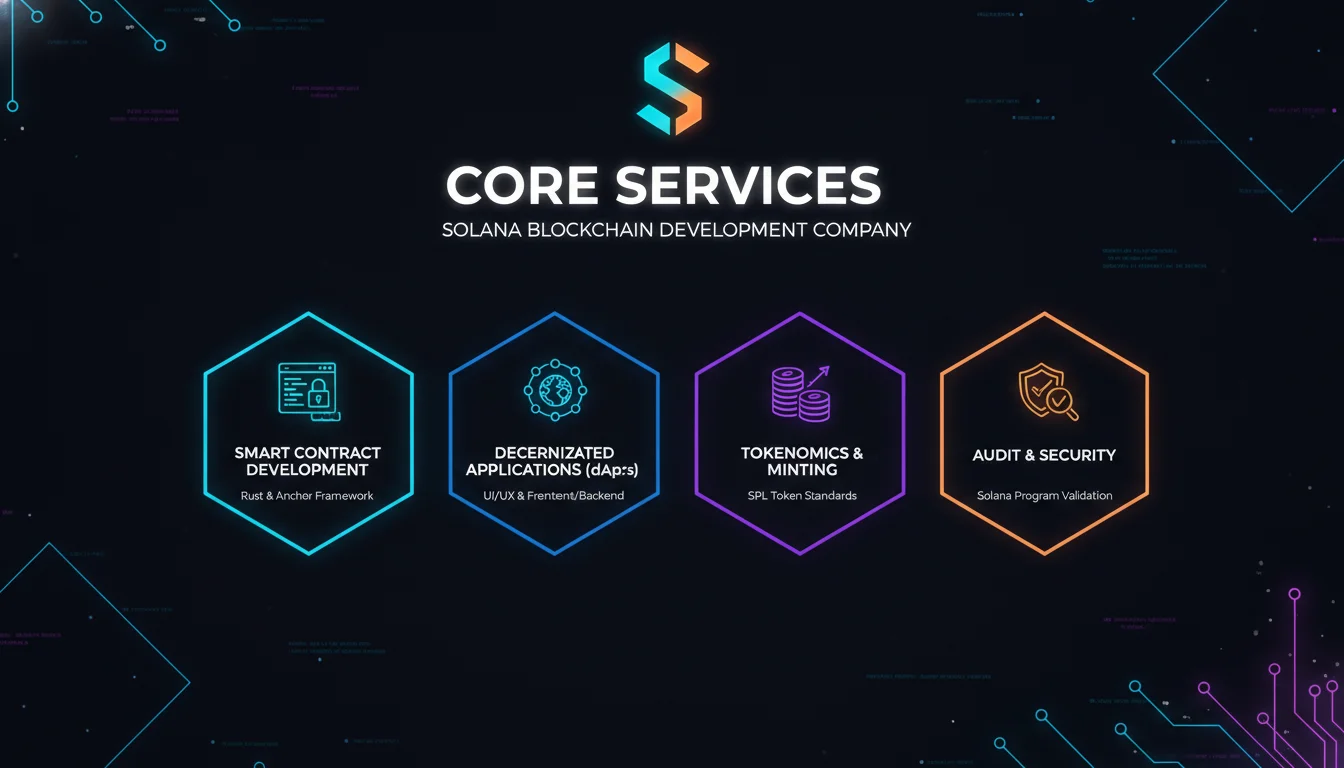
A core offering is custom Solana smart contract development. According to Oodles Technologies, Solana smart contract developers build custom contracts using Rust, C, and C++. These contracts automate transactions and business logic, making them faster and safer than manual processes. Token development covers building financial instruments including banking, payments, lending platforms, and NFTs.
DeFi, Exchange, and NFT Marketplace Solutions
A development company typically delivers DeFi products like lending platforms, automated market makers, decentralized exchanges, and staking mechanisms. Solana lending platforms let crypto-based loans move in a trustless manner without middlemen. NFT marketplace development covers storefront design, minting, multi-token support, sales, and Web3 optimization. Exchange development gives users control over privacy and data security while enabling smooth token purchases.
Wallet, DApp, and Enterprise Integration Services
Wallet development produces regulation-compliant, easy-to-use web and mobile wallets with QR scanners, multi-token support, in-chat payments, multilingual options, and NFC support. DApp development on Solana uses SDKs, command-line interfaces, Anchor, and BFT algorithms. A this type of company also handles enterprise integrations, analytics dashboards, and admin tooling for organizations migrating off EVM-based systems.
Solana Use Cases and Industry Applications
Lending, Borrowing, and Decentralized Finance
Solana’s low fees and high throughput suit DeFi applications well. Lending and borrowing platforms benefit from permissioned membership, better scalability, and lower bandwidth usage compared with legacy blockchains. Smart contracts on Solana handle crypto transfers, settlements, and agreements without a third party in the middle. A this kind of development company can build secured, permissionless lending platforms where users trade and safeguard assets through interest-bearing smart contracts.
Payments, Tokenization, and Automated Market Makers
Peer-to-peer payments on Solana enable non-custodial crypto transfers with fast settlement, no counterparty risk, high scalability, and low cost. Tokenizing digital assets on Solana lets users exchange assets digitally without putting the underlying asset at risk, with cheap fees, fast transactions, and greater interoperability. Automated market makers support customizable trading strategies and automate decentralized protocols with reasonable fees and no order limits.
NFTs, Gaming, and Real-Time Data Applications
Solana supports creator-centric NFT marketplaces where users create, trade, and sell unique digital collectibles with low fees and high scalability. Web3 applications in gaming, social media, and data storage also benefit from Solana’s speed. Real-time data applications that need immediate on-chain settlement can lean on Solana’s 400-800 millisecond block times. A the blockchain development company that understands these use cases builds more efficient dApps as a result.
Solana Development Stack: Languages, Frameworks, and Tools
Programming Languages: Rust, C, and C++
Solana program development primarily runs on Rust, with C and C++ supported for performance-critical modules. According to Oodles Technologies, deep proficiency in Rust, C, and C++ is essential for a Solana blockchain development company building custom smart contracts. Rust’s memory safety model lines up well with Solana’s focus on secure contracts. Developers use these languages to write programs that execute on Solana’s runtime.
Frameworks, CLIs, and the Anchor Framework
Solana developers rely on frameworks like the Command-Line Interface and Anchor to build and deploy programs. Anchor cuts boilerplate and gives developers a structured environment for smart contract work. The Solana Docs quickstart lets developers build and deploy a first Solana project directly in the browser. A Solana blockchain development company using these tools can move faster without sacrificing code quality.
AI Coding Agents and the Solana Developer Platform
As of 2026, coding with AI agents has become a normal part of the Solana development workflow. The Solana Docs describe setting up Solana MCP or installing the official Solana skill for coding agents. The Solana Developer Platform, Agent Registry, and Skills products support agent-based development. A Solana blockchain development company integrating AI-assisted development can boost productivity while keeping code auditable.
How to Evaluate and Select a Solana Blockchain Development Partner
Define Your Project Scope First
Selecting the right partner starts with a clear project brief, not a vendor list. List dApp features, token mechanics, expected transaction volume, and compliance requirements before you take a single sales call.
Audit Solana-Specific Knowledge
Verify the team’s real experience with Proof of History, Sealevel, Tower Consensus, and Anchor rather than taking a homepage’s word for it. Ask for architecture diagrams or past technical decisions, not just a client logo wall.
Review Security Practices
Request smart contract audit history, fuzzing results, formal verification reports, and penetration testing documentation. This step alone eliminates most agencies that only claim Solana experience.
Compare Delivery Models
Weigh fixed-price, dedicated team, and outstaffing options against your timeline and budget. Each model shifts risk differently, so match it to how predictable your requirements are.
Request Proofs of Work
Examine delivered Solana projects, GitHub activity, client references, and post-launch support history. A team that can’t show working code on mainnet isn’t ready for your production budget.
Security Audits, Testing, and Formal Verification
Smart contract security is non-negotiable on a network handling this much transaction volume. Specialized firms like Zealynx Security focus on smart contract audits, fuzzing, and formal verification, offering a dedicated client portal and direct access to senior security engineers. A Solana blockchain development company should either run internal audits or partner with independent auditors. Reviewing past exploits and outage discussions is worthwhile too, since Solana’s high transaction volume has contributed to several notable network outages, according to Wikipedia.
According to Wikipedia’s entry on Solana, the platform’s architecture aims to deliver faster transaction speeds and lower costs than other major blockchains, though its high transaction volume has contributed to several notable network outages affecting stability.
Pricing Models and Geographic Considerations
Pricing varies by region and delivery model. According to RightFirms, LeewayHertz charges $101-$150 per hour, Webisoft charges $51-$100 per hour, and Zealynx Security charges $101-$150 per hour. Oodles Technologies states it delivers Solana development services at roughly 30% less than market rates and holds ISO 9001:2015 certification. A solana blockchain development company based in North America may price differently than a firm in Poland or India, so align rates to delivered scope, not hourly cost alone.
Comparing Solana Development Partners: Capabilities and Pricing
Full-Service Solana Blockchain Development Companies
Full-service firms such as Ment Tech Labs, HashCash Consultants, LeewayHertz, and Blockchain App Factory deliver token development, smart contracts, wallets, DeFi, and enterprise integrations. According to Aria Quinn’s research, these firms treat Solana as infrastructure rather than an app layer and combine performance, security, and long-term scalability in their delivery.
Specialized Auditors and Enterprise Consultancies
Some partners focus on narrower layers of the stack. Zealynx Security provides top-tier smart contract audits and blockchain security work. ChainCode Consulting operates more like a protocol research firm, digging into performance optimization and interoperability. Enterprise consultancies such as Accubits offer end-to-end Solana development for Fortune 500 companies and federal agencies. Choosing between a full-service shop and a specialist comes down to whether you need broad delivery or deep technical refinement.
Comparison Table of Notable Solana Development Firms
The table below summarizes companies identified in public 2026 research. It’s not exhaustive, but it illustrates different positioning across the market.
| Company | Founded | Founder | Solana Focus |
|---|---|---|---|
| Ment Tech Labs | 2018 | Ujjawal Sahay | Full-stack Solana software development, backend systems, scalable infrastructure |
| HashCash Consultants | 2015 | Raj Chowdhury | Financial and token platforms, protocol-level customization |
| LeewayHertz | 2007 | Akash Takyar | Product engineering, smart contracts, analytics dashboards, enterprise UX |
| Blockchain App Factory | 2017 | Sathvik Vishwanath | Ecosystem planning, token mechanics, deployment strategy |
| ChainCode Consulting | 2016 | Not publicly listed | Performance optimization, interoperability, technical guidance |
This landscape shows that no single provider fits every project. A founder evaluating a solana blockchain development company should match the firm’s core strengths to the product’s performance, security, and cross-chain requirements.
Pros and Cons of Building on Solana
Pros
- Extremely high throughput, supporting over 50,000 peak TPS with sub-cent fees
- Fast finality with 400-800 millisecond block times, suited to real-time applications
- Growing AI-agent tooling through the Solana Developer Platform and Agent Registry
- Mature ecosystem of specialized development firms with proven Solana-specific expertise
Cons
- History of notable network outages tied to high transaction volume, per Wikipedia
- Smaller validator hardware requirements can raise centralization questions compared to fully permissionless designs
- Rust’s learning curve is steeper than Solidity for teams coming from EVM chains
- Cross-chain interoperability with Ethereum and other ecosystems still requires custom bridging work
Frequently Asked Questions
What is a Solana blockchain development company?
A Solana blockchain development company is a specialized service provider that designs, builds, and deploys decentralized applications, smart contracts, tokens, and infrastructure on Solana. These firms often handle backend systems, token logic, and integration with other blockchain networks.
Who is developing Solana?
Solana was developed by Solana Labs and the Solana Foundation. The network was founded in 2018 by Anatoly Yakovenko and Raj Gokal and launched in March 2020 by Solana Labs in San Francisco.
What companies are building on Solana?
Companies building on Solana include Ment Tech Labs, HashCash Consultants, LeewayHertz, Blockchain App Factory, and ChainCode Consulting, according to 2026 ecosystem research. These firms provide smart contracts, token development, DeFi, NFT marketplaces, and enterprise integrations.
What services does a Solana blockchain development company offer?
Typical services include Solana token development, smart contract development, wallet development, exchange development, lending platforms, dApps, NFT marketplaces, and DeFi solutions. Many companies also provide security audits and enterprise integration.
Could Solana hit $10,000?
No source in the analyzed competitor content provides a reliable price forecast for SOL. Price depends on market adoption, network stability, regulatory developments, and overall crypto market conditions, so treat any specific target as speculation.
What if I invested $1000 in Solana 5 years ago?
We can’t verify historical return data for a $1,000 investment in SOL five years ago from the sources reviewed here. Historical performance varies significantly based on purchase date and market timing, and past returns never guarantee future results.
Picking the right partner is ultimately an architecture decision, not a vendor decision. If you’re building a production Solana application and want a team that treats protocol depth as the starting point rather than a marketing line, apply to the Genesis Cohort at digitalblockchains.com and let’s talk about what you’re shipping.