AI crypto trading bots are software systems that use machine learning to execute cryptocurrency trades automatically, analyzing real-time price data, on-chain metrics, and sentiment signals around the clock. Compare the top 7 platforms for 2026 to find the right fit for your trading goals.
Key Takeaways
- trading bots are software programs that use artificial intelligence to execute trades automatically without human intervention.
- Leading platforms in 2026 include 3Commas, Cryptohopper, Coinrule, Pionex, Bitsgap, Stoic AI, and Bybit Trading Bot, each with distinct AI capabilities.
- AI bots analyze massive datasets, adapt via machine learning, and run 24/7, removing emotional bias from every decision.
- Risks include API key security, overfitting to historical data, and inability to predict sudden market crashes.
- Selection priorities: non-custodial API setup, exchange support, backtesting tools, and transparent pricing.
- Subscription costs range from free (Pionex, Bybit) to over $100/month for institutional-grade features.
What Are AI Crypto Trading Bots?

AI vs. Rule-Based Bots
this type of bots are fundamentally different from traditional rule-based systems, and that distinction matters more than most traders realize. Traditional bots operate on fixed, pre-programmed conditions (buy when RSI < 30, sell when RSI > 70). They are predictable but rigid. this kind of trading bots use machine learning models that continuously learn from new market data, adapting strategies without manual intervention. As Kraken explains, AI-driven algorithms can identify novel opportunities and evolve, while rule-based bots merely execute a backtested script. This adaptability is critical in crypto markets where static rules routinely fail during black swan events.
Core Components of AI Trading Bots
Every AI bot consists of four key layers: data ingestion (price feeds, on-chain metrics, sentiment scores), signal generation (machine learning models that detect patterns), risk management (position sizing and stop-loss logic), and execution (API calls to exchanges). Advanced bots also incorporate natural language processing (NLP) to gauge market sentiment from news and social media, and reinforcement learning to optimize actions based on reward signals. These systems require significant computational resources, which is why most retail traders subscribe to cloud-based platforms rather than running local infrastructure.
How Do AI Crypto Trading Bots Work?
The Data and Machine Learning Pipeline
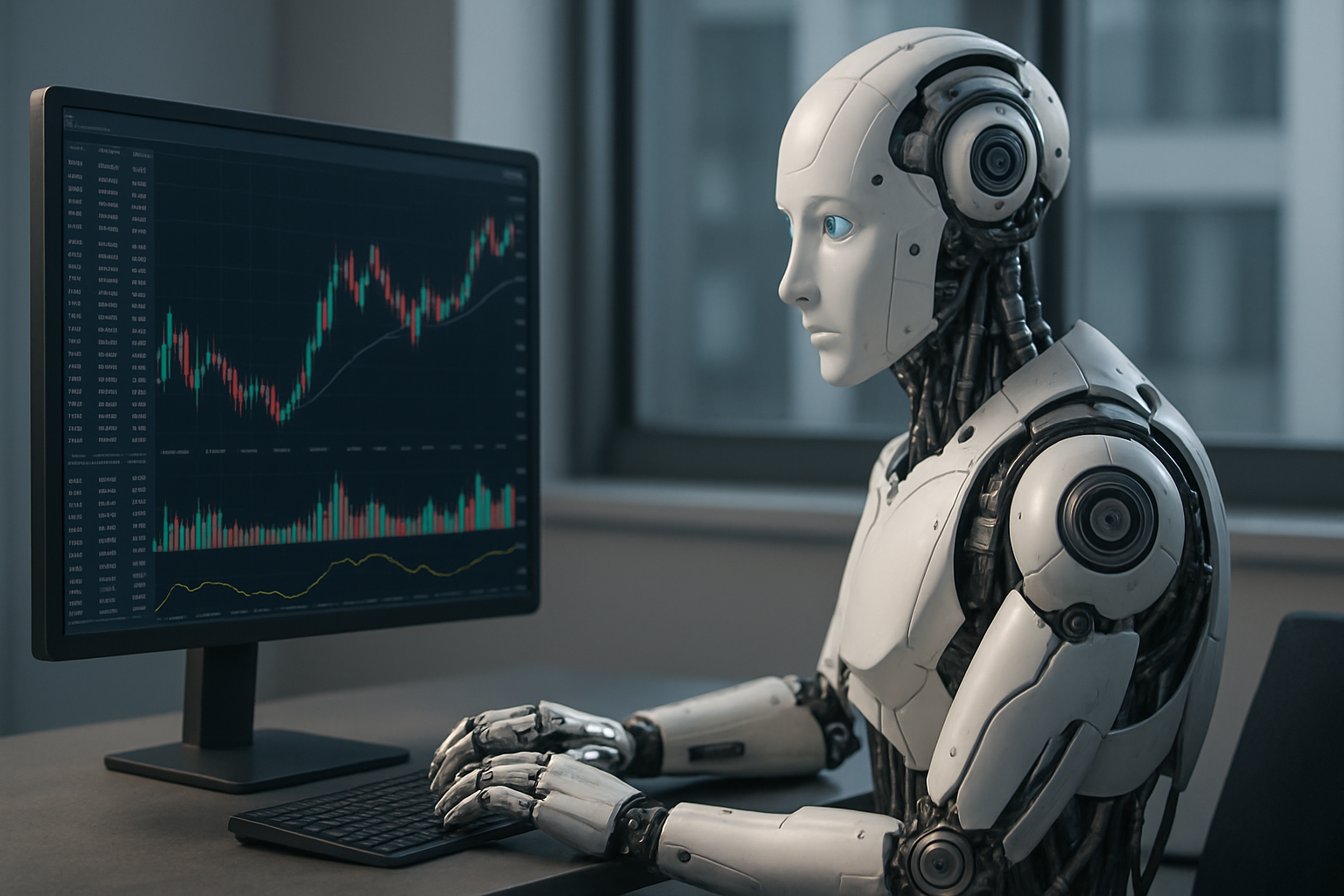
the crypto trading bots collect and process large volumes of historical and live data: order book snapshots, trade volumes, social media trends, and macroeconomic indicators. A typical pipeline preprocesses this data into features (moving averages, volatility indices, funding rates), then trains a model using supervised learning on historical price movements. The model outputs a buy/sell/hold signal with a confidence score. According to CoinTracker, the best platforms refine their strategies through backtesting against years of historical data before going live. Platforms like 3Commas have built this pipeline into a consumer-friendly interface that handles the heavy lifting automatically.
Execution and Risk Management
Once a signal is generated, the bot calculates position size based on predefined risk parameters (a common starting point is 1-2% of portfolio per trade) and places an order via exchange API. Execution speed matters: some bots claim latency under 50ms, which is relevant for arbitrage strategies where windows close in milliseconds. Simultaneously, the system monitors open positions and adjusts stop-losses dynamically using trailing stops or volatility-based triggers. Platforms like Bitsgap allow users to set multiple take-profit levels and deploy a “buy the dip” strategy that scales into falling markets with predefined position increments.
Pros and Cons of AI Crypto Trading Bots
Pros
- 24/7 automation: bots execute trades around the clock without requiring constant screen-watching.
- Emotion-free execution: Removes fear and greed from decision-making, enforcing discipline at every trade.
- Institutional-grade tools at retail prices: Grid trading, arbitrage, and AI-powered rebalancing start at $9/month on platforms like Stoic AI.
- Backtesting and simulation: Most platforms let you test strategies against years of historical data before risking real capital.
- Speed advantage: Bots react to market signals in milliseconds, far faster than any human trader.
- Diversification: Run multiple strategies across 15-20+ exchanges simultaneously from a single dashboard.
Cons
- Black swan blindness: ai crypto cannot anticipate sudden regulatory changes, exchange hacks, or macro shocks.
- Overfitting risk: A model that performs brilliantly in backtests may collapse when live market conditions shift.
- API security exposure: Connecting third-party platforms to your exchange account creates an attack surface if the provider is compromised.
- Ongoing monitoring required: No AI system today is fully autonomous. Drift, error loops, and strategy decay require regular review.
- Cost vs. return uncertainty: Monthly subscription fees of $15-$110 can erode returns during flat or bear markets.
Benefits and Risks of AI Crypto Trading Bots

Advantages of Using AI for Trading
The primary benefit is 24/7 automation in markets that never sleep. trading bots execute trades around the clock, eliminating the need for constant screen-watching. They also strip away emotional biases: fear and greed that lead to impulsive decisions. According to Kraken, algorithmic trading already accounts for 60-75% of volume in traditional financial markets, and crypto is following the same trend. For retail traders, this type of bots provide institutional-grade tools like grid trading, arbitrage, and AI-powered portfolio rebalancing at a fraction of the cost of a managed account.
Potential Drawbacks and Risks
Despite their sophistication, this kind of trading bots cannot predict black swan events or extreme volatility caused by regulatory news. A model trained on historical data may fail when market regimes shift abruptly. Security is another major concern: granting API keys to third-party platforms exposes funds if the service is compromised. Additionally, over-optimization during backtesting can create a false sense of security. A Coinbase blog notes that “AI tools are only as good as the data they’re trained on, and they can sometimes make mistakes.” Always choose platforms with read-and-trade API permissions only. Never grant withdrawal rights.
Top 7 AI Crypto Trading Bots in 2026
Comparison Table
| Bot | Starting Price | Key AI Feature | Exchanges | Non-Custodial | Best For |
|---|---|---|---|---|---|
| 3Commas | $15/month | AI SignalBot, SmartTrade | 15+ | Yes | Advanced multi-exchange traders |
| Cryptohopper | $24.16/month | Algorithm Intelligence, copy trading | 10+ | Yes | Social and beginner traders |
| Coinrule | Free / $29.99 | 350+ agentic bots | 20+ | Yes | No-code beginners |
| Pionex | 0.05% trading fee | Built-in GPT AI | Own exchange | Yes | Fee-sensitive users |
| Bitsgap | Free / $23 | AI Assistant, arbitrage | 17+ | Yes | Futures and multi-strategy |
| Stoic AI | $9/month | Institutional quant strategies | Major CEXs | Yes | Set-and-forget investors |
| Bybit Bot | Free | Aurora AI recommendations | Bybit only | Yes | Bybit users |
3Commas
Since 2017, 3Commas has served sophisticated traders with its AI SignalBot that integrates TradingView indicators, a Dollar Cost Averaging (DCA) bot, and a grid bot for range-bound markets. It supports over 15 exchanges and offers a SmartTrade terminal for advanced order routing. Pricing tiers run at $15, $40, and $110 per month on annual billing. The platform is actively developing a proactive AI bot that will scan markets across 15+ exchanges simultaneously, with a waitlist already open as of 2026.
Cryptohopper
Cryptohopper stands out for its social trading and copy features. Users can follow professional traders via the Copy Bot or use the native Algorithm Intelligence (AI) framework for automated signal execution. The platform offers extensive backtesting, paper trading, and a marketplace for buying and selling strategies. Plans start at $24.16/month after a free trial, with higher tiers at $57.50 and $107.50/month. It connects to 10+ exchanges and is consistently recommended for beginners who want to learn by observing expert traders before running their own configurations.
Coinrule
Coinrule is a no-code platform built for traders with zero programming experience. It offers 350+ agentic bots that run on over 20 exchanges, including select stock exchanges. The visual rule builder uses a drag-and-drop interface, and the platform now supports on-chain bots on Ethereum and Base. Pricing ranges from free to $749/month for institutional-grade tools. The free tier is genuinely useful for experimenting with basic strategies before committing capital.
Pionex
Pionex is unique because it is both a crypto exchange and a bot platform. Users trade directly within the Pionex ecosystem using 16 built-in bots (DCA, grid, leveraged grid) at a flat 0.05% maker/taker fee with no separate subscription cost. Its AI integration, PionexGPT, functions as a natural-language strategy creator. For spot traders who do not need external exchange connectivity, Pionex is the most cost-effective option in this comparison by a significant margin.
Bitsgap
Bitsgap unifies spot and futures trading across 17+ exchanges with an AI Assistant that recommends optimal portfolio allocation based on seven-plus years of historical data. Available bots include grid, DCA, and a “buy the dip” strategy. Plans start at free (limited) and scale to $119/month for advanced arbitrage and full API access. A demo mode allows risk-free strategy testing before deploying real capital.
Stoic AI
Stoic AI is an institutional-grade platform developed by a quant team with over 10 years of experience and $9 million invested in R&D. It offers fully automated, research-driven strategies including market-neutral, index-based, and carry trades. The service is non-custodial and charges a flat subscription fee ($9-$19/month) with no performance fees. With $230 million in cumulative AUM and 18,000+ clients, it is built for investors who want a hands-off, hedge-fund-like experience without hedge-fund minimums.
Bybit Trading Bot
Integrated directly within the Bybit exchange, this free tool uses Aurora AI to recommend bots based on current market conditions. It offers futures grid, spot grid, DCA, and martingale strategies with metrics like APR, drawdown ratio, and volatility ratio displayed transparently. Users can copy top-performing bots directly from the marketplace. Because it runs natively on Bybit with no extra subscription, it is the strongest option for existing Bybit users who want to automate without adding another monthly bill.
How to Choose the Right AI Crypto Trading Bot
Security and API Permissions
The single most important decision is API permission scope. Always grant read-and-trade permissions only. Never enable withdrawal rights. Platforms like Stoic AI and Cryptohopper explicitly restrict API keys to trading functions. Check for security audits, two-factor authentication (2FA), and whether the platform stores keys in an encrypted enclave. The 2019 3Commas API incident exposed thousands of keys and pushed the industry toward stricter practices. Ensure any platform you choose offers IP whitelisting and real-time trade alerts as standard features.
Strategy Customization and Backtesting
A quality AI crypto trading bot should provide robust backtesting against multiple years of historical data. Look for platforms that surface key metrics like Sharpe ratio, max drawdown, and win rate, not just cumulative P&L. Coinrule and 3Commas both offer visual strategy builders that simulate performance before risking real capital. Avoid any platform that only displays a “profit factor” without disclosing trade count, recovery period, or the market conditions used in the test.
Pricing and Exchange Support
Subscription fees for the crypto trading bots range from $9 to over $110/month, but Pionex and Bybit Bot are free (charging only trading fees). Consider how many exchanges you need: Bitsgap and Coinrule support 17-20+, while others focus on a single exchange ecosystem. Factor in whether the fee includes customer support, a strategy marketplace, and cloud server uptime guarantees. A 99.9% uptime guarantee is a reasonable baseline to require.
Setting Up Your AI Crypto Trading Bot Safely
Step-by-Step Setup
- Choose a platform that matches your skill level. Beginners: Coinrule or Cryptohopper. Advanced traders: 3Commas or Bitsgap.
- Create an account and enable 2FA immediately. Verify your identity if the platform requires it.
- Connect your exchange via API keys set with trade-only permission. IP-whitelist the bot’s server address if supported.
- Select or build a strategy. Use pre-configured templates or the AI wizard. Backtest thoroughly on a demo account before going live.
- Start with paper trading for at least 2-4 weeks to observe real-time performance without financial risk.
- Deploy with small capital (1-2% of portfolio) and monitor daily for the first month.
- Set stop-losses and profit targets globally and per trade. Never leave bots unattended for weeks without reviewing logs.
Risk Management Best Practices
Even the most advanced ai crypto can spiral during market dislocations. Employ a portfolio-level drawdown limit (20% is a common threshold) that automatically pauses all active bots. Diversify strategies by combining trend-following with mean-reversion to avoid overexposure to a single market regime. Review trade logs regularly to detect drifting profitability or error loops before they compound. As CoinBureau notes, “monitoring is mandatory” because no AI system today is entirely autonomous.
Tax Reporting and Regulatory Considerations
How Automated Trading Affects Your Tax Obligations
AI crypto trading bots can generate hundreds or thousands of taxable events per month, and most jurisdictions treat each trade as a taxable disposal. In the U.S., the IRS classifies cryptocurrency as property, meaning every bot-executed trade triggers a capital gains calculation. High-frequency strategies can produce tax liabilities that exceed gross trading profits if not managed carefully.
Several platforms integrate directly with crypto tax software. Coinrule and 3Commas both export trade history in formats compatible with tools like Koinly and CoinTracker. Before deploying any AI crypto trading bot at scale, confirm that your chosen platform provides complete, downloadable trade logs with timestamps, cost basis, and exchange identifiers. Missing records create audit exposure.
Regulatory Landscape for Automated Trading
Automated trading regulation varies significantly by jurisdiction. In the EU, MiCA (Markets in Crypto-Assets Regulation) introduced in 2024 establishes disclosure requirements for algorithmic trading services. In the U.S., the SEC and CFTC continue to debate jurisdiction over crypto derivatives, which affects futures-trading bots specifically. As of 2026, most retail AI crypto trading bots operate in a gray zone: they are not registered as investment advisers, and their performance disclosures are largely unaudited. Treat any published backtest results as marketing material until independently verified.
“AI tools are only as good as the data they’re trained on, and they can sometimes make mistakes.” – Coinbase
“Monitoring is mandatory – no AI system today is entirely autonomous.” – CoinBureau
The Future of AI in Crypto Trading
Institutional Adoption and AI-Native Platforms
The line between retail and institutional tools is narrowing fast. Platforms like Stoic AI bring quant-grade strategies directly to everyday investors at $9-$19/month. Meanwhile, exchanges like Bybit and Binance are embedding AI directly into their trading terminals, reducing the need for third-party bot subscriptions entirely. According to a Kraken survey, 47% of U.S. crypto holders believe AI token sectors will outperform other crypto categories, signaling a broader convergence of AI infrastructure and crypto markets. Expect tighter integration of sentiment analysis from social feeds and on-chain data by 2027.
On-Chain and DeFi Bots
AI trading is expanding beyond centralized exchanges. Coinrule now supports Ethereum and Base on-chain bots that interact directly with smart contracts for yield farming and arbitrage. Projects like Gelato Network allow users to automate complex DeFi strategies without managing private keys directly. The next frontier is decentralized AI bots that operate transparently on-chain, with verifiable logic and profit sharing via tokenized ownership structures. This is where AI crypto trading bots and Web3-native infrastructure converge in ways that centralized platforms cannot replicate.
If you’re building protocol infrastructure or tokenomics systems that need automated execution layers, explore how Digital Blockchains’ studio approaches smart contract architecture. For a deeper look at DeFi automation primitives, see our analysis of on-chain execution strategies.
Frequently Asked Questions
Are AI crypto trading bots profitable?
Profitability depends on the strategy, market conditions, and risk management in place. No bot guarantees returns, and many platforms publish historical backtest results that may be exaggerated. Always read risk disclosures, start with small amounts, and treat any published profit figures as unaudited estimates.
What’s the difference between AI bots and rule-based bots?
Rule-based bots follow static conditions like “buy if RSI drops below 30.” AI crypto trading bots use machine learning to adapt to changing market dynamics, identifying patterns that rigid rules would miss entirely. The practical difference shows up most clearly during regime changes, when static rules fail and adaptive models can adjust.
Can AI trading bots predict market crashes?
No. AI models cannot anticipate black swan events or sudden regulatory changes. They are reactive systems, not predictive oracles. Sudden volatility will likely cause losses if stop-losses are not properly configured before the event occurs.
Are AI crypto trading bots safe to use?
They are safe when you use platforms with read-and-trade API keys only, enable IP whitelisting, and never grant withdrawal permissions. Always research a platform’s security history and incident response record before connecting any exchange account.
Do I need coding skills to use an AI trading bot?
Not necessarily. Platforms like Coinrule, Cryptohopper, and Pionex offer no-code interfaces with drag-and-drop strategy builders and ready-made templates. Advanced users can still write custom strategies in Python or connect external signals via webhook if they want deeper control.
Which AI crypto trading bot is best for beginners?
Coinrule and Cryptohopper are consistently recommended for their intuitive interfaces and educational resources. Pionex is also beginner-friendly with 16 built-in bots and a flat 0.05% fee structure that keeps costs predictable from day one.
Ready to Build Smarter Automated Systems?
AI crypto trading bots are a compelling way to automate cryptocurrency trading, but they are not a magic bullet. The best platforms: 3Commas, Cryptohopper, Bitsgap, and Stoic AI, combine genuine machine learning with robust security and transparent pricing. When choosing an AI crypto trading bot, prioritize backtesting capabilities, non-custodial API integration, and complete trade log exports for tax compliance. Always start with paper trading and never risk more than you can afford to lose.
If you’re serious about building automated trading infrastructure, tokenomics systems, or on-chain execution layers, apply to the Genesis Cohort at digitalblockchains.com. We work with builders who want to go beyond off-the-shelf bots and build protocol-level systems that actually scale.