Key Takeaways
- Blockchain technology in supply chain creates an immutable, distributed ledger that records every transaction, ensuring data integrity and trust among multiple parties.
- Implementing blockchain can reduce administrative costs by up to 20% by eliminating manual reconciliation and paperwork, and enhance traceability to pinpoint issues in seconds rather than days.
- Smart contracts automate payments and compliance checks at predefined milestones, accelerating cash flow and reducing disputes.
- Integration with IoT sensors and AI enables real-time environmental monitoring and predictive analytics for proactive supply chain management.
- The global market for blockchain in supply chain is projected to reach USD 17.15 billion by 2030, according to Market Research Future, driven by demand for transparency and efficiency.
Blockchain technology in supply chain is a decentralized, immutable ledger system that records every transaction from source to consumer, reducing fraud and improving trust across all network participants.
What Is Blockchain Technology in Supply Chain?
 What Is Blockchain Technology in Supply Chain? – blockchain technology in supply chain | Digital Blockchains” class=”wp-image-1109″ loading=”lazy” width=”1792″ height=”1024″ />
supply chain is a distributed ledger that stores transaction data in cryptographically linked blocks. Multiple participants, from suppliers and manufacturers to distributors and retailers, access a single shared version of truth. Every movement of goods, change of ownership, or environmental condition like temperature is recorded as a block that, once verified, cannot be altered. This creates an auditable trail that ensures accountability and enables rapid identification of issues such as contamination or counterfeiting.
According to an Oracle overview of blockchain for supply chain, networks deployed in enterprise settings are typically permissioned, meaning participants must be invited or approved by a consortium. This approach balances transparency with privacy, as sensitive business data is shared only with authorized parties.
The Mechanics of Distributed Ledgers
A distributed ledger relies on a network of nodes that validate transactions through consensus mechanisms. In a supply chain context, when a product is scanned at a checkpoint, the data is packaged into a block and broadcast to the network. Nodes verify the transaction, checking that the product’s digital identity matches its physical tag, and once agreement is reached, the block is appended to the chain. Each block contains a cryptographic hash of the previous block, making the chain tamper-evident. Any attempt to alter a record would require recalculating all subsequent hashes and controlling a majority of the network, which is computationally infeasible.
Permissioned vs. Public Blockchains in Supply Chains
Public blockchains like Bitcoin are open to anyone, but supply chains typically use permissioned or consortium blockchains. These restrict access to known entities, enabling faster transaction processing and lower energy consumption. Hyperledger Fabric and R3 Corda are popular enterprise-grade platforms that allow modularity and fine-grained confidentiality. Both support smart contracts: self-executing code that automates business logic, such as releasing payment upon proof of delivery. Public chains process roughly 7 transactions per second (Bitcoin) to 15-45 per second (Ethereum), far below enterprise throughput requirements. Permissioned chains like Hyperledger Fabric can handle thousands of transactions per second under optimized configurations, which is why they dominate production deployments.
“Blockchain provides the foundation for a system where everyone involved can track exactly what happened at each step. Now, if a product needs to be recalled, affected items can be identified quickly.” Oracle, Blockchain for Supply Chain
Key Benefits of Blockchain Technology in Supply Chain Management
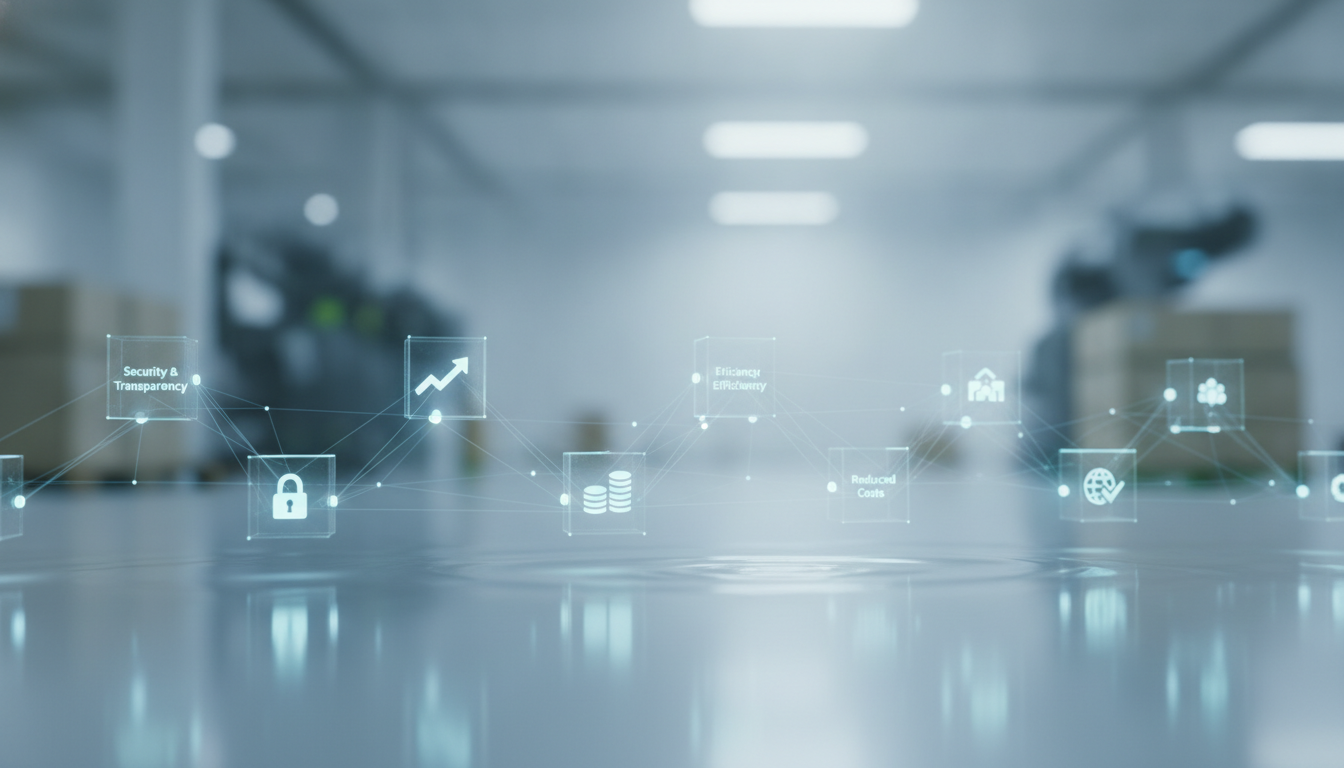
this type of chain offers substantial advantages that address long-standing inefficiencies. The three core benefits, enhanced transparency, reduced costs through automation, and trust among participants, are compelling organizations to invest heavily. A Deloitte perspective on blockchain supply chain innovation identifies three key drivers for this investment: predicting supply chain risk, enabling ESG tracking, and enhancing trust in multi-stakeholder environments.
Enhanced Transparency and Traceability
In traditional supply chains, data is siloed across disparate systems, often stored in centralized databases or paper records. This fragmentation makes it difficult to trace the provenance of goods, verify sustainability claims, or respond swiftly to recalls. this kind of supply chain consolidates all transaction data onto a single ledger visible to all permissioned parties. Walmart uses the IBM Food Trust platform to trace the origin of produce. A 2018 pilot traced a package of sliced mangoes from store shelf back to the farm in 2.2 seconds, a process that previously took 6 days, 18 hours, and 26 minutes. This near-instant traceability can be life-saving during foodborne illness outbreaks.
Reduced Administrative Costs and Fraud Prevention
Paper-based documentation and manual reconciliation are error-prone and expensive. As Deloitte notes, blockchain can slash administrative costs by eliminating intermediaries and automating verification. Smart contracts reduce manual intervention: when a shipment’s IoT sensor confirms temperature compliance and geolocation within agreed parameters, payment is triggered automatically. This cuts processing time and prevents invoice fraud. The tamper-proof nature of the technology in supply chain also deters counterfeit goods. Luxury brands like LVMH and Prada use the Aura Blockchain Consortium to authenticate products from raw materials to final sale.
Improved Efficiency with Smart Contracts
Smart contracts are self-executing agreements written in code. They automatically enforce terms when conditions are met: releasing payment upon delivery confirmation, imposing penalties for late shipments, or ordering replenishment when inventory drops below a threshold. According to IBM’s blockchain insights, smart contracts facilitate cross-border trade by ensuring all parties adhere to the same rules without manual document exchange. Settlement cycles compress from weeks to hours. Below is a simplified Solidity example of a delivery-triggered payment contract:
// SPDX-License-Identifier: MIT

    }

    }

    }
}
In production, the confirmDelivery call would be triggered by a verified IoT oracle, not a manual transaction, removing human error from the settlement loop entirely.
Pros and Cons of Blockchain Technology in Supply Chain
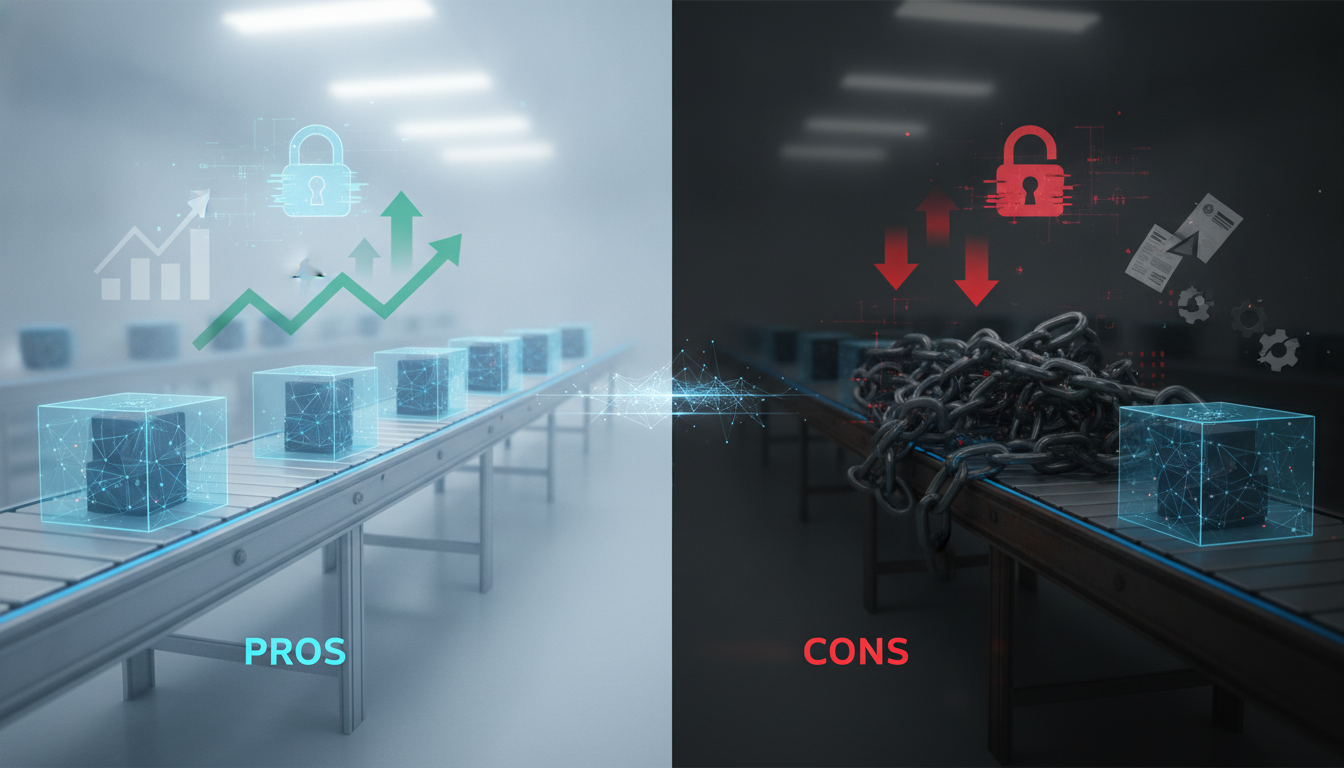
chain delivers real operational gains, but it also introduces complexity that teams must plan for carefully.
Pros
- End-to-end traceability: Every product movement is recorded immutably, enabling recalls that take seconds instead of days.
- Fraud and counterfeit reduction: Cryptographic provenance makes it computationally infeasible to forge product histories.
- Automated settlement: Smart contracts compress payment cycles from weeks to hours, improving cash flow across the entire network.
- ESG and compliance verification: Sustainability claims, organic certifications, and regulatory compliance are auditable without third-party intermediaries.
- Multi-party trust: A shared ledger eliminates the need for each participant to maintain and reconcile their own siloed records.
Cons
- High upfront investment: Infrastructure, integration, and training costs are substantial, and a Deloitte survey found cost to be the primary barrier cited by a majority of respondents.
- Scalability constraints: Even permissioned chains can struggle with the throughput demands of global supply networks at peak volume.
- Interoperability gaps: Dozens of competing platforms and legacy ERP systems create data silos unless standards like GS1 EPCIS 2.0 are adopted.
- Consortium governance complexity: Getting competitors to agree on data-sharing rules, access controls, and upgrade paths is a political challenge as much as a technical one.
- Garbage-in, garbage-out risk: Blockchain guarantees data integrity on-chain, but it cannot verify that the physical product matches its digital record at the point of entry.
How Blockchain Technology in Supply Chain Works: A Step-by-Step Process
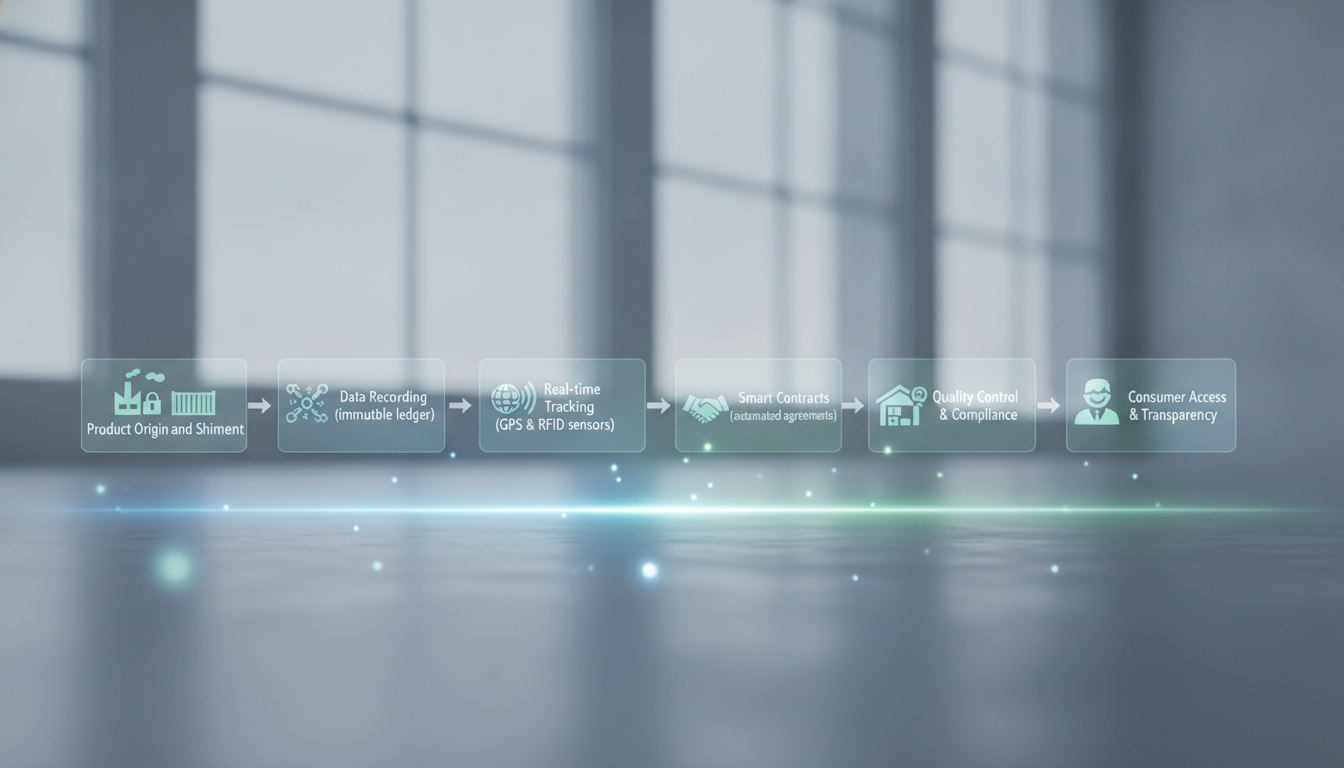
Understanding the operational flow is essential for adoption. Here is a simplified five-step process that illustrates how blockchain technology management functions from product genesis to end consumer.
- Step 1: Product Registration A unique digital identity, such as a QR code or RFID tag, is assigned to each batch or item at the point of origin. This identity is recorded on the blockchain along with attributes like origin, production date, and certifications.
- Step 2: Data Capture with IoT As the product moves through the supply chain, IoT sensors capture location, temperature, humidity, and shock data. This is transmitted directly to the blockchain via secure APIs, ensuring immutability from the moment of capture.
- Step 3: Transaction Recording At each transfer point, a new block is created containing the transaction details: sender, receiver, timestamp, and relevant sensor readings. Network nodes validate the block using consensus rules.
- Step 4: Verification and Immutability Once validated, the block is appended to the chain. Its cryptographic hash links it to previous blocks, making the entire history tamper-proof. Any attempt to alter data breaks the chain and is instantly detected.
- Step 5: Real-Time Visibility and Audit All authorized participants can view the product’s journey via a dashboard. Auditors verify compliance without reconciling multiple databases, and consumers can scan a QR code to see full provenance.
This process speeds up recalls and dispute resolution, and it opens new possibilities for consumer engagement and sustainability verification.
| Feature | Traditional Supply Chain | Blockchain-based Supply Chain |
|---|---|---|
| Data Storage | Centralized databases, siloed per organization | Distributed ledger shared among permissioned parties |
| Transparency | Limited visibility into upstream suppliers | End-to-end visibility in real-time |
| Data Integrity | Prone to manual errors; data can be altered | Immutable; tampering is evident |
| Transaction Settlement | Days due to reconciliation and manual verification | Near-instant via smart contracts |
| Cost Efficiency | High administrative costs from paperwork and audits | Reduced costs through automation and trustless verification |
| Fraud & Counterfeit Risk | Higher risk due to opaque provenance | Lower risk; provenance is cryptographically verifiable |
Real-World Use Cases of Blockchain Technology in Supply Chain
supply chain is no longer theoretical. Major corporations and industry consortia have deployed live solutions that demonstrate tangible ROI. Below are three prominent sectors where the technology is making a measurable impact.
Food Safety and Provenance Tracking
The food industry adopted blockchain early because recall costs are enormous. By integrating blockchain with IoT, companies can monitor conditions from farm to fork. Nestlé, Unilever, and Tyson Foods are among the enterprises using IBM Food Trust to digitize their supply chains. When contamination is suspected, they can instantly trace the affected batch and remove only those products from shelves, minimizing waste and protecting brand reputation. The system also verifies organic, fair-trade, and non-GMO claims, combating food fraud at scale.
Pharmaceutical Supply Chain Integrity
Counterfeit pharmaceuticals account for an estimated USD 200 billion in annual global sales, according to the World Health Organization. this type of chain ensures that each unit of medication is traceable from manufacturing facility to pharmacy. Companies like Pfizer and McKesson are exploring solutions that comply with the Drug Supply Chain Security Act (DSCSA) in the United States. Temperature-sensitive biologics and vaccines benefit from continuous monitoring: any temperature excursion triggers an alert on the blockchain, and smart contracts can prevent the sale of compromised products automatically.
Tokenizing Assets in Luxury Goods and Logistics
High-value items such as diamonds, art, and designer handbags are prime targets for counterfeiting. Tokenization creates a digital twin on a blockchain, providing a unique certificate of authenticity that accompanies the physical asset throughout its lifecycle. As described in the Oracle blockchain overview, a diamond’s record might include its mine of origin, cut, color, and clarity, along with each change of ownership. The Gübelin Gem Lab in Switzerland uses the Provenance Proof Blockchain to track colored gemstones, increasing consumer confidence and potentially raising resale value. In logistics, the now-discontinued TradeLens platform built by Maersk and IBM demonstrated how shipping documentation for global container trade could be digitized on a shared ledger, cutting document processing time from days to hours across dozens of ports.
“The immutability of blockchain records means that every party in a supply network, from the smallest tier-3 supplier to the end retailer, is working from the same verified history. That shared foundation is what makes autonomous settlement and real-time compliance possible.” IBM Institute for Business Value, Blockchain and the Supply Chain
Integration with Emerging Technologies
The full potential of this kind of supply chain is realized when combined with other advanced technologies. Two powerful combinations are with the Internet of Things (IoT) and artificial intelligence (AI).
Blockchain and IoT for Environmental Monitoring
IoT sensors generate vast amounts of real-time data on location, temperature, humidity, and vibration. Storing this data using the technology in supply chain ensures its integrity and provides an auditable trail for compliance with regulations like the FDA’s Food Safety Modernization Act (FSMA) or the European Union’s Good Distribution Practice (GDP) for pharmaceuticals. According to IBM research, the global market for blockchain in IoT grew from USD 30 million in 2018 to over USD 113 million in 2021, and is projected to exceed USD 3 billion by 2024 with a CAGR of nearly 93%. This growth reflects the accelerating convergence of physical and digital worlds in supply networks.
AI and Predictive Analytics in Blockchain-Based Supply Chains
AI algorithms can analyze the trustworthy data recorded on a blockchain to forecast demand, optimize inventory, and predict disruptions before they occur. Machine learning models process historical shipment data alongside weather forecasts and geopolitical events to recommend alternative routings. Smart contracts then automatically execute revised shipping instructions. This proactive approach moves companies from reactive firefighting to strategic supply chain orchestration. The economic impact of industrial IoT alone is projected to reach between USD 4 trillion and USD 11 trillion by 2025, per IBM estimates, which signals the scale of data that AI systems will have to work with.
Regulatory Compliance and Energy Considerations
chain does not exist in a regulatory vacuum. As of 2026, compliance requirements are shaping which consensus mechanisms and platforms enterprises choose.
Key Regulatory Frameworks
Beyond the DSCSA and FSMA already mentioned, the EU General Data Protection Regulation (GDPR) creates tension with blockchain’s immutability: once personal data is written to a chain, it is difficult to delete. Enterprises address this by storing only hashes on-chain and keeping personal data off-chain, with the hash serving as a tamper-evident pointer. The EU’s Corporate Sustainability Reporting Directive (CSRD), which took effect for large companies in 2024, is driving demand for auditable ESG data, and blockchain is emerging as a natural fit for verifiable scope-3 emissions tracking across supply networks. Standards body GS1 has published the EPCIS 2.0 specification to standardize how supply chain events are encoded and shared across blockchain platforms, reducing interoperability friction.
Energy Consumption: Proof of Work vs. Proof of Authority
Energy consumption is a legitimate concern for blockchain deployments. Public proof-of-work chains like Bitcoin consume significant electricity per transaction. Enterprise supply chain deployments avoid this entirely by using proof-of-authority (PoA) or practical Byzantine fault tolerance (PBFT) consensus on permissioned networks. Hyperledger Fabric, for example, uses a pluggable ordering service and does not rely on mining at all, making its energy footprint comparable to a conventional database cluster. This distinction matters for enterprises with net-zero commitments: choosing the right consensus mechanism is as much a sustainability decision as a technical one.
Challenges and Limitations of Implementing Blockchain Technology in Supply Chain
Despite its promise, blockchain technology faces significant hurdles to widespread adoption. Understanding these challenges is essential for crafting effective implementation strategies.
Scalability and Interoperability Issues
Public blockchains can process only a limited number of transactions per second: Bitcoin around 7, Ethereum 15-45. Both figures fall far below the throughput required by global supply chains. Permissioned blockchains offer higher speeds, but they still lag behind centralized databases at extreme scale. Supply chains often involve dozens of different blockchain platforms and legacy ERP systems. Interoperability standards like GS1 EPCIS 2.0 are evolving, but smooth data exchange remains a challenge. The absence of a universal protocol can lead to data silos on separate ledgers, defeating the purpose of a unified view.
High Initial Investment and Organizational Resistance
Deploying a blockchain network requires substantial upfront costs: hardware, software, integration, and training. A Deloitte survey on blockchain adoption found that cost was identified as a primary barrier by a majority of respondents. Convincing all supply chain partners to adopt a common system is difficult when they have conflicting interests or varying levels of digital maturity. Some may be reluctant to share data perceived as proprietary, even in a permissioned mode. Success demands strong consortium governance and a clear value proposition for every participant.
Best Practices for Adopting Blockchain Technology in Supply Chain
Organizations can work through these challenges by following proven strategies. Drawing from successful deployments, here is a practical roadmap for teams evaluating blockchain technology in supply chain for the first time.
Building a Consortium and Governance Model
Blockchain in supply chain is inherently a multi-party endeavor. Start by assembling a consortium of key stakeholders who share a common problem, such as reducing counterfeits or improving recall processes. Define a governance framework that specifies data access rights, consensus mechanisms, and rules for onboarding new members. The Viant platform helps companies establish such consortia for supply chain traceability. Formalized agreements backed by legal contracts are critical to ensure compliance and resolve disputes outside the blockchain itself.
Pilot Projects and Phased Rollouts
Instead of a wholesale replacement of existing systems, start with a pilot targeting a specific, high-value use case. Track a single product line or a critical component. Measure ROI carefully: reductions in reconciliation time, fewer stockouts, or faster recall execution. Use the insights to refine the technology and build confidence among partners, then gradually expand scope. The Maersk and IBM TradeLens platform, now discontinued but instructive as a case study, initially focused on a few trade lanes before attempting global scale. Its discontinuation in 2022 also offers a clear lesson: consortium adoption requires sustained commercial incentives for every participant, not just the platform founders.
For a deeper look at how smart contract architecture supports these deployments, see our breakdown of smart contract development fundamentals. If you are evaluating tokenization as part of your supply chain strategy, our guide to tokenomics design covers the economic models that make digital asset programs sustainable.
Future Outlook: The Evolution of Blockchain Technology in Supply Chain
The trajectory of blockchain technology in supply chain points toward more sophisticated, autonomous, and tightly integrated systems. Here we examine the market momentum and the path toward self-executing supply networks.
Market Growth and Investment Trends
The financial commitment to blockchain in supply chain management is accelerating. According to a comprehensive report cited by Market Research Future (MRFR), the market is expected to grow to USD 17.15 billion by the end of 2030, representing a CAGR of over 45% from 2022 levels. This growth is fueled by increasing regulatory pressure for traceability, consumer demand for ethical sourcing, and the proven ability of blockchain to cut costs. Investments in complementary technologies like IoT continue to surge, with the economic impact of industrial IoT projected to reach between USD 4 trillion and USD 11 trillion by 2025, per IBM estimates.
The Path to Self-Executing Supply Chains
Looking ahead, the convergence of blockchain, AI, IoT, and 5G will enable supply chains where goods are monitored, routed, and paid for with minimal human intervention. An AI system might detect a port strike via news feeds, automatically trigger a smart contract to reroute shipments through an alternative port, adjust inventory allocations in response, and settle carrier payments, all in seconds. Tokenized assets will allow fractional ownership and more fluid logistics financing. Full autonomy remains a vision, but the building blocks are being laid today. As of 2026, the most advanced deployments are already combining on-chain settlement with AI-driven demand forecasting, compressing planning cycles from weeks to hours.
Frequently Asked Questions
What is blockchain technology in supply chain management?
Blockchain technology in supply chain management is the application of a decentralized, immutable digital ledger to record all transactions across a supply chain network. It enables end-to-end traceability, reduces fraud, and streamlines processes by providing a single source of truth for all participants. Every record is cryptographically linked to the one before it, making unauthorized changes detectable immediately.
How does blockchain improve supply chain transparency?
Blockchain improves transparency by creating an unalterable record of each transaction that is visible to all permissioned parties in real time. This allows tracking of products and verification of claims like organic or fair-trade status without relying on intermediaries. Walmart’s IBM Food Trust deployment reduced mango traceability time from nearly 7 days to 2.2 seconds, which is a concrete measure of what that transparency looks like in practice.
What is an example of blockchain in logistics?
The Maersk and IBM TradeLens platform is the most cited logistics example: it digitized shipping documentation across global container trade, cutting document processing from days to hours across dozens of ports. Though TradeLens was discontinued in 2022 due to consortium adoption challenges, it validated the technical model and informed subsequent deployments. Pharmaceutical companies using DSCSA-compliant blockchain traceability represent another active logistics application.
What are the challenges of implementing blockchain in supply chains?
Key challenges include scalability limitations (public chains handle only 7-45 transactions per second), high initial costs, interoperability between different blockchain platforms and legacy ERP systems, and the need for consortium-wide adoption and governance. The garbage-in, garbage-out problem is also real: blockchain guarantees on-chain data integrity but cannot verify that a physical product matches its digital record at the point of entry.
How do smart contracts work in supply chain blockchain?
Smart contracts are self-executing agreements coded on the blockchain that automatically trigger actions when predefined conditions are met. In supply chain applications, a confirmed GPS location combined with a temperature reading within spec can release payment to a carrier instantly, with no manual invoice processing. This compresses settlement from weeks to hours and removes the dispute surface that comes with manual reconciliation.
Is blockchain secure for supply chain data?
Blockchain uses cryptographic hashing and decentralized consensus to make data tamper-evident and resistant to unauthorized changes. In permissioned networks, access controls further protect sensitive business information. The primary security caveat is at the data entry point: if a bad actor inputs false data before it reaches the chain, the blockchain will faithfully preserve that false record, which is why physical verification controls at onboarding remain essential.