Key Takeaways
- Real estate blockchain uses distributed ledger technology to secure transactions and automate processes without relying on a central authority.
- Smart contracts cut out intermediaries by self-executing once predefined conditions, like payment verification, are met.
- Tokenization splits property ownership into digital shares, opening deals to a much wider pool of investors.
- Platforms like Propy and JPMorgan’s Kinexys are already moving blockchain from pilot projects into commercial real estate workflows.
- Adoption still faces regulatory gaps and legacy-system integration hurdles, even as the cost and time savings become harder to ignore.
Real estate blockchain is the use of distributed ledger technology to record property transactions, enabling smart contracts and tokenization for secure, transparent deals. It supports fractional ownership and automated payments.
Paper-based property deals are slow, opaque, and full of redundant middlemen. estate blockchain replaces those paper trails with immutable digital records, tackling long-standing inefficiencies in sales, leasing, and property management. The technology is still early, but major financial institutions and startups are already testing it in production, and that alone signals a real shift toward a more digitized property market.
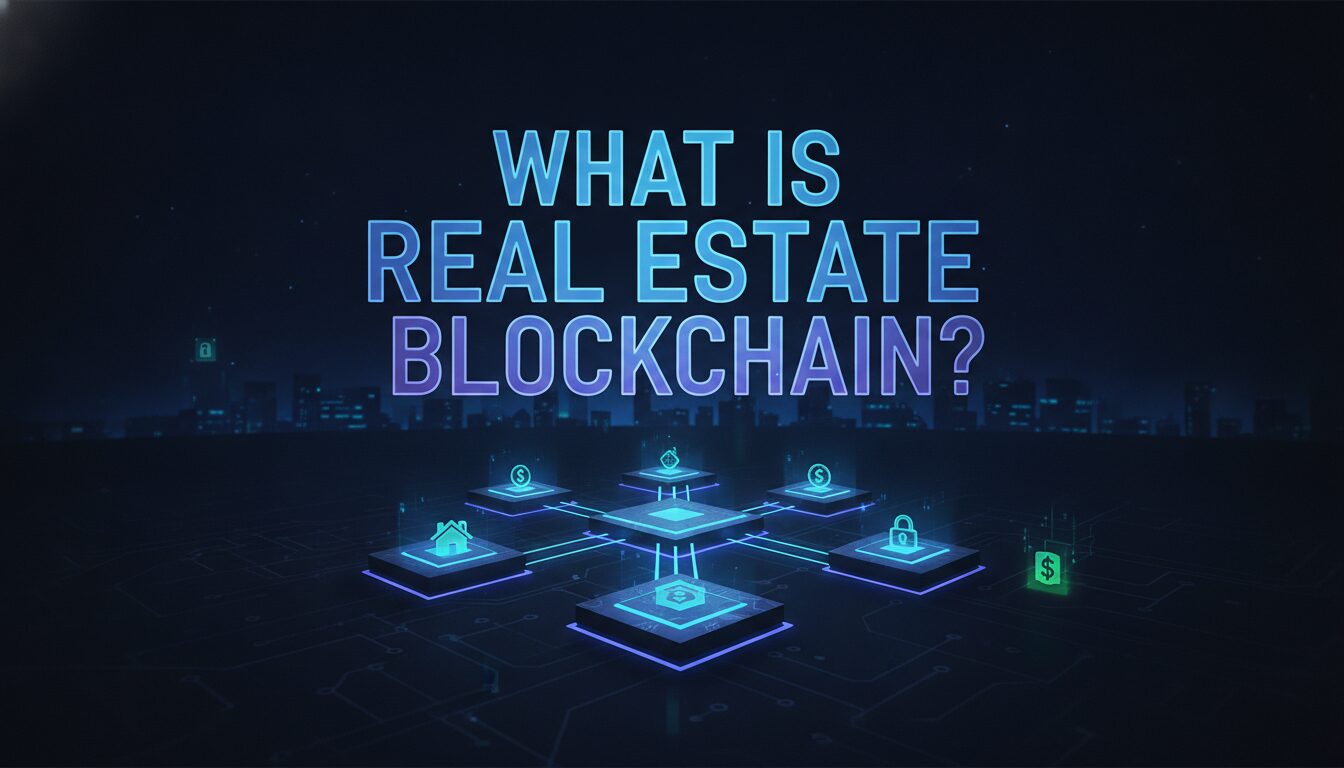
What Is Real Estate Blockchain?
Defining Blockchain Technology
Blockchain is a decentralized digital ledger that records transactions across a network of computers rather than a single database owned by one company. Each transaction gets grouped into a block and linked to the ones before it, forming a chain that’s extremely hard to alter after the fact. No single entity controls the ledger, which is what makes it resistant to tampering and fraud. According to the Texas A&M Real Estate Center, blockchain “allows for the creation of immutable records of transactions accessible by all participants in a network.” Once data lands on the ledger, changing it without detection becomes practically impossible.
How Blockchain Applies to Real Estate
this type of blockchain digitizes property records, automates contract execution, and streamlines payments across a deal that traditionally passes through many hands. Conventional systems route transactions through agents, lawyers, and banks; blockchain lets parties transact peer-to-peer with trust built into the protocol instead of into a middleman. Property titles stored on-chain give a transparent, tamper-resistant history of ownership and encumbrances, which JPMorgan notes can cut the risk of fraud and clerical errors. This groundwork is what makes smart contracts and tokenized assets possible in the first place.
Key Benefits of Real Estate Blockchain
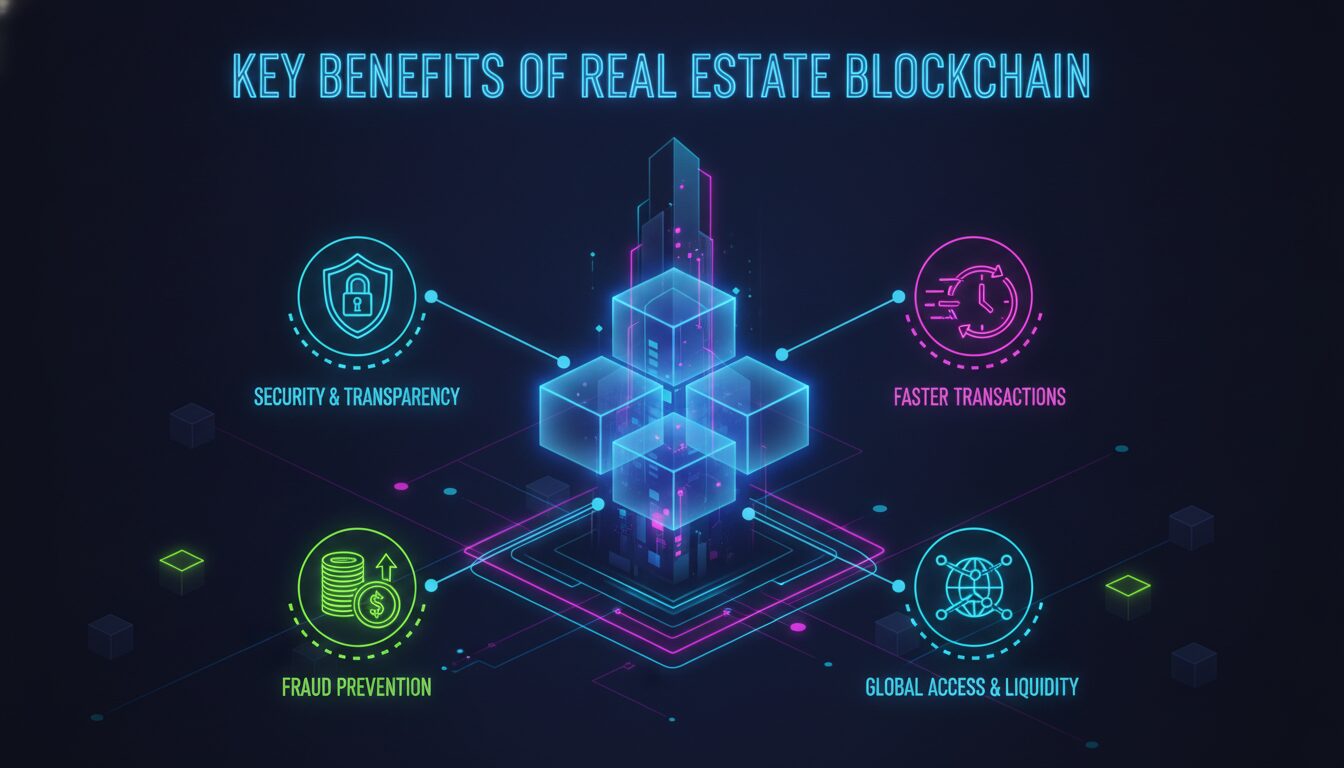
Transparency and Immutable Records
The biggest benefit of this kind of blockchain is the transparency it brings to a historically opaque asset class. Every event, from a lien filing to a final sale, gets recorded on the ledger and stays visible to permissioned parties, which cuts down on disputes and the need for costly title searches. The Consensys overview on blockchain in real estate points out that this kind of data accessibility increases transparency and supports better investment decisions. That same immutability makes title fraud far harder to pull off, which is exactly the problem Propy built its platform around: using blockchain to protect against title and wire fraud.
“There’s a demystifying process that needs to happen, and from a regulatory perspective, there are some unknowns. But there are clear applications for blockchain in commercial real estate, with potential for increased efficiency and transparency as these solutions develop.” – Witness Yi, Treasury Services Manager, Chase
Cost and Time Efficiency
Traditional real estate settlements can take days or weeks, and cross-border deals are worse. JPMorgan’s Kinexys platform demonstrates that blockchain-based programmable payments can settle within minutes, including cross-border transactions that traditionally take up to two days by wire. Smart contracts automate rent collection, security deposit returns, and fund disbursements once conditions are met, which removes manual intervention and the delays that come with it. According to Deloitte, blockchain can ease leasing and cash flow management, making day-to-day operations more efficient for property owners.
Traditional vs. Blockchain: A Comparative Overview
The table below lays out the practical differences between conventional property dealings and blockchain-powered ones.
| Feature | Traditional Real Estate | real estate |
|---|---|---|
| Settlement Time | Days to weeks | Minutes to hours |
| Transparency | Limited, fragmented data | Full, shared immutable ledger |
| Security | Susceptible to fraud | Cryptographically secured |
| Accessibility | Local, high capital thresholds | Global, fractional ownership |
| Intermediaries | Multiple (agents, banks, escrow) | Minimized via smart contracts |
| Costs | High fees | Lower automation costs |
The pattern is clear: this approach reduces friction at nearly every step and opens the market to a much wider set of participants than the traditional model allows.
Real Estate Blockchain Use Cases
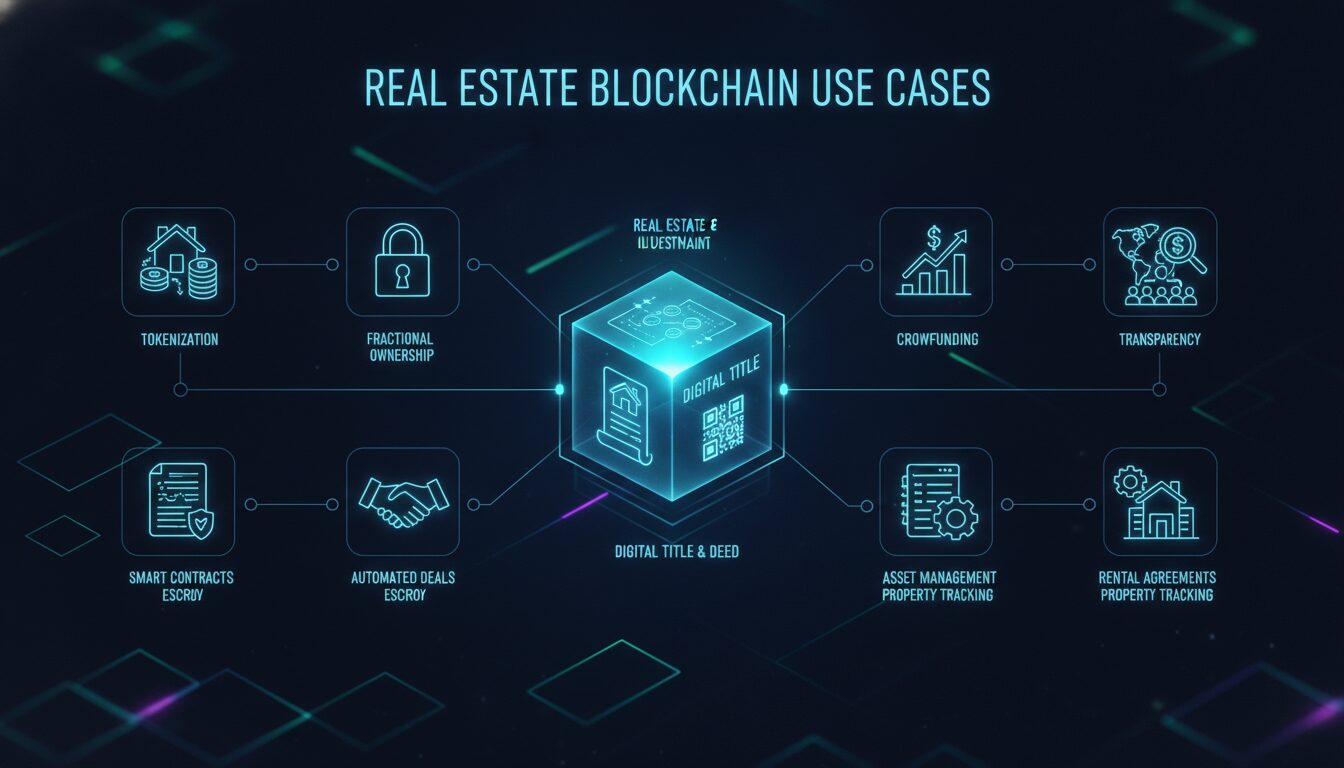
Smart Contracts for Automated Transactions
Smart contracts are the working engine behind most real estate blockchain applications. A smart contract is a self-executing digital agreement stored on-chain that triggers actions once predefined conditions are met, whether that’s transferring ownership after payment clears or releasing a security deposit after a passed inspection. Deloitte’s report identifies six specific use cases, including improving the property search process, expediting pre-lease due diligence, and easing leasing and cash flow management. These applications reduce reliance on intermediaries like escrow companies and lower the odds of contractual disputes dragging into litigation.
Tokenization of Real Estate Assets
Tokenization converts ownership rights into digital tokens on a blockchain, letting a single property split into many fractional shares. Each token represents a proportional stake, so investors can buy and sell exposure without acquiring the whole asset. According to Milkroad, the tokenized real estate market is currently worth roughly $200 million, against a global real estate market valued around $317 trillion. Even a 0.5% tokenization rate would turn this into a trillion-dollar sector. Fractionalization like this opens real estate to retail investors worldwide and injects liquidity into a market that has historically had almost none.
Programmable Payments and Leasing
Blockchain enables programmable payments that follow whatever rules a business sets. A property owner can configure a smart contract to automatically distribute rental income to token holders or route surplus funds into a separate account once a threshold is hit. JPMorgan’s Kinexys shows how complex, cross-border transactions settle in minutes instead of days. The same logic extends to recurring lease payments, maintenance fee collections, and property tax payments, all handled without a human pushing buttons in the middle.
Real Estate Blockchain Platforms and Solutions
Propy: Secure Transaction Management
Propy runs a blockchain-powered transaction management platform built for agents and brokers, not developers. Its design shows how real estate blockchain can work without asking users to understand the underlying cryptography. Transaction documents get secured on an immutable ledger, which protects against title fraud and wire fraud. The platform bundles offer management, a transaction dashboard, and compliance tools, all tied together with smart contracts for transparency and security.
JPMorgan Kinexys and Institutional Blockchain
JPMorgan built Kinexys (formerly Onyx) to handle blockchain-based payments for institutional clients, and commercial real estate is one of its clearest use cases. Kinexys enables near-instant settlement and programmable payment features, helping property owners automate treasury functions and cut payment timing uncertainty. Its emphasis on compliance and regulatory alignment makes it a bridge between traditional finance and decentralized infrastructure, proof that real estate blockchain has moved past the whiteboard stage for at least some major players.
Ethereum-Based Tokenization Platforms
Ethereum hosts most of the tokenization protocols and dApps built for real estate. Platforms like RealT and Slice Space let investors buy fractional tokens tied to specific U.S. properties, and those tokens can trade on decentralized exchanges for secondary market liquidity. The Consensys overview notes that tokenization reduces the cost and increases the speed of issuing assets, while also enabling automated dividend distribution and compliance enforcement built directly into the token logic.
Challenges and Considerations for Adoption
Regulatory Uncertainty
Regulatory uncertainty is the single biggest obstacle slowing real estate blockchain adoption. Property law is jurisdiction-specific, and many local governments don’t yet formally recognize blockchain-based ownership records. Regulators are still writing rules around digital asset classification, securities treatment, and cross-border transfers, and that ambiguity, as JPMorgan’s Witness Yi has pointed out, makes it hard for businesses to commit fully. Some jurisdictions, including Switzerland and Singapore, are moving faster on blockchain-friendly property frameworks, which gives the rest of the industry a template to watch.
Integration with Legacy Systems
Most real estate firms still run on decades-old software and paper-heavy workflows. Bolting blockchain onto that requires a real overhaul, not a plug-in. Interoperability between lenders, appraisers, title companies, and whatever blockchain layer gets introduced is a genuine technical problem. Deloitte advises firms to assess how much system overhaul is actually needed and confirm that any blockchain solution can talk to their existing technology stack before committing budget.
Technical Expertise Requirements
Building and running blockchain infrastructure takes specialized skills in cryptography, smart contract development, and consensus design. Most real estate firms don’t have this talent in-house, and the learning curve is steep. Security bugs in smart contracts can also lead to real financial losses, so rigorous auditing isn’t optional, it’s a baseline requirement. Third-party platforms and specialist consultancies are stepping in to close that gap, which is lowering the barrier for firms that don’t want to build from scratch.
How to Invest in Tokenized Real Estate
Step 1: Choose a Tokenization Platform
Start by selecting a reputable platform like RealT, Slice Space, or Propy that lists tokenized properties with clear documentation.
Step 2: Complete KYC/AML Verification
Provide identity documents to satisfy regulatory checks. Nearly every legitimate platform requires investor verification before you can transact.
Step 3: Fund Your Wallet
Buy cryptocurrency, usually USDC or ETH, from an exchange and move it to a compatible crypto wallet.
Step 4: Browse Available Properties
Review listed offerings, which may include residential or commercial properties with disclosed yield estimates.
Step 5: Purchase Tokens
Use your wallet to buy tokens representing a fractional stake. Ownership gets recorded directly on the blockchain.
Step 6: Receive Income
Rental yields are typically distributed monthly or quarterly through smart contract payouts straight to your wallet.
Step 7: Trade or Hold
Tokens can often be resold on secondary markets, though liquidity varies significantly by platform. Long-term holders may benefit more from property appreciation than active trading.
Choosing a Platform
When comparing platforms, weigh jurisdiction, asset quality, fee structure, and custody arrangements. Some platforms handle every administrative task for you; others are far more self-directed. Read the documentation closely and confirm smart contracts have been audited before committing capital. As the market matures, expect more institutional-grade options to show up, making real estate blockchain investing more approachable for everyday investors.
The Future of Real Estate Blockchain
Market Growth Projections
According to Milkroad, even a 0.5% tokenization rate of the global real estate market would create a trillion-dollar industry. That’s worth sitting with: the tokenized sector sits at roughly $200 million today, a rounding error against the broader opportunity, but it’s positioned for real growth as legal frameworks mature and institutional capital starts showing up in size. Banks and asset managers piloting blockchain-based property funds is a signal that real estate blockchain isn’t a passing trend so much as a structural shift already underway.
Emerging Trends and Institutional Adoption
Beyond tokenization, decentralized autonomous organizations for property management and blockchain-based land registries are gaining real traction. Countries including Sweden and Georgia have piloted putting land titles on-chain to cut corruption and speed up processing. As of 2026, these pilots are still small, but if they keep succeeding, they’ll shape how bigger markets approach the same problem. Pairing artificial intelligence with real estate blockchain could also push automated property valuation and risk assessment further than either technology manages alone.
Academic research examining blockchain acceptance among real estate buyers and sellers, published in Information Systems Frontiers, points to trust and perceived usefulness as the main drivers of adoption, not just technical capability. That lines up with what we see across the industry: the technology usually isn’t the bottleneck. Trust and regulatory clarity are.
As real estate blockchain technology matures, adoption should unlock real efficiency and accessibility gains across property markets. Smart contracts, tokenization, and programmable payments are likely to reshape how people invest in and manage real estate assets globally, and this year is shaping up as a genuine inflection point rather than another hype cycle.
Pros and Cons
Pros
- Settlement times drop from days or weeks to minutes in programmable payment systems like Kinexys.
- Tokenization lowers investment minimums and opens property markets to a global pool of investors.
- Immutable records make title fraud and wire fraud significantly harder to pull off.
- Smart contracts cut out several layers of intermediaries, reducing both cost and delay.
Cons
- Regulatory frameworks for tokenized property and digital ownership records are still incomplete in most jurisdictions.
- Integrating blockchain with legacy real estate systems requires significant technical overhaul.
- Smart contract bugs and platform risk can lead to real financial losses if audits are skipped.
- Secondary market liquidity for tokenized real estate still varies widely and isn’t guaranteed.
Frequently Asked Questions
Is there a blockchain for real estate?
Yes, several blockchains support real estate applications, with Ethereum being the most widely used for tokenization and smart contracts. Platforms like Propy have also built specialized solutions on blockchain infrastructure specifically to secure transaction data and prevent fraud.
Is blockchain real or fake?
Blockchain is a proven technology that underpins cryptocurrencies like Bitcoin and enterprise systems built by firms like JPMorgan. It’s a decentralized ledger that records transactions immutably, and it’s already in active use across supply chain, healthcare, and real estate.
Is tokenized real estate worth it?
Tokenized real estate offers fractional ownership, lower investment minimums, and potential liquidity that traditional property investing rarely provides. It also carries risks like regulatory uncertainty, platform risk, and market volatility, so due diligence before participating matters.
Where can I buy tokenized real estate?
You can buy tokenized real estate through platforms like RealT, Slice Space, and Propy. These platforms typically require KYC verification and use of stablecoins like USDC, and you should always confirm the platform complies with local securities laws before funding an account.
How does blockchain prevent title fraud?
Blockchain’s immutable ledger means that once a property title is recorded, it can’t be altered or deleted without network consensus. That makes forging ownership documents extremely difficult, since every change is transparent and permanently recorded for anyone with access to verify.
Are there real estate blockchain stocks?
Several publicly traded companies touch blockchain for real estate without being exclusively focused on it, and JPMorgan (through Kinexys) is a clear example. Propy remains private for now. Investors can also gain exposure through blockchain-focused ETFs or by directly purchasing tokenized real estate assets on established platforms.
If you’re building in this space and want to move past pilots into production-grade infrastructure, apply to the Genesis Cohort at digitalblockchains.com. We work with serious teams tackling tokenization, smart contract architecture, and onchain treasury design from the protocol layer up.