Blockchain services are third-party-managed platforms, tools, and consulting that let organizations build, deploy, and maintain blockchain-based applications without internal infrastructure. They cover decentralized ledger hosting, smart contract automation, tokenization, and system integration.
Key Takeaways
- services encompass platforms, tools, and consulting that help businesses build and manage decentralized applications and digital assets.
- The global blockchain market is forecast to reach nearly $1 trillion by 2032, driven by demand for transparency, security, and efficiency (Statista).
- Top providers include IBM, Oracle, Chainlink, and specialized development firms offering tailored enterprise solutions.
- Real-world use cases span finance, supply chain, energy, and media, with tokenization and DeFi leading the next wave of innovation.
- Choosing the right provider means evaluating security, scalability, and integration capabilities against your specific use case.
What Is Blockchain Technology?
 What Is Blockchain Technology? – blockchain services | Digital Blockchains” class=”wp-image-1054″ loading=”lazy” width=”1792″ height=”1024″ />
Defining the Distributed Ledger
Blockchain technology is a shared, immutable digital ledger that records transactions and tracks assets across a network, providing a single verifiable source of truth. As IBM explains, it operates as a decentralized distributed database, with data stored across multiple computers, making it resistant to tampering. Transactions are grouped into blocks, cryptographically linked into a chain. That structure ensures data integrity and creates a tamper-proof record, which is why this type of services are increasingly adopted for cryptocurrencies, supply chain tracking, and identity management.
Core Components: Blocks, Nodes, and Consensus
Every blockchain relies on three fundamental components: blocks that store transaction data, a network of nodes that validate and relay information, and a consensus mechanism that ensures all participants agree on the ledger’s state. Consensus algorithms like Proof of Work (PoW) and Proof of Stake (PoS) prevent double-spending and malicious attacks. These building blocks are what make blockchain capable of delivering security without a central authority.
Consensus Algorithms: A Technical Breakdown
Not all consensus mechanisms are equal, and the choice has real consequences for throughput, energy use, and trust assumptions.
- Proof of Work (PoW): Used by Bitcoin. Miners compete to solve computationally expensive puzzles. Highly secure but energy-intensive, with Bitcoin’s network consuming roughly as much electricity annually as some mid-sized countries.
- Proof of Stake (PoS): Used by Ethereum post-Merge. Validators stake collateral rather than burning compute. Ethereum’s shift to PoS reduced its energy consumption by over 99%, according to the Ethereum Foundation.
- Practical Byzantine Fault Tolerance (PBFT): Used in permissioned networks like Hyperledger Fabric. Reaches consensus in 3 communication rounds, tolerating up to one-third of nodes acting maliciously. Ideal for enterprise this kind of services where participants are known.
- Raft: A leader-based consensus protocol used by Oracle Blockchain Platform. Simpler than PBFT, optimized for crash fault tolerance rather than Byzantine faults. Suited for trusted consortium environments.
Enterprise blockchain typically default to PBFT or Raft because they offer deterministic finality and high throughput without the energy overhead of PoW.
How Blockchain Services Enable Enterprise Adoption
services simplify adoption by offering managed infrastructure, pre-built templates, and APIs. This lets businesses focus on core operations while using the benefits of decentralization. As AWS notes, this type of services provide an advanced database mechanism for transparent information sharing, eliminating the need for a trusted third party in many financial transactions.
The Emergence of Blockchain Services

From Satoshi Nakamoto to Wall Street
The journey of this kind of services began with Bitcoin’s launch in 2008 by the pseudonymous Satoshi Nakamoto. The underlying blockchain was designed as a decentralized digital currency enabling peer-to-peer transactions without intermediaries. In 2011, Blockchain.com built the world’s first blockchain explorer, now with over 95 million wallets created and more than $1.1 trillion in transaction volume. The introduction of Ethereum in 2015, featuring smart contracts, expanded blockchain’s scope beyond currency, laying the groundwork for decentralized finance (DeFi) and non-fungible tokens (NFTs).
The Rise of Blockchain as a Service (BaaS)
As interest grew, major technology firms recognized the need for simplified access. Blockchain as a Service (BaaS) emerged, allowing companies to cloud-host blockchain networks and applications. According to Built In, BaaS involves third-party installation and maintenance of blockchain networks, delivering benefits like optimization, transparency, and cost reduction. Today, leading BaaS providers include IBM, Microsoft, and Oracle, each with dedicated blockchain divisions.
Tokenization and AI Agents: The Next Frontier
Modern blockchain have evolved to support real-world asset tokenization: the process of representing physical assets like real estate, art, or commodities as digital tokens on a blockchain. Platforms like Oracle Blockchain now offer a Digital Assets edition for central bank digital currencies (CBDCs) and stablecoins. Blockchain.com’s roadmap also includes support for AI agent integration by 2027, enabling autonomous execution of complex financial operations on-chain, a trend that will redefine automated trading and portfolio management.
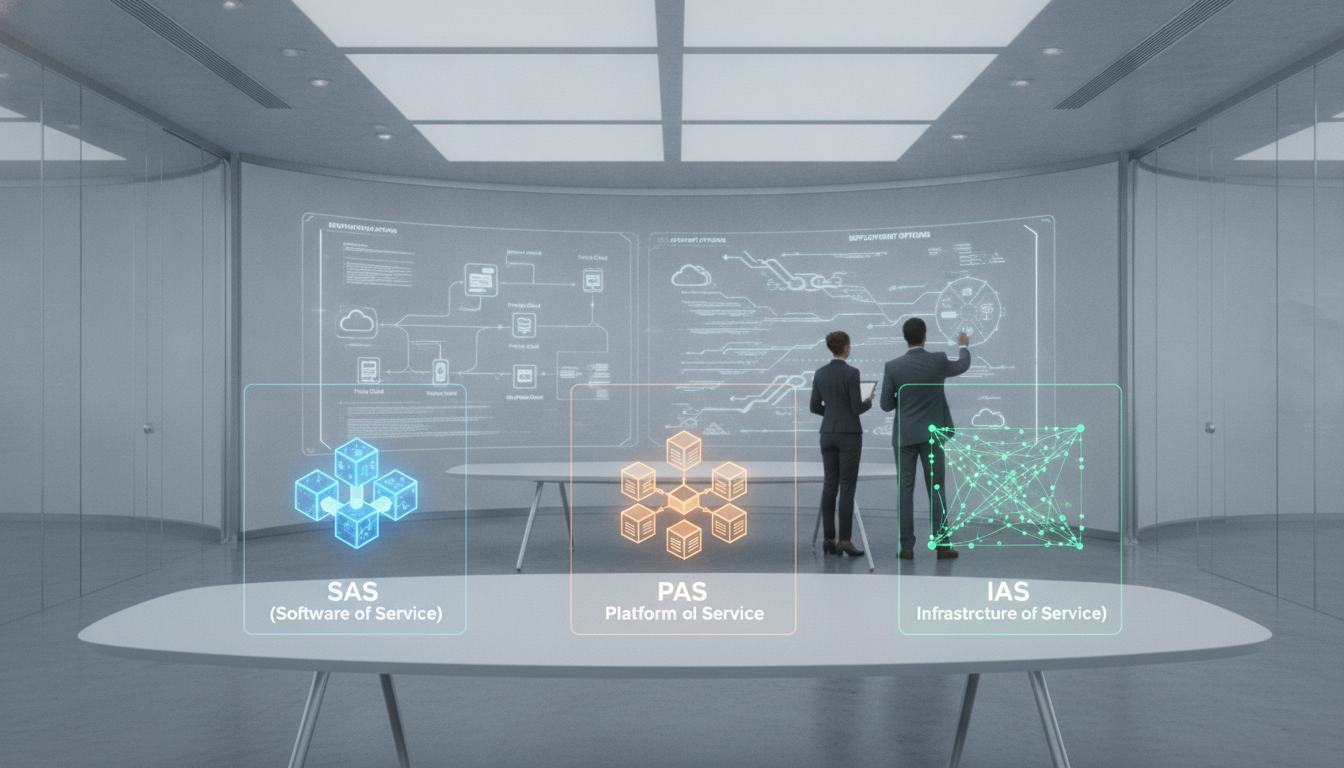
Blockchain Services: Service Models and Deployment Options
Public, Private, and Consortium Networks
Not all services are built on the same network model. The underlying architecture shapes everything from throughput to regulatory compliance.
- Public (Permissionless): Anyone can join and participate, as seen with Bitcoin and Ethereum. Ideal for open, decentralized applications.
- Private (Permissioned): Restricted to authorized participants, offering greater control and privacy for enterprise use.
- Consortium: Governed by a group of organizations, balancing decentralization with controlled access. Common in banking and supply chain consortia.
Each model is supported by different this type of services, and the right choice depends on your need for transparency, speed, and regulatory compliance.
Consulting, Development, and Integration Services
Many this kind of services firms offer a full suite of capabilities: blockchain consulting for strategic guidance, bespoke development for custom dApps and smart contracts, enterprise integration to connect with existing systems, and security audits to safeguard deployments. Firms like Damco provide all four, accelerating time-to-market and ensuring solutions meet industry-specific standards.
Managed Hosting vs. Self-Managed Infrastructure
A critical decision when adopting blockchain is whether to use a fully managed cloud offering or run your own nodes. Managed BaaS offloads the operational burden, including updates and scaling, while a self-managed approach offers full control but demands in-house expertise. Oracle offers hybrid models covering cloud, on-premises, and multicloud editions, catering to diverse enterprise requirements.
Pros and Cons of Blockchain Services
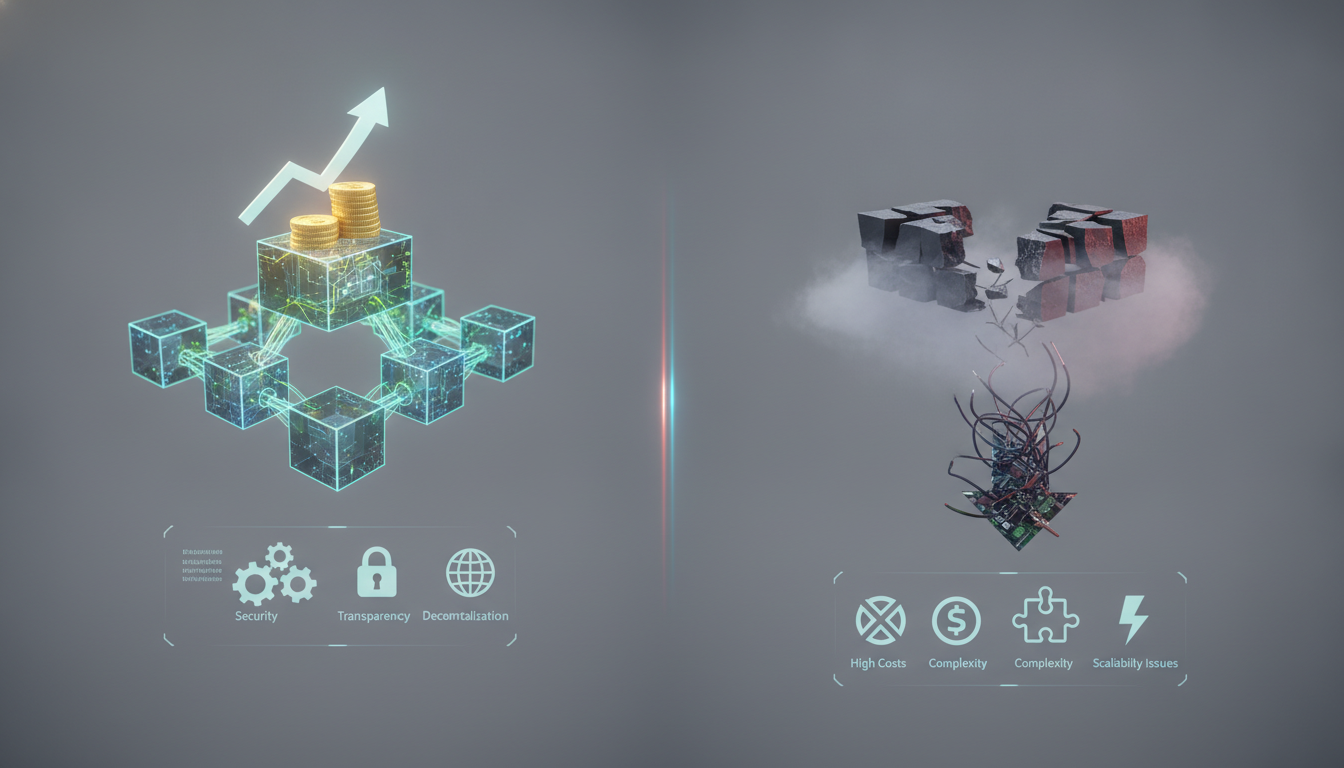
Pros
- Immutable audit trail: Once data is written to the chain, it cannot be altered without network consensus, reducing fraud risk across finance and healthcare.
- Reduced intermediary costs: Smart contracts automate settlement, royalty distribution, and compliance checks, cutting operational overhead significantly.
- Transparency by design: All permitted participants see the same ledger state, eliminating reconciliation disputes in supply chain and interbank settlement.
- Composability: Public services like Ethereum allow protocols to build on each other, accelerating innovation without starting from scratch.
- Regulatory momentum: With the EU’s MiCA framework fully in effect as of June 2026, institutional-grade this type of services now operate within a clear legal structure.
Cons
- Scalability constraints: Base-layer throughput on public chains remains limited compared to centralized databases, though Layer-2 rollups are closing this gap.
- Integration complexity: Connecting this kind of services to legacy ERP and CRM systems requires significant engineering effort and careful API design.
- Energy consumption: PoW-based networks carry a substantial environmental footprint, though PoS alternatives have addressed this at the protocol level.
- Talent scarcity: Solidity, Rust, and ZK-proof expertise remain rare, driving up development costs for custom blockchain projects.
- Regulatory uncertainty outside the EU: While MiCA provides clarity in Europe, other jurisdictions are still developing frameworks, creating compliance risk for global deployments.
Key Advantages of Blockchain
Enhanced Security and Immutability
services provide a level of security that traditional centralized databases cannot match. Once a transaction is validated and added to a block, it cannot be altered without network consensus. This immutability, combined with cryptographic hashing, makes data tamper-proof. IBM highlights that no transaction can be deleted, even by a system administrator, reducing fraud risks in sectors like finance and healthcare.
Transparency and Traceability
Every transaction on a blockchain is visible to permitted participants, creating an indelible audit trail. This is invaluable for supply chain management, where participants can track goods from source to shelf. AWS cites how retail companies use blockchain to track the movement of goods, while Sony Music employs it for digital rights management. Such traceability also helps demonstrate compliance with sustainability and ethical sourcing standards.
Cost Reduction and Automated Trust
By eliminating intermediaries and reconciling records automatically, this type of services can significantly reduce operational costs. Smart contracts automate processes such as payments, insurance claims, and royalty distributions. In energy trading, homeowners with solar panels can sell excess power directly to neighbors via blockchain-based platforms, with smart meters and smart contracts handling settlement instantly, no clearing house required.
Top Industry Players and Platforms
Enterprise Blockchain Leaders
Several technology giants dominate the blockchain services landscape. IBM Blockchain powers supply chain networks like Food Trust, deployed with Walmart and Maersk. Oracle, recognized by Juniper Research as the leader in enterprise blockchain, offers a platform for digital assets and tokenization already used by banks worldwide. AWS provides managed blockchain services that simplify Hyperledger Fabric and Ethereum deployments. These incumbents bring decades of IT infrastructure experience to the blockchain world.
Walmart’s Food Trust: A Case Study in Enterprise Blockchain
IBM’s Food Trust network is one of the clearest examples of blockchain services delivering measurable business value. Before the system, tracing a food item’s origin through Walmart’s supply chain took roughly 7 days. After deploying on Hyperledger Fabric, that same trace takes about 2.2 seconds. The network connects growers, suppliers, processors, shippers, retailers, and regulators on a single permissioned ledger, with each participant seeing only the data they’re authorized to view. Walmart now requires its leafy green suppliers to participate in the network, making Food Trust a compliance requirement rather than an optional upgrade.
“Food safety is a shared responsibility. Blockchain gives every participant in the supply chain the same verified data at the same time, which is something no centralized system could achieve at this scale.” – IBM Food Trust documentation
Niche and Decentralized Solutions
While enterprise platforms focus on permissioned networks, other blockchain services serve the decentralized ecosystem. Chainlink, the market-leading oracle network, has enabled over $31.5 trillion in transaction value by securely connecting smart contracts to real-world data. Its partners include Swift, Euroclear, Mastercard, Fidelity International, and UBS. For organizations requiring custom development, firms like Damco and Altoros provide end-to-end consulting, proof-of-concept development, and integration services, bridging legacy systems and Web3.
“The oracle problem is the most underappreciated challenge in smart contract design. A contract is only as trustworthy as the data it consumes.” – Chainlink whitepaper, foundational architecture documentation
Provider Comparison Table
| Provider | Key Services | Consensus Support | Notable Clients/Partners |
|---|---|---|---|
| IBM Blockchain | BaaS, supply chain, digital identity, smart contracts | Pluggable (PBFT, Raft) | Walmart, Maersk |
| Oracle Blockchain Platform | Enterprise blockchain, digital assets, tokenization | Raft, pluggable | Global banks, Juniper Research leader |
| Chainlink | Decentralized oracle network, data feeds, cross-chain | N/A (oracle service) | Swift, Euroclear, Mastercard |
| Damco | Custom development, consulting, integration | Varies per client | Enterprise across industries |
Blockchain Services Pricing Models
Pricing for blockchain services varies by deployment model, network type, and provider. Understanding the cost structure before committing to a platform can save significant budget.
- Public chain gas fees: Deploying on Ethereum mainnet incurs gas fees that fluctuate with network demand. Layer-2 solutions like Arbitrum and Optimism reduce these costs by 90-99% compared to mainnet, according to on-chain data from L2Beat.
- Enterprise BaaS subscriptions: Managed platforms from providers like Oracle typically start at several thousand dollars per month, scaling with node count, transaction volume, and support tier.
- Custom development projects: Bespoke blockchain services engagements, covering architecture, smart contract development, auditing, and integration, commonly range from $50,000 to over $500,000 depending on complexity and timeline.
- Oracle network fees: Chainlink’s data feed pricing varies by network and update frequency, with costs structured around per-request or subscription models for enterprise integrations.
- Open-source self-hosted: Hyperledger Fabric and Besu are free to deploy, but operational costs including DevOps, security, and maintenance can exceed managed BaaS costs for smaller teams.
The right pricing model depends on your transaction volume, compliance requirements, and internal engineering capacity. For most enterprises, a managed BaaS subscription with a defined SLA is the lowest-risk starting point.
Environmental Impact and Green Blockchain Solutions
The environmental footprint of blockchain services is a real concern, particularly for PoW-based networks. Bitcoin’s mining network consumes substantial energy annually, a figure that draws legitimate criticism from sustainability-focused organizations. That said, the industry has made measurable progress.
Ethereum’s transition from PoW to PoS in September 2022 (the Merge) reduced the network’s energy consumption by over 99%, according to the Ethereum Foundation. This single protocol change made Ethereum-based blockchain services dramatically more sustainable overnight. Newer chains like Solana and Avalanche were designed with energy efficiency as a baseline requirement, not an afterthought.
For enterprises with ESG mandates, permissioned networks running PBFT or Raft consensus are the practical answer. These networks don’t require mining at all, consuming energy comparable to a standard cloud database cluster. Providers like IBM and Oracle run their blockchain services on data centers with renewable energy commitments, giving compliance teams a defensible sustainability narrative. If you’re evaluating blockchain services and environmental impact is a factor, PoS and permissioned networks are the correct technical choice.
Practical Applications Across Industries
Financial Services and Digital Assets
Blockchain services are reshaping finance by enabling near-instant settlement, cross-border payments, and the issuance of digital securities. The Singapore Exchange uses blockchain to streamline interbank payment accounts, eliminating manual reconciliation of thousands of transactions daily. Chainlink has partnered with over 50 banks in Project Pangea to redefine global FX markets, while DTCC is integrating its oracle technology for 24/7 collateral management. Tokenizing assets like bonds, real estate, and commodities is opening new investment opportunities and liquidity pools that were previously inaccessible to smaller institutions.
Supply Chain and Retail
From farm to fork, blockchain services deliver end-to-end visibility. Retail organizations use them to track product provenance, reduce counterfeits, and streamline recalls. AWS notes that companies use blockchain to track the movement of goods, with smart contracts automating payments upon delivery confirmation. In the energy sector, blockchain-based crowdfunding initiatives let individuals sponsor and own solar panels in communities that lack energy access, with transparent rental payouts handled on-chain.
Healthcare and Identity Management
In healthcare, blockchain services secure patient records, ensure drug traceability, and facilitate clinical data sharing. A permissioned network can give hospitals, insurers, and patients controlled access to sensitive data, reducing administrative costs and preventing fraud. Self-sovereign identity solutions built on blockchain let individuals control their digital credentials, streamlining KYC processes for financial institutions and online platforms. Both applications depend on the core features of immutability and selective disclosure that blockchain services provide.
If you want a deeper look at how decentralized identity and token-based systems intersect, our breakdown of Web3 development fundamentals covers the architecture in detail.
Choosing the Right Blockchain Services Provider
Step 1: Define Your Use Case and Objectives
Start by identifying the problem you want to solve: supply chain inefficiency, payment friction, or data silos. Consider the required level of decentralization, throughput, and regulatory compliance. A public chain works for open DeFi applications, while a permissioned network is better for corporate record-keeping. Clear objectives will guide you toward the right blockchain services model before you evaluate a single vendor.
Step 2: Evaluate Platform Scalability and Security
Look for providers that offer high transaction throughput (TPS) and support the consensus mechanism aligned with your needs. Security is non-negotiable: audit the platform’s track record, encryption standards, and response to past incidents. Check whether the provider offers pluggable consensus so you can switch algorithms as your network grows. IBM Blockchain’s pluggable architecture, for example, lets businesses tailor their network’s performance and trust model without rebuilding from scratch.
Step 3: Assess Integration and Support
Blockchain services must integrate with your existing IT stack, APIs, and legacy databases. A provider with strong integration tools and a rich partner ecosystem can save months of development time. Evaluate their service level agreements (SLAs), uptime guarantees, and the availability of professional services for ongoing maintenance and governance. As deployment experience from firms like Damco shows, a well-planned integration strategy is the difference between a successful deployment and a stalled pilot.
The Future of Blockchain Services in 2026 and Beyond
Regulatory Clarity Fuels Institutional Growth
With the EU’s Markets in Crypto-Assets (MiCA) regulation transition period ending in June 2026, blockchain services are entering a new era of regulatory certainty. This has already attracted major financial institutions to the space. Blockchain.com notes that MiCA marks a defining moment for crypto in Europe, and its platform now serves a growing user base across multiple markets. As regulations crystallize, expect a wave of institutional-grade custody, staking, and tokenization services built on compliant blockchain infrastructure.
AI, IoT, and Cross-Chain Interoperability
The convergence of artificial intelligence and blockchain services will accelerate through 2026 and beyond. AI agents will autonomously execute trades, manage supply chains, and optimize energy grids using on-chain data. The Internet of Things (IoT) will feed billions of signed data points into blockchains, enabling trustless automation in manufacturing and logistics. Cross-chain protocols like Chainlink’s CCIP are already making it possible to move assets and instructions across different blockchain networks, creating a unified, interoperable Web3 ecosystem.
Scalability and Mainstream Adoption
Layer-2 scaling solutions like rollups on Ethereum and sharding techniques are tackling historic throughput limitations. On-chain data from L2Beat confirms that these upgrades reduce transaction costs by 90-99% compared to mainnet fees. With over 95 million wallets already created on platforms like Blockchain.com and $31.5 trillion in oracle-enabled value flowing through Chainlink, the infrastructure is in place for billions of users. The next five years will see blockchain services become as ubiquitous as cloud computing, powering everything from micropayments to global trade settlement.
For builders ready to move beyond theory, explore how Digital Blockchains approaches protocol infrastructure and tokenomics design for serious Web3 projects.
Frequently Asked Questions
What is a blockchain service?
A blockchain service is any platform, tool, or consulting engagement that helps organizations create, manage, or interact with blockchain networks and applications. These services abstract away the complexity of running decentralized infrastructure, letting businesses use features like immutability, transparency, and smart contracts without deep in-house expertise.
What are examples of blockchain services?
Examples include Blockchain as a Service (BaaS) platforms from IBM, Oracle, and AWS that host networks; oracle services like Chainlink that bring off-chain data on-chain; digital wallet services from Blockchain.com; and custom development firms such as Damco that build tailored dApps and integrate legacy systems.
How does Blockchain as a Service (BaaS) work?
BaaS operates on a cloud-based model where a provider sets up and maintains a blockchain network, including nodes, consensus, and security. The client accesses the network via APIs or a dashboard, allowing them to develop and run smart contracts and applications without managing the underlying infrastructure. It’s similar to SaaS but for distributed ledgers.
What are the benefits of blockchain services for businesses?
Key benefits include enhanced data security via encryption and immutability, greater transparency across supply chains, automated processes through smart contracts, and reduced operational costs by eliminating intermediaries. These advantages translate into measurable ROI, as seen in Walmart’s food traceability system and interbank settlements powered by blockchain.
Who are the top blockchain services companies?
Leading companies include IBM (Hyperledger-based BaaS), Oracle (enterprise blockchain and digital assets), Chainlink (decentralized oracles), and Blockchain.com (consumer and institutional wallet and trading). Development-focused firms like Damco and Altoros also rank highly for bespoke enterprise solutions. The right choice depends on whether you need a managed platform or a custom-built application.
How much do blockchain services cost?
Costs vary widely. Public blockchain usage incurs gas fees that fluctuate with network demand, though Layer-2 solutions reduce these by 90-99%. Enterprise BaaS subscriptions typically start at several thousand dollars per month, while custom development projects commonly range from $50,000 to over $500,000 depending on complexity and scale. Request a scoped quote based on your specific use case before committing to any vendor.
Ready to Build on Blockchain?
The infrastructure is mature. The regulatory framework is taking shape. What’s missing is builders who understand both the protocol layer and the business logic. If you’re serious about deploying blockchain services that go beyond a pilot, apply to the Genesis Cohort at Digital Blockchains. We work with founders, protocol teams, and enterprises who are ready to build for real.