Key Takeaways
- Blockchain jobs span highly technical roles like smart contract developers and broader roles in marketing, operations, and community management, with annual salaries ranging from $75,000 to over $280,000.
- The two largest job boards, Web3 Jobs and Cryptocurrency Jobs, host a combined total of over 89,000 live blockchain jobs across 9,000-plus companies worldwide.
- Over 70% of blockchain jobs offer remote or hybrid options, enabling talent from any geography to participate in the crypto economy.
- Employers urgently need Solidity, Rust, EVM expertise, and DeFi literacy. Blockchain jobs remain highly merit-based, often placing portfolio and proven contributions above formal degrees.
- Entry points exist for newcomers through paid internships, learn-to-earn programs, and blockchain bootcamps that guarantee job placement, making the sector accessible even without prior crypto experience.
Blockchain jobs are professional roles in the Web3 and cryptocurrency sector, covering development, marketing, operations, and governance. Over 74,000 positions are listed on platforms like Web3 Jobs, Cryptocurrency Jobs, and CryptoJobsList, with salaries frequently exceeding $150,000 for experienced roles.
The global blockchain market has matured far beyond its early Bitcoin roots. Today, jobs encompass everything from core protocol engineering at Layer-1 networks like Ethereum and Solana to non-technical functions that sustain decentralized finance (DeFi) protocols, NFT platforms, and DAO governance systems. According to Web3 Jobs, more than 74,885 openings are currently listed across 7,230 projects. Cryptocurrency Jobs reports over 15,000 jobs posted at 2,000-plus startups. This guide breaks down the types of roles available, the skills that command the highest salaries, where to find credible listings, and a concrete step-by-step plan to land a blockchain job in 2026, whether you are an experienced engineer or a curious newcomer.
What Are Blockchain Jobs?

A blockchain job is any professional position that involves building, maintaining, marketing, or governing systems built on distributed ledger technology. Unlike a decade ago, when opportunities were confined to Bitcoin miners and C++ core developers, the modern blockchain workforce includes UI/UX designers, content writers, data analysts, compliance officers, and brand directors. That shift reflects the industry’s move toward consumer-facing applications at scale.
The Spectrum of Technical Roles
Technical this type of jobs demand deep knowledge of cryptography, distributed consensus, and smart contract programming. Roles such as Solidity Developer, Rust Engineer, and Backend Architect are responsible for writing and auditing code that secures billions in digital assets. A Senior Blockchain Engineer at Paradex, listed on CryptoJobsList, offers $200,000 to $280,000 per year, requiring 8-plus years of backend experience plus proficiency in Solidity, JavaScript, Python, and cloud-native infrastructure. Integration engineers at CoW DAO combine TypeScript with EVM knowledge to build cross-protocol DeFi tooling.
The Expanding Non-Technical Side
Not all this kind of jobs require coding. Marketing managers, graphic designers, community moderators, and business development leads are equally vital to a protocol’s success. CryptoJobsList features a Brand Director position with a salary range of $500,000 to $1,000,000, illustrating that top-tier non-technical talent is compensated at C-suite levels when it can bridge Web3 products with mainstream audiences. Cryptocurrency Jobs lists a Head of Marketing role with a pay band of $150,000 to $180,000, underscoring the premium placed on professionals who understand tokenomics, community culture, and regulatory messaging.
Freelance and Gig-Based Opportunities
Platforms like LaborX connect freelancers with short-term Web3 projects, from writing whitepapers to auditing smart contracts. This flexible model lets developers and creatives enter the ecosystem without committing to full-time employment. Many eventually transition into salaried blockchain after building an on-chain reputation that hiring managers can verify directly.
Top Blockchain Job Boards in 2026
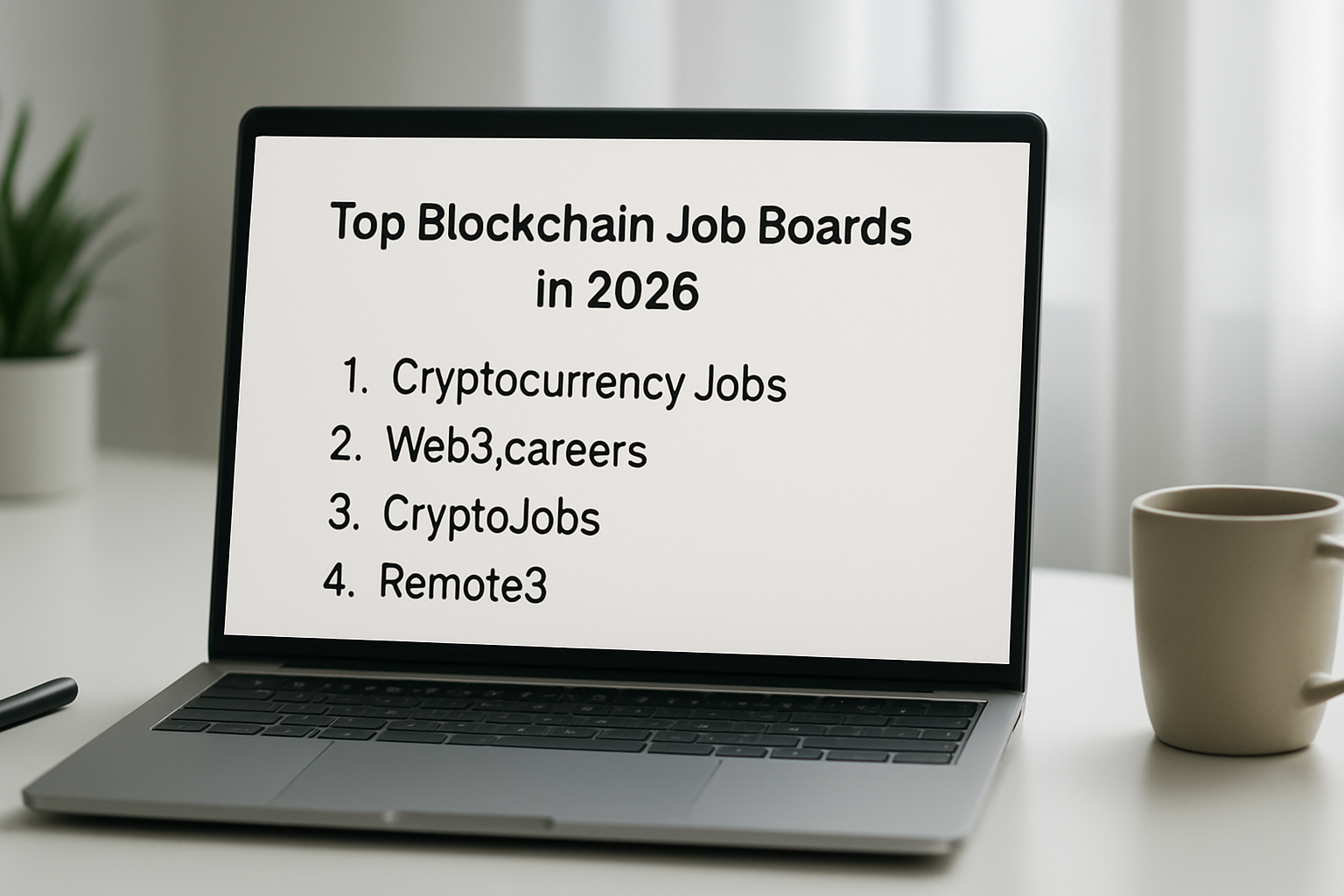
With new startups launching daily, aggregators have become the primary gateway for talent discovery in jobs. Below is a comparison of the four leading platforms by scale, specialization, and unique features.
| Platform | Listings | Specialty | Standout Feature |
|---|---|---|---|
| Web3 Jobs | 74,885 | All Web3 roles, technical and non-technical | Integrated with Bondex ecosystem; World ID verification |
| Cryptocurrency Jobs | 15,000+ | Curated jobs at startups and leading protocols | Job alert subscription; dedicated newsletter |
| CryptoJobsList | 250+ | Comprehensive listings with salary data | Layoffs tracker; research reports on workforce trends |
| LaborX | Varies | Freelance and full-time blockchain gigs | Smart contract-based payments; reputation system |
How to Use These Platforms Effectively
Start by setting up job alerts on Cryptocurrency Jobs and Web3 Jobs for keywords matching your skills, such as “React”, “Rust”, or “DeFi”. Check CryptoJobsList’s Salaries tab regularly to benchmark compensation before applying. For freelance this type of jobs, LaborX lets you propose a rate and get paid in cryptocurrency, often with escrow protection via smart contracts.
Beyond Aggregators: Company Websites and Direct Outreach
Some of the most coveted this kind of jobs are advertised only on company-specific pages. Blockchain.com, for instance, lists roughly 30 open roles spanning BSA Compliance to iOS Engineering across offices in London, New York, and Buenos Aires. Following protocol developers on GitHub and engaging with their Discord communities can surface unposted openings before they hit any job board.
Niche Boards for Specialized Talent
For zero-knowledge cryptography or advanced DeFi research roles, dedicated filters like Web3.career’s “Salaries” filter and CryptoJobsList’s “Zero Knowledge” tag help narrow your search considerably. These niche filters save time and connect you directly with projects that match your expertise level.
Blockchain Jobs Salary Trends in 2026

Compensation across blockchain remains consistently above Web2 averages, even accounting for market cycles. According to data aggregated by CryptoJobsList, a Blockchain Developer earns between $75,000 and $150,000, while a Principal Engineer can command $200,000 to $280,000. Salaries vary by role, geographic region, and the project’s funding stage.
Developer Salaries at a Glance
Solidity and Rust engineers are the highest-paid individual contributors across jobs. On Cryptocurrency Jobs, an Institutional Sales Lead at 0x offers $150,000 to $250,000, and a Head of Capital Formation at Symbiotic is listed at $275,000 to $325,000. Junior roles such as Junior Blockchain Accountant start at $50,000 to $60,000, proving that entry points exist even for those without a programming background.
Non-Technical Pay Ranges
Marketing and operations this type of jobs often carry six-figure salaries. A Lifecycle Marketing Manager at Uphold is posted at $150,000, and a Brand Design Manager at Stellar ranges from $145,000 to $215,000. Even internships in design or data analysis can pay $80,000 to $96,000, as seen with a Data Analyst role at SBI Investment on Web3 Jobs.
Token Bonuses and Equity
Beyond base salary, many this kind of jobs include token allocations or crypto bonuses. Blockchain.com offers employees a “Crypto Bonus” alongside equity, effectively pushing total compensation well above the listed figures when token prices appreciate. This equity-token mix is a defining feature of Web3 compensation and can produce outsized returns if the project succeeds.
“The best blockchain don’t just pay you in dollars. They give you skin in the game through token vesting, which aligns your incentives with the protocol’s long-term success in a way no stock option ever quite manages.” – Observed across multiple Web3 hiring frameworks and DAO contributor agreements
Pros and Cons of Pursuing Blockchain Jobs

jobs offer a genuinely different career experience compared to traditional tech roles. Here’s an honest breakdown before you commit.
Pros
- Compensation ceiling is high. Principal engineers and senior non-technical leads routinely earn $200,000 to $325,000, with token bonuses adding further upside.
- Remote-first by default. Over 70% of this type of jobs are fully remote, giving you geographic freedom that most industries still don’t offer.
- Merit beats credentials. A strong GitHub profile, audited contracts, or a well-researched DeFi blog post can outweigh a computer science degree from a top university.
- Early-stage equity. Joining a protocol at Series A or earlier often comes with token allocations that can appreciate significantly if the project gains traction.
- Rapid skill development. The pace of innovation in Web3 means you’ll encounter new cryptographic primitives, consensus models, and economic designs faster than in any other sector.
Cons
- Market volatility affects hiring. Crypto bear markets trigger layoffs and hiring freezes. CryptoJobsList’s layoffs tracker documents these cycles in real time, and they can be severe.
- Token compensation is speculative. A token bonus worth $100,000 at grant can be worth a fraction of that by vesting date. Total compensation figures can be misleading.
- Regulatory uncertainty persists. Compliance requirements under frameworks like MiCA in Europe are still evolving, which creates ambiguity for both employers and employees.
- Burnout risk is real. Blockchain protocols run 24/7. On-call expectations and the always-on culture of crypto communities can erode work-life balance quickly.
- Scam job postings exist. The pseudonymous nature of Web3 attracts fraudulent listings. Always verify employers through on-chain activity, GitHub history, and community reputation before sharing personal information.
In-Demand Skills for Blockchain Careers
Recruiters filling this kind of jobs prioritize demonstrable skill over pedigree. A computer science degree helps, but a strong GitHub profile with audited smart contracts or a well-researched blog post can be equally persuasive to a hiring manager who reads code for a living.
Technical Proficiencies That Unlock Offers
For engineering blockchain, Solidity remains the foundation language for Ethereum and EVM-compatible chains. Demand for Rust is surging due to its use in Solana, Polkadot, and Cosmos-based projects. According to job descriptions across Web3 Jobs, familiarity with Hardhat, Truffle, and OpenZeppelin is expected, while expertise in zero-knowledge proofs or account abstraction can instantly differentiate a candidate. A Staff/Senior Security Engineer role at Ethena Labs explicitly asks for experience with Aave, Morpho, and Fireblocks, demonstrating that protocol-specific knowledge matters as much as general programming ability.
Soft Skills and Web3 Fluency
Non-technical blockchain jobs require a blend of traditional business acumen and native crypto literacy. A Fintech Research Analyst at Artemis needs to analyze on-chain metrics from sources like Dune Analytics and DefiLlama, while a Community Manager must navigate Discord dynamics and meme-driven engagement cycles. The ability to explain blockchain concepts to a mainstream audience while debating the nuances of MEV with core developers is a rare but highly valued skill set in this market.
How to Build Your Credentials Without a Job
Contributing to open-source DAOs, writing grant proposals, or winning hackathons like ETHGlobal creates a public portfolio that hiring managers actively search. Metana’s Web3 Bootcamp, advertised on Web3 Jobs, offers a job guarantee, underscoring that structured learning paths now directly feed into full-time blockchain jobs. Completing even one audited contract deployment on a public testnet signals more than most cover letters ever will.
How to Transition from Web2 to Web3 Roles
Thousands of experienced software engineers, product managers, and marketers are eyeing blockchain jobs but worry their Web2 background is insufficient. The truth: Web3 projects crave battle-tested talent and are willing to upskill promising hires who show genuine curiosity about the space.
Mapping Your Current Skills to Blockchain Needs
A front-end React developer can target a Front-End Engineer role at decentralized applications like Blackwing, paying up to $250,000. A financial analyst experienced in Excel and Python can pivot to a DeFi Analyst role at Decentralized Masters, ranging from $40,000 to $108,000, or an Investment Analyst position at Arrington Capital. The key is translating your resume: replace “user acquisition” with “growth strategy in Web3” and highlight any personal crypto projects, even small ones.
Leveraging Internships and Part-Time Gigs
Several companies explicitly seek Web2 talent willing to learn on the job. Cryptocurrency Jobs lists a Business Development Intern at Bitbase with a salary of $1,000 to $2,000 per month, ideal for a sales professional transitioning into crypto. Part-time blockchain jobs like Fintech Research Analyst at Artemis let you test the waters while maintaining a stable income from your current role.
The AI Bridge
With the emergence of on-chain AI agents, Web2 data scientists and ML engineers find their skills directly applicable to crypto openings. Positions like AI and Cloud Infra Software Engineer at Bitdeer or AI Platform Engineer at 0G Labs fuse traditional AI stacks, including PyTorch and TensorFlow, with blockchain infrastructure. These roles offer salaries competitive with Big Tech but with greater upside through token incentives.
The Rise of Remote Blockchain Jobs
Remote work isn’t a perk in this sector. It’s the default operating model. Approximately 70% of blockchain jobs listed on Web3 Jobs and Cryptocurrency Jobs are remote-first, with companies like Tether, CoW DAO, and Symbiotic hiring globally without location restrictions.
Why Remote Is the Default
Blockchain protocols operate 24/7 across multiple time zones, making co-located teams impractical for most projects. Remote positions allow protocols to tap into talent from Singapore to Buenos Aires without relocation costs or visa delays. A Principal Engineer at Paradex is hired “remotely for exceptional candidates,” while a Technical Lead at Tether is advertised as “100% remote,” reflecting the industry’s genuinely borderless nature.
Salary Adjustments and Geographic Equity
Some platforms, like Web3 Jobs, display salaries without location adjustment. A $80,000 to $96,000 Data Analyst role pays the same whether you’re in Manila or Miami. Larger firms like Binance occasionally adjust based on local cost of living, so a Senior Marketing Manager in Japan may earn differently than one in Dubai. Tools like CryptoJobsList’s salary research help you compare location-specific pay bands before negotiating.
Staying Productive in a Distributed Team
Remote blockchain jobs demand exceptional self-management. Successful practitioners use Notion for documentation, Telegram and Discord for async communication, and GitHub for code reviews. Employers often provide a technology stipend. Paradex, for instance, offers $3,000 USD for first-year setup to ensure you have a productive home office from day one.
“Distributed teams building on public blockchains have a natural advantage: the codebase is open, the community is global, and the best contributors surface regardless of geography. Remote isn’t a compromise. It’s a feature.” – A perspective shared consistently across Web3 hiring documentation and DAO contributor frameworks
How to Land a Blockchain Job: A 5-Step Process
Breaking into blockchain jobs follows a repeatable pattern, even if you’re starting from scratch. Below is a tactical plan used by successful candidates in 2026.
- Identify Your Niche. Decide whether you want to be a technical contributor (smart contract engineer), a business-side operator (marketing, biz dev), or a hybrid role (product manager). Study real job descriptions on Web3 Jobs to align your learning path with actual market demand before spending time on courses.
- Build a Public Portfolio. For developers, deploy at least 3 smart contracts to testnet and link them on your GitHub. For non-technical blockchain jobs, publish articles on Mirror.xyz or Substack analyzing a DeFi protocol. These roles are won through demonstrated curiosity, not just resumes.
- Engage with Communities. Join Discord servers of projects like 0x, Ethereum, and Solana. Answer questions, suggest improvements, and attend virtual meetups. Many blockchain jobs are filled after someone stands out in a community chat. A Community Manager role at WOO, for instance, explicitly values prior community involvement over formal experience.
- Set Job Alerts and Apply with Purpose. Use Cryptocurrency Jobs’ alert feature to receive daily emails matching your filters. Apply only to positions where you meet at least 70% of requirements, and always include a brief note referencing the company’s latest on-chain activity. Generic applications get ignored.
- Ace the Web3 Interview. Expect technical deep-dives covering live coding, protocol design, and culture-fit conversations. Prepare to discuss transaction ordering, Ethereum Improvement Proposals (EIPs), and recent security incidents. Demonstrated passion for the space often outweighs a perfect algorithm answer.
Common Mistakes to Avoid
Candidates often spray-and-pray applications, which recruiters ignore immediately. Another frequent error is focusing solely on technical skills while neglecting the social layer. Blockchain jobs require a public presence, whether through a crypto Twitter handle, a Farcaster profile, or a history of on-chain governance participation. Ignoring smaller protocols, where you can become an early team member with outsized equity, is a consistently missed opportunity.
Resources for Continuous Upskilling
CryptoJobsList publishes an annual Web3 Workforce Report detailing hiring trends and salary shifts. Metana’s bootcamp offers structured guidance with a job placement guarantee. Reading Web3 Jobs’ salary data regularly keeps you calibrated on shifting compensation norms across different blockchain jobs categories.
Future Outlook: AI, Regulation, and Blockchain Jobs
The next generation of blockchain jobs is being shaped by two forces: AI agents becoming on-chain participants, and formal regulatory frameworks creating entirely new compliance functions. Both trends are already visible in active job listings as of 2026.
AI-Native Blockchain Roles
Positions like AI Platform Engineer at 0G Labs combine deployment of ML models with smart contract infrastructure, while Senior Engineer roles at CertiK now expect familiarity with AI-assisted security analysis. Based on current hiring volumes on Web3 Jobs, the convergence of AI and crypto is on track to create 10,000-plus new openings by 2027. These are not speculative roles. They are already appearing in active listings today.
Compliance and Legal Hiring Boom
After years of regulatory ambiguity, formal frameworks are mandating dedicated compliance staff across the industry. Blockchain.com lists multiple compliance openings, including a Deputy BSA and Sanctions Officer in New York. Transak’s search for a Compliance Analyst in Vienna and BitGo’s Compliance Analyst role in Dubai signal that these blockchain jobs are global and permanent, not temporary responses to enforcement pressure.
DAOs and the Next Wave of Employment
Decentralized autonomous organizations are beginning to issue on-chain employment contracts with token-based vesting schedules. While still early, this model, exemplified by CoW DAO’s hired integration engineers, points toward a future where a “job” is not with a company but with a protocol’s community. Early participants in DAO governance often transition into paid contributor roles, making it a low-risk entry point into the broader blockchain jobs market.
If you want to go deeper on how DAOs structure contributor compensation and governance, our guide to DAO creation covers the mechanics in detail. For those interested in the token economics that underpin many of these roles, our tokenomics deep dive is worth reading before your next interview.
Conclusion
The market for blockchain jobs in 2026 is deeper, more diverse, and better compensated than at any prior point in the industry’s history. From $80,000 entry-level analyst positions to $500,000-plus brand director roles, the opportunity spectrum reflects an industry that has matured while retaining its meritocratic, border-crossing character. Whether you are a Rust developer targeting a $200,000-plus protocol role or a marketing professional pivoting into token go-to-market strategy, the path forward is the same: start contributing today. Join a DAO, set your job alerts on Web3 Jobs, and begin building the on-chain reputation that opens doors. The next wave of blockchain jobs will be defined by AI integration, regulatory clarity, and decentralized employment models. The talent that embraces these trends early will help build the financial infrastructure of the next decade.
Ready to build something real? Apply to the Genesis Cohort at Digital Blockchains and work alongside protocol builders who are actively shaping what comes next.
Frequently Asked Questions
What is a blockchain job?
A blockchain job is any role, technical or non-technical, that contributes to the development, operation, marketing, or governance of systems using blockchain technology. Examples include smart contract developers, compliance analysts, community managers, and brand directors at crypto-native companies.
What skills do I need for blockchain jobs?
Technical blockchain jobs require Solidity, Rust, or Golang, plus tools like Hardhat and OpenZeppelin. Non-technical positions demand Web3 literacy, understanding of tokenomics, and strong digital community engagement. A portfolio of audits, blog posts, or hackathon wins is often more important than a formal degree.
How can I find remote blockchain jobs?
Over 70% of listings on platforms like Web3 Jobs and Cryptocurrency Jobs are remote-first. Filter by location “Remote” and set up alerts for your desired role. Many blockchain jobs also offer hybrid arrangements in crypto hubs like Singapore, London, and New York.
What are the average salaries for blockchain jobs?
Salaries range from $50,000 for junior positions to $280,000-plus for principal engineers. Marketing heads can earn $150,000 to $180,000, and brand directors up to $1,000,000. Token bonuses and equity often significantly increase total compensation beyond the listed base figures.
Can I get an entry-level blockchain job with no experience?
Yes. Many companies offer paid internships ranging from $1,000 to $2,000 per month, plus bootcamps with job placement guarantees. Contributing to open-source DAOs or completing a learn-to-earn program demonstrates real value without requiring a formal crypto background.
Are blockchain jobs in demand in 2026?
Extremely. With over 74,000 open positions on major boards and new AI-related roles emerging weekly, demand continues to outstrip supply. The sector’s growth and regulatory maturation ensure that blockchain jobs will remain a high-growth career path for the foreseeable future.