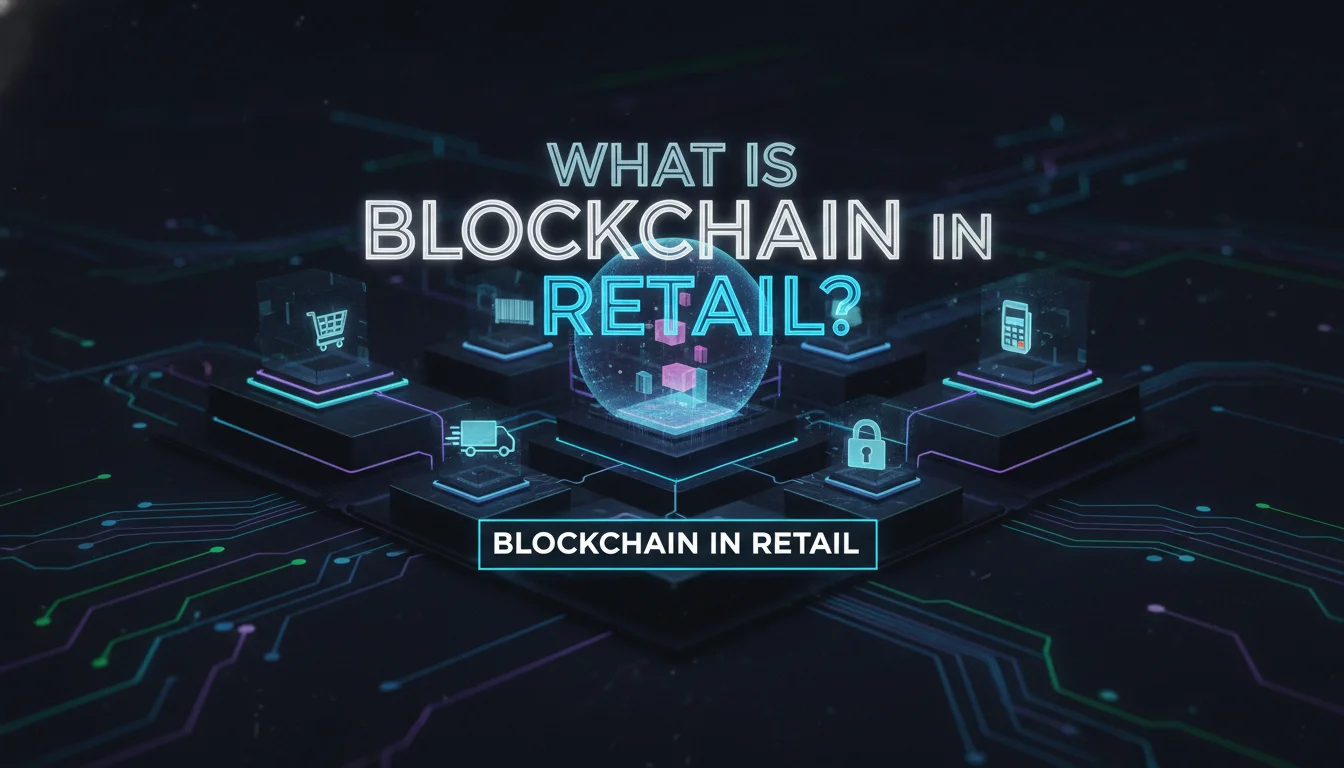
Blockchain in retail is the use of decentralized ledger technology to secure transaction processing, product tracking, and supply chain monitoring across a shared, tamper-proof record that connects retailers, suppliers, and consumers.
Key Takeaways
- in retail creates a single, immutable record across every node in the supply chain, eliminating the data silos that fuel fraud and counterfeiting.
- The global blockchain in retail market is projected to reach $62.6 billion by 2029, with the US segment alone expected at $34.3 billion by 2035.
- Tokenized loyalty programs represent one of the fastest-growing applications, with the tokenized loyalty point market projected to hit $43.1 billion by 2033.
- Public, private, and consortium blockchains each serve different retail needs. Choosing the wrong model is one of the most common implementation mistakes.
- Successful deployments start narrow: one high-friction use case, a controlled pilot, measurable ROI, then scale.
- Deloitte identifies three strategic drivers for blockchain in supply chains: predicting risk, enabling ESG tracking, and building trust across multi-stakeholder environments.
What Is Blockchain in Retail?
A Decentralized Ledger for Retail Operations
According to Itransition, blockchain in retail is the application of decentralized ledger technology to enable secure and transparent transaction processing, product tracking, and supply chain monitoring. It increases operational visibility, optimizes business processes, and improves trust among consumers and partners. In a retail context, it connects data across stores, brands, and suppliers through a shared, verifiable record that no single party can alter without network consensus.
At its core, a blockchain is a distributed database that maintains a continuously growing list of ordered records called blocks. Each block contains a cryptographic hash of the previous block, a timestamp, and transaction data. Because the ledger is replicated across many computers in a peer-to-peer network, there is no central point of failure. This architecture makes the record append-only and tamper-evident, which is essential for supply chains where multiple parties may not inherently trust each other.
Why Retail Trust Is Under Strain
Retail is built on trust, yet that trust is under pressure from multiple directions. According to the BSV Association, global retail research shows that 67% of consumers do not trust retailers with their data, and 55% say recommendations feel irrelevant. Fraud losses in retail exceed $100 billion a year. These problems persist because traditional systems rely on siloed databases that do not communicate with one another, leaving gaps that slow decision-making and weaken customer confidence.
Blockchain in retail provides a shared foundation that strengthens trust and improves accuracy. By recording transactions and product events on an immutable ledger, retailers can give consumers verifiable proof of provenance, authenticity, and sustainability. This is not a standalone fix. It is a foundational layer for how information moves across the retail value chain.
Core Attributes: Shared, Decentralized, Immutable, Secure
To understand why blockchain in retail works, examine four key attributes. Shared means transactions are recorded, replicated, and distributed across a network. Decentralized means transactions occur without a third-party approver, reducing the risk of data manipulation or theft. Immutable means records are append-only because there is no central authority to change them. Secure means all records are individually encrypted and verified through consensus mechanisms, making the system fault-tolerant and reliable.
Market State and Adoption Drivers
Market Size Projections
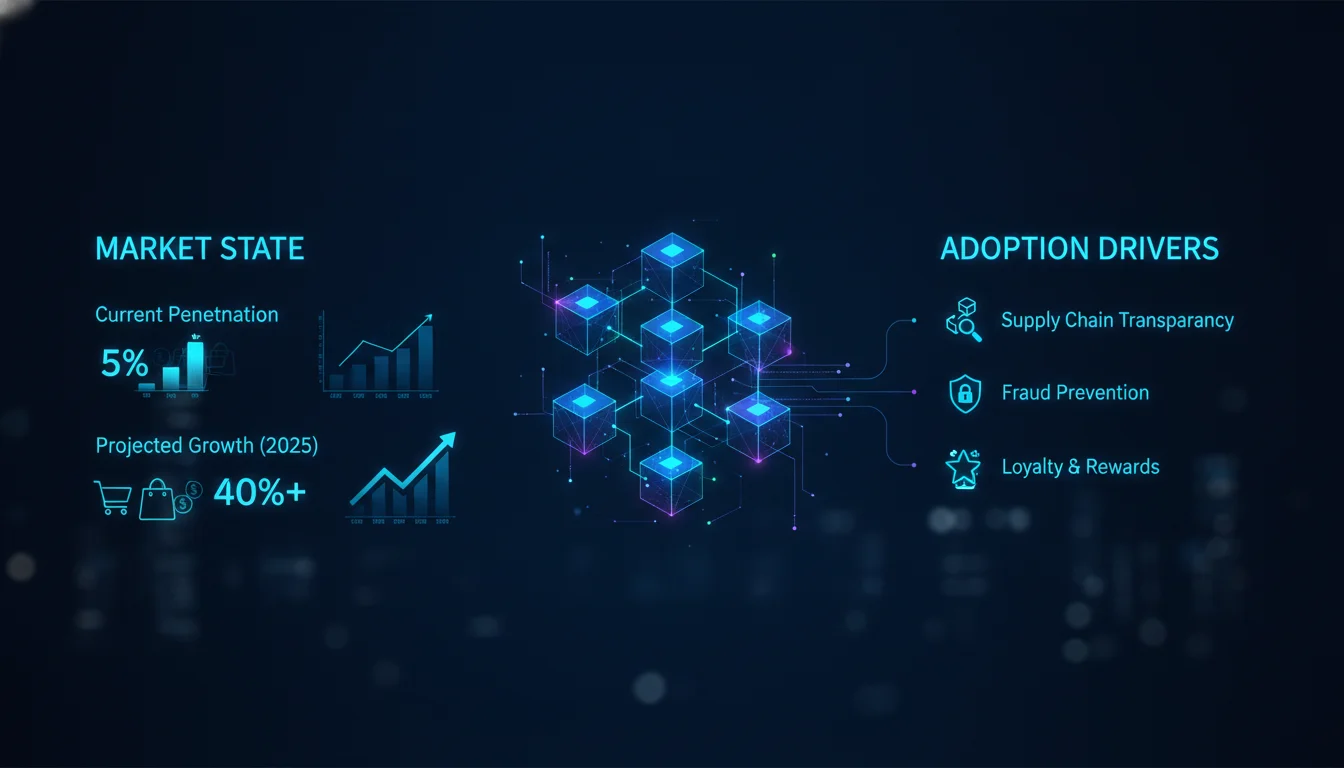
The global blockchain in retail market is expected to reach $62.6 billion by 2029, according to The Business Research Company, cited by Itransition. The US market alone is projected at $34.3 billion by 2035, based on data from Market Research Future. These two projections differ in scope and time horizon, which reflects a broader reality: the market is still maturing and analysts measure it differently. Both figures point to substantial growth from the current base.
Consumer Trust Gaps and Fraud Pressure
Sustainability and trust now drive purchase decisions at scale. Consensys reports that 66% of global consumers and 73% of millennials are willing to pay more for sustainable goods. Yet the average transparency score among the top 200 most prominent fashion brands and retailers sits at just 21%. Brand trust tops the list of sustainability factors influencing purchasing for nearly two-of-three consumers globally, at 62%. These numbers create a clear business case: blockchain in retail provides the verifiable data needed to close the transparency gap.
From Pilot Programs to Scaled Adoption
Retailers are moving beyond pilot programs and beginning to adopt blockchain at scale, according to UST. The shift is driven by the need for better data transparency, reduced fraud, faster payments, and streamlined operations. Early pilots focused on single use cases like food traceability or counterfeit detection. Now, large retailers are integrating blockchain into broader supply chain and customer engagement platforms. This transition marks a move from experimentation to operational deployment.
Deloitte’s Three Strategic Effectiveness Drivers
According to Deloitte, supply chain executives are focusing strategic investments on three key effectiveness drivers. First: predicting supply chain risk before it materializes. Second: enabling ESG tracking through supply chain traceability, which satisfies both regulatory pressure and consumer demand. Third: enhancing trust in complex, multi-stakeholder environments where participants may not inherently trust each other. Blockchain addresses all three simultaneously by providing a shared, tamper-evident record that any authorized participant can audit in real time.
Core Benefits of Blockchain in Retail
Supply Chain Transparency and Traceability
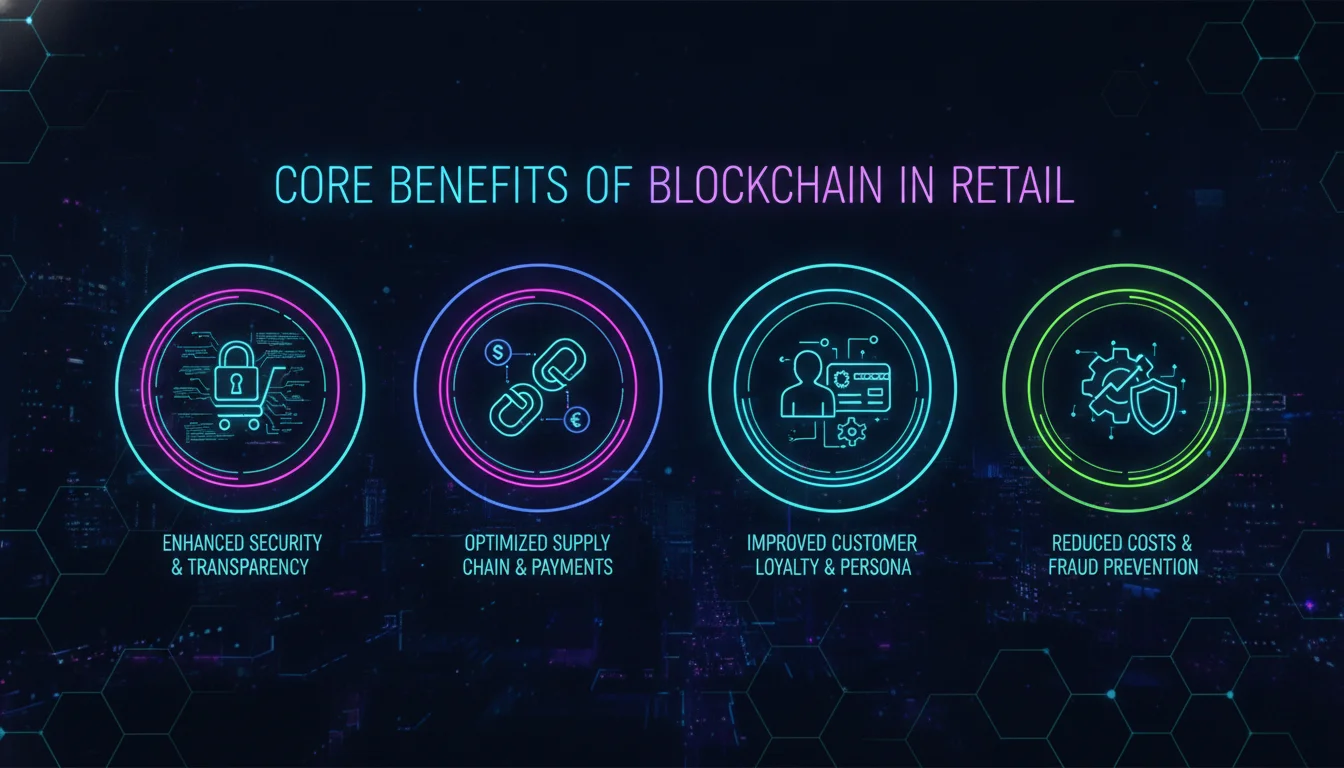
Supply chain traceability is one of the most immediate benefits of blockchain in retail. The COVID-19 pandemic exposed the fragility of lean, just-in-time supply chains and shifted consumer expectations from a two-hour delivery model toward a stronger demand for visibility. According to Deloitte, blockchain can improve both supply chain transparency and traceability while reducing administrative costs. A blockchain ledger gives each product a tamper-evident record of every step from raw material sourcing to final sale, enabling retailers to track provenance and compliance in real time.
Counterfeit Prevention and Brand Authenticity
Counterfeiting leads to product recalls, brand reputation damage, consumer distrust, and significant monetary losses. Blockchain systems combat this by storing proof-of-origin information in an immutable ledger. According to Itransition, retailers and customers gain visibility into the entire supply chain, from extraction of raw materials to shipment to the end consumer. Luxury items can be labeled with one-to-one counterfeit-proof features and tracked through digital twin technology, which connects physical products to digital records. This approach supports brand authenticity and allows customers to verify ownership before purchase.
Reducing Costs and Settlement Time
Blockchain reduces operating costs by improving data management and eliminating intermediaries in transactions. Consensys notes that reduced costs and settlement time are direct benefits for retail fashion and luxury companies. Instead of relying on multiple disconnected systems and manual reconciliation, blockchain provides a single source of truth. This cuts administrative overhead, reduces disputes, and accelerates supplier payments across complex multi-party environments.
Pros and Cons of Blockchain in Retail
Pros
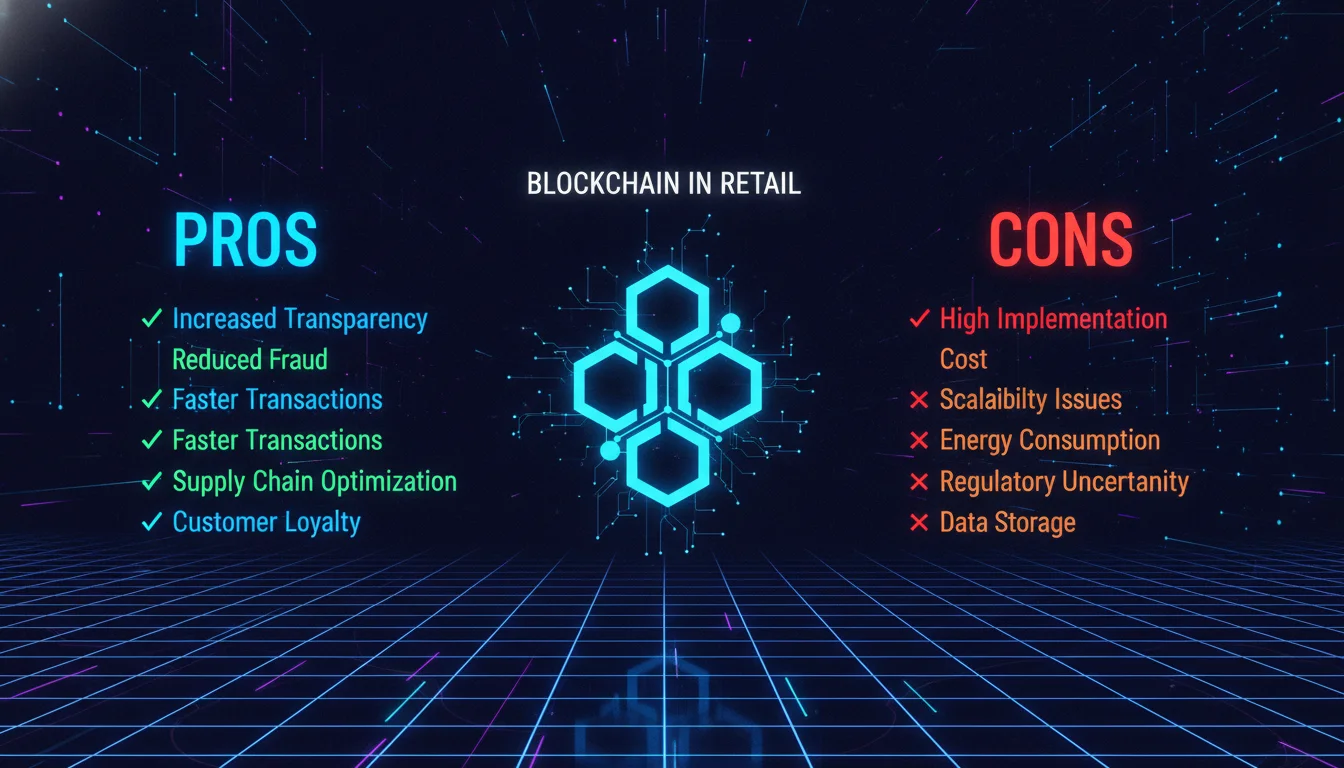
- Tamper-evident records: Every product event is cryptographically signed and append-only, making fraud and data manipulation significantly harder to execute.
- Real-time traceability: Retailers can trace a product’s origin in seconds rather than days, which is critical for food safety recalls and luxury authentication.
- Tokenized loyalty programs: Customers can hold, trade, and resell tokenized rewards, increasing perceived value and long-term engagement.
- Automated supplier payments: Smart contracts trigger payments when predefined conditions are met, removing manual reconciliation and reducing settlement delays.
- ESG credibility: Verifiable on-chain sustainability data closes the gap between brand claims and consumer expectations.
Cons
- Integration complexity: Connecting blockchain to legacy ERP systems, point-of-sale infrastructure, and IoT devices requires significant engineering effort and data standardization work.
- Upfront cost: Permissioned network setup, smart contract audits, and partner onboarding carry real costs that can delay ROI for smaller retailers.
- Data privacy tension: Immutable ledgers conflict with GDPR’s right to erasure. Zero-knowledge proofs and off-chain storage can help, but they add architectural complexity.
- Not a silver bullet: As Deloitte warns, blockchain cannot protect against geopolitical disruptions, cyberattacks, or climate-driven supply chain shocks on its own.
- Partner dependency: A consortium blockchain is only as strong as its weakest participant. Onboarding suppliers with inconsistent data standards undermines the entire system.
Blockchain Use Cases Across Retail Operations
Product Provenance and Food Safety Monitoring
Blockchain-based provenance tracking creates an accurate record of a product’s entire lifecycle from sourcing to purchase. As goods move through the supply chain, all data regarding origin, location changes, and movements is recorded as timestamped blocks in chronological order. In permissioned networks, suppliers, manufacturers, and distributors receive role-based access to the ledger, and each participant uses a private cryptographic key to sign transactions. For food safety, IoT sensors collect temperature and humidity data and upload it directly to the blockchain. Regulatory bodies such as the FDA recognize blockchain’s potential for food traceability and safety monitoring, according to Itransition.
Tokenized Loyalty Rewards and Customer Engagement
Retailers are increasingly implementing tokenized loyalty points to create a more flexible, secure, and tradable rewards ecosystem. According to research by Growth Market Reports, cited by Itransition, the tokenized loyalty point market will reach $43.1 billion by 2033, with a CAGR of 22.1% from 2025 to 2033. Tokenized reward programs allow customers to resell their rewards on a secondary market, which increases the perceived value of loyalty points and deepens engagement. Blockchain also enables gamification and diversified customer experiences that go beyond simple point accumulation.
Smart Contracts for Supplier Agreements and Global Transactions
Smart contracts are self-executing agreements with terms written directly into code. They automate supplier payments, enforce compliance, and reduce the need for manual contract management. In retail, smart contracts for supplier agreements streamline global transactions by triggering payments automatically when predefined conditions are met, such as delivery confirmation or quality checks. EffectiveSoft highlights that blockchain enables faster transactions and eliminates intermediaries, which is particularly valuable for retailers operating across borders with multiple currencies and banking partners.
Digital Twins and Luxury Authentication
Digital twin technology connects physical luxury goods to on-chain digital records, creating a one-to-one link between the object and its verifiable history. Each item receives a unique digital identity that travels with it through resale, repair, and ownership transfers. Consensys describes how luxury retail items can be labeled with counterfeit-proof features and tracked through digital twin architecture, allowing customers to log in to a brand’s platform and prove ownership of an asset that can later be transferred to another party. This approach is gaining traction in high-value fashion and collectibles, where provenance directly affects resale price.
How to Implement Blockchain in Retail: A Step-by-Step Process
Step 1: Identify High-Friction Use Cases
Map processes where data fragmentation, counterfeiting, or slow payments create the most cost and risk. Common starting points include supply chain traceability, loyalty programs, and supplier settlements. The goal is to find a use case with a clear before-and-after metric so ROI is measurable from day one.
Step 2: Choose a Network Model and Consensus Mechanism
Decide between public, private, or consortium blockchains based on trust requirements, scalability needs, and regulatory constraints. A permissioned network suits internal data and sensitive supplier pricing. A public network supports tokenized assets and customer-facing authenticity verification. Most enterprise retail deployments land on consortium or private models for their first production system.
Step 3: Integrate IoT Devices and Existing Systems
Connect IoT sensors, ERP systems, and point-of-sale data to the blockchain through APIs or middleware. This ensures that physical events are captured and recorded automatically without manual data entry, which is the primary source of error in traditional supply chain systems.
Step 4: Run a Controlled Pilot
Select a subset of products, suppliers, and customers to test the solution. Measure improvements in traceability, dispute resolution, and customer engagement before scaling. A narrow pilot also surfaces integration gaps and data standardization issues before they become expensive problems.
Step 5: Audit, Scale, and Monitor KPIs
Conduct a security and compliance audit, then expand to additional product lines and partners. Continuously track metrics such as fraud reduction, settlement time, and customer trust scores. Smart contract code should be audited by an independent security firm before any production deployment.
Overcoming Implementation Barriers
Blockchain is not a silver bullet. Supply chains are subject to geopolitical tensions, cyberattacks, inflation, droughts, and product stockouts, as Deloitte warns. Retailers must integrate blockchain with broader risk management strategies rather than treating it as a standalone solution. Other barriers include the cost of integration, the need for data standardization across partners, and organizational change management. Successful deployments almost always start with a narrow use case and expand only after clear ROI is demonstrated.
Internal Readiness Checklist
- Stakeholder alignment: Ensure suppliers, logistics providers, and internal teams agree on data sharing rules before writing a single line of smart contract code.
- Data standards: Adopt common product identifiers and event schemas so all parties can interpret blockchain records consistently.
- Compliance and privacy: Evaluate GDPR and industry regulations, especially for consumer data on a distributed ledger. Zero-knowledge proofs can separate transactional data from personally identifiable information.
- Security controls: Manage private keys, access roles, and smart contract audits to prevent exploits before they reach production.
Comparison Table: Blockchain Approaches for Retail
Public vs. Private vs. Consortium Blockchains
A public blockchain is open and permissionless, meaning anyone can join and verify transactions. A private blockchain is invitation-only and controlled by a single organization. A consortium blockchain is governed by a group of approved participants, such as multiple retailers and suppliers. Each model offers different trade-offs for speed, privacy, and decentralization.
| Attribute | Public Blockchain | Private Blockchain | Consortium Blockchain |
|---|---|---|---|
| Access control | Open, permissionless | Invitation-only, permissioned | Shared among approved members |
| Trust model | No central authority; trust in code | Single organization governs | Group governance by industry partners |
| Scalability | Lower throughput, higher latency | Higher throughput, lower latency | Moderate throughput, balanced |
| Typical retail use | Tokenized assets, public proof of authenticity | Internal supply chain data, audit logs | Multi-partner provenance, supplier agreements |
Selecting the Right Model
For most retail supply chain applications, a private or consortium blockchain is preferred because it protects sensitive pricing and supplier data while still providing a shared, tamper-evident record. Public blockchains are better suited for customer-facing features like tokenized loyalty points or publicly verifiable authenticity. Retailers may also use a hybrid approach, anchoring critical proofs on a public chain while keeping operational data on a private network.
Real-World Examples of Blockchain in Retail
Walmart and Food Traceability
Walmart is one of the most cited examples of blockchain in retail for food traceability. According to Lightspeed, Walmart uses blockchain technology to track food products through its supply chain. The goal is to reduce the time needed to trace the origin of contaminated food from days to seconds. This capability improves food safety, reduces waste, and builds consumer confidence in grocery retail.
LUXARITY and Luxury Resale
In luxury resale, Consensys describes how LUXARITY hosts an annual Preloved Pop-Up sale for gently used luxury retail items. When customers scan an item’s QR code, they see background information including previous owners, where the item was worn, and the positive environmental impact of the purchase. The code may also reveal a digitized handwritten note from the original owner. Customers can choose which charity receives their donation and track how that donation is spent transparently on the blockchain.
“Enterprise Ethereum gives retailers, manufacturers, and end-users unprecedented transparency, traceability, and tradability in retail fashion and luxury supply chain management.” – Consensys, Blockchain Use Cases in Retail Fashion and Luxury
BSV Association and Enterprise-Scale Retail
The BSV Association, a Switzerland-based non-profit, promotes the BSV blockchain as an enterprise-scale public blockchain designed for data integrity and enterprise solutions. According to the association, BSV gives retailers practical tools to strengthen loyalty, reduce risk, and operate more efficiently without overhauling existing workflows. Its focus on scalability, security, and energy efficiency positions it for government and enterprise retail applications, including proof-of-concept deployments where throughput and cost per transaction matter.
“Blockchain is a record of transaction data that relies on a shared ledger. This ledger is inherently tamper-evident and provides a trusted, shared, and reliable way to record, validate, and view transactions across a complex system with many participants, some of whom may not inherently trust each other.” – Deloitte, Using Blockchain to Drive Supply Chain Transparency
Challenges, Limitations, and Future Outlook
Technical and Organizational Barriers
Despite its potential, blockchain in retail faces meaningful hurdles. Technology is no silver bullet, and supply chains are often subject to factors including geopolitical tensions, cyberattacks, inflation, droughts that disrupt shipping, and critical product stockouts, according to Deloitte. Blockchain also requires interoperability with legacy systems, data standardization across partners, and upfront investment. Organizations that treat it as a standalone tool rather than part of a broader transformation are less likely to see lasting results.
Data Privacy and Regulatory Considerations
Consumer data privacy remains a central concern. With 67% of consumers not trusting retailers with their data, any blockchain deployment must address how personal information is handled on a distributed ledger. Permissioned ledgers and zero-knowledge proofs can help separate transactional data from personally identifiable information. Regulatory frameworks such as GDPR in Europe also require careful architectural design to ensure that immutable records do not conflict with the right to erasure. Compliance must be built in from day one, not retrofitted after deployment.
Future Outlook for Blockchain in Retail Beyond 2026
As of 2026, blockchain in retail is shifting from a competitive differentiator to a baseline expectation for transparency. The tokenized loyalty market alone is projected to reach $43.1 billion by 2033, signaling a broader move toward tokenized customer engagement. The convergence of IoT, AI, and distributed ledgers will likely enable automated, verifiable supply chains that self-report quality and compliance without human intervention. Retailers that build this infrastructure now will be better positioned to meet rising consumer expectations for authenticity and accountability.
Frequently Asked Questions
What is blockchain in retail?
Blockchain in retail is the use of decentralized ledger technology to securely process transactions, track products, and monitor supply chains. It provides a tamper-proof, shared record that builds trust among retailers, suppliers, and consumers without relying on a central authority.
How does blockchain prevent counterfeiting in retail?
Blockchain stores proof-of-origin and ownership data in an immutable ledger that any authorized participant can audit. Retailers and customers can verify a product’s entire supply chain from raw materials to final sale, making counterfeit goods significantly harder to introduce undetected.
What are the main use cases for blockchain in retail?
Key use cases include product provenance tracking, counterfeit prevention, food safety monitoring, tokenized loyalty rewards, smart contracts for supplier agreements, digital twin authentication for luxury goods, and streamlining cross-border transactions.
Is blockchain in retail expensive to implement?
Implementation costs vary depending on network type, integration complexity, and scale. A controlled pilot with a permissioned blockchain reduces upfront investment, and most retailers start with a single high-ROI use case before expanding to broader supply chain or loyalty applications.
Which blockchain platforms are used in retail?
Retailers use a mix of public, private, and consortium blockchains. Examples include public platforms like BSV for enterprise data integrity, permissioned Hyperledger-style networks for supply chain management, and Ethereum-based tokenization for loyalty programs and digital asset ownership.
Can blockchain improve customer loyalty programs?
Yes. Tokenized loyalty points are more flexible, secure, and tradable than traditional rewards. Customers can resell points on secondary markets, which increases perceived value and deepens long-term engagement beyond simple point accumulation.
Ready to build blockchain infrastructure for your retail operation? Apply to the Genesis Cohort at Digital Blockchains and work with a team that deploys production-grade distributed systems, not proof-of-concept demos.