Companies offering blockchain app development services are specialized firms that design, build, and deploy decentralized applications, smart contracts, and enterprise blockchain platforms for businesses across industries.
Key Takeaways
- development services build secure, scalable decentralized applications, smart contracts, and enterprise blockchain platforms tailored to specific business needs.
- According to Gartner, blockchain’s business value will reach $176 billion by 2025 and exceed $3.1 trillion by 2030, signaling massive long-term opportunity.
- The U.S. leads global blockchain adoption with more than 40% of global market share and a 30%+ CAGR, per on-chain market data.
- Project costs range from $10,000 for a basic dApp to over $1,000,000 for complex enterprise systems, depending on scope and security requirements.
- When selecting a partner, prioritize smart contract auditing capability, multi-chain experience, regulatory compliance, and post-launch support.
- Demand for blockchain development services has doubled in recent years, tightening the talent pool and raising the bar for partner selection.
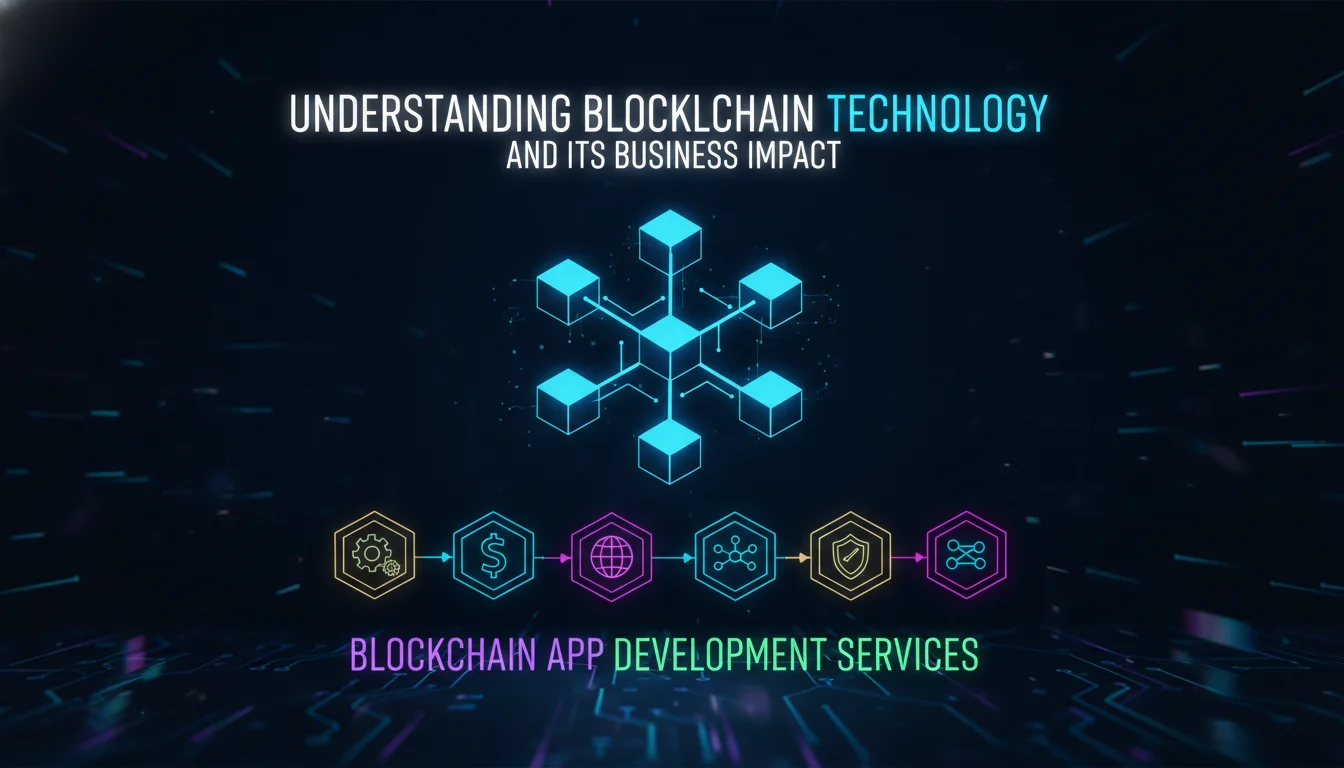
Understanding Blockchain Technology and Its Business Impact
What Is Blockchain?
A blockchain is a decentralized digital ledger that records transactions across a distributed network of computers, making data tampering practically impossible. Each block contains a cryptographically linked set of transactions, forming an immutable chain with no single point of failure. This architecture is what makes this type of services so valuable: they translate that structural integrity into real business applications.
According to Gartner, the business value generated by blockchain will grow to $176 billion by 2025 and surpass $3.1 trillion by 2030. That growth is driven by accelerating adoption across finance, healthcare, supply chain, and government sectors.
Key Components of Blockchain Applications
A production-grade blockchain application is built in layers: the core protocol (Ethereum, Solana, Hyperledger Fabric), smart contracts that encode business logic, a user-facing interface, and off-chain data integrations via oracles or APIs. Smart contracts are self-executing programs with agreement terms written directly into code. They automate fund transfers, asset issuance, and compliance checks without requiring a trusted intermediary. Decentralized applications (dApps) run on peer-to-peer networks rather than centralized servers, giving users greater control and auditability.
Leading this kind of development services architect all these layers together, ensuring performance, security, and cross-chain interoperability. Their expertise spans Ethereum, Hyperledger Fabric, Polygon, Solana, Avalanche, and Cosmos, enabling solutions tailored to specific industry requirements.
Consensus Mechanisms: The Engine Under the Hood
Consensus mechanisms determine how a blockchain network agrees on the state of the ledger, and your choice of mechanism directly affects throughput, energy use, and security guarantees. Proof of Work (PoW) requires nodes to solve computationally expensive puzzles, making attacks costly but limiting transaction throughput. Proof of Stake (PoS), used by Ethereum post-Merge, selects validators based on staked collateral, dramatically reducing energy consumption while maintaining strong economic security. Delegated PoS (used by networks like EOS) and Practical Byzantine Fault Tolerance (used in Hyperledger Fabric) trade some decentralization for higher throughput in permissioned environments. Any serious development partner should walk you through the tradeoffs before recommending a network.
Key Services Offered by Companies Offering Blockchain App Development Services
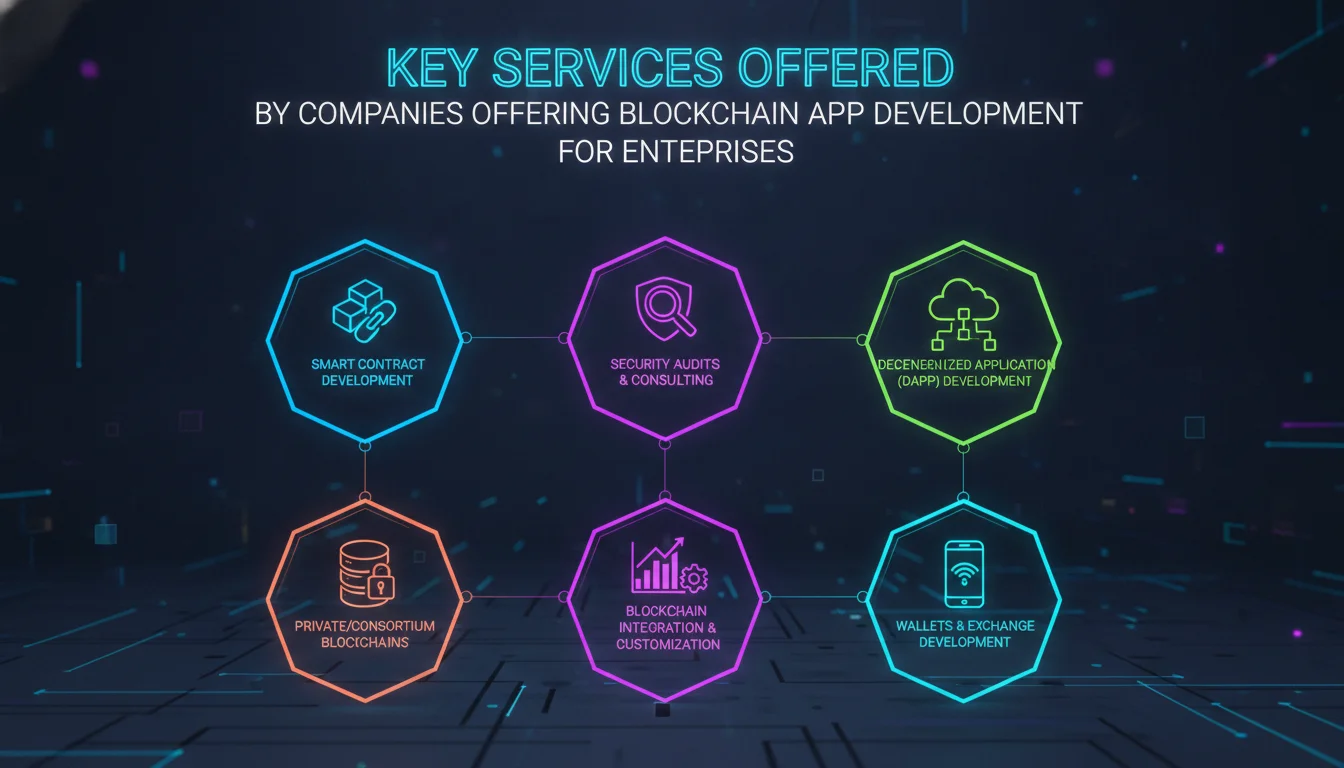
Smart Contract Development and Auditing
Smart contracts are the foundation of most blockchain applications, and getting them wrong is expensive. Professional development firms write, test, and deploy contracts using Solidity (for EVM-compatible chains), Rust (for Solana and Near), and Vyper (for security-critical Ethereum contracts). They then perform rigorous security audits targeting reentrancy attacks, integer overflows, access control flaws, and front-running risks. the offering blockchain app development services like PixelPlex and Interexy emphasize auditing as a core deliverable, not an afterthought, particularly for DeFi protocols and NFT platforms where exploits can drain millions in minutes.
Decentralized Application (dApp) Development
dApp development covers frontend design, backend decentralization, and wallet integration into a single cohesive product. Firms like SparxIT and Appinventiv provide end-to-end dApp development from concept through deployment, building applications for gaming, social networking, and finance. The goal is a smooth user experience that doesn’t require users to understand the blockchain infrastructure running beneath it.
Enterprise Blockchain Integration
Many organizations need blockchain integrated with existing ERP, CRM, or supply chain systems rather than built from scratch. This requires deep expertise in permissioned networks like Hyperledger Fabric and R3 Corda, plus middleware and API design. Confianz Global and TechAhead specialize in this integration layer, helping enterprises achieve data immutability and process automation without disrupting legacy infrastructure.
Tokenization and NFT Marketplace Development
Asset tokenization converts real-world assets into on-chain digital tokens, improving liquidity, enabling fractional ownership, and creating transparent ownership records. Development firms build platforms for real estate tokenization, security tokens, and NFT marketplaces. A3Logics and Inceptives Digital are noted for multi-chain tokenization projects spanning Ethereum, Solana, Polygon, and Avalanche.
DeFi and Crypto Wallet Solutions
Decentralized finance replaces traditional financial intermediaries with smart contract protocols for lending, borrowing, trading, and yield generation. services like Rapid Innovation and AppsChopper build DeFi platforms, crypto wallets, and decentralized exchanges with features like multi-signature security, liquidity pools, and on-chain governance. Blockchain wallet users exceeded 85 million by the start of 2023, according to Blockchain.com data cited by Interexy, reflecting the scale of the market these tools serve.
Technical Stack: Solidity vs. Rust, Truffle vs. Hardhat
The toolchain your development partner uses matters as much as the language. Solidity remains the dominant language for EVM chains, with a mature ecosystem and extensive audit tooling. Rust is the language of choice for Solana and Near, offering memory safety and high throughput at the cost of a steeper learning curve. On the tooling side, Hardhat has largely displaced Truffle for Ethereum development due to its plugin architecture, faster compilation, and better debugging via console.log in Solidity. Foundry is gaining ground for teams that want Solidity-native testing without JavaScript overhead. Ask any prospective partner which toolchain they use and why: the answer reveals how current their practice is.
Top Companies Offering Blockchain App Development Services in the USA
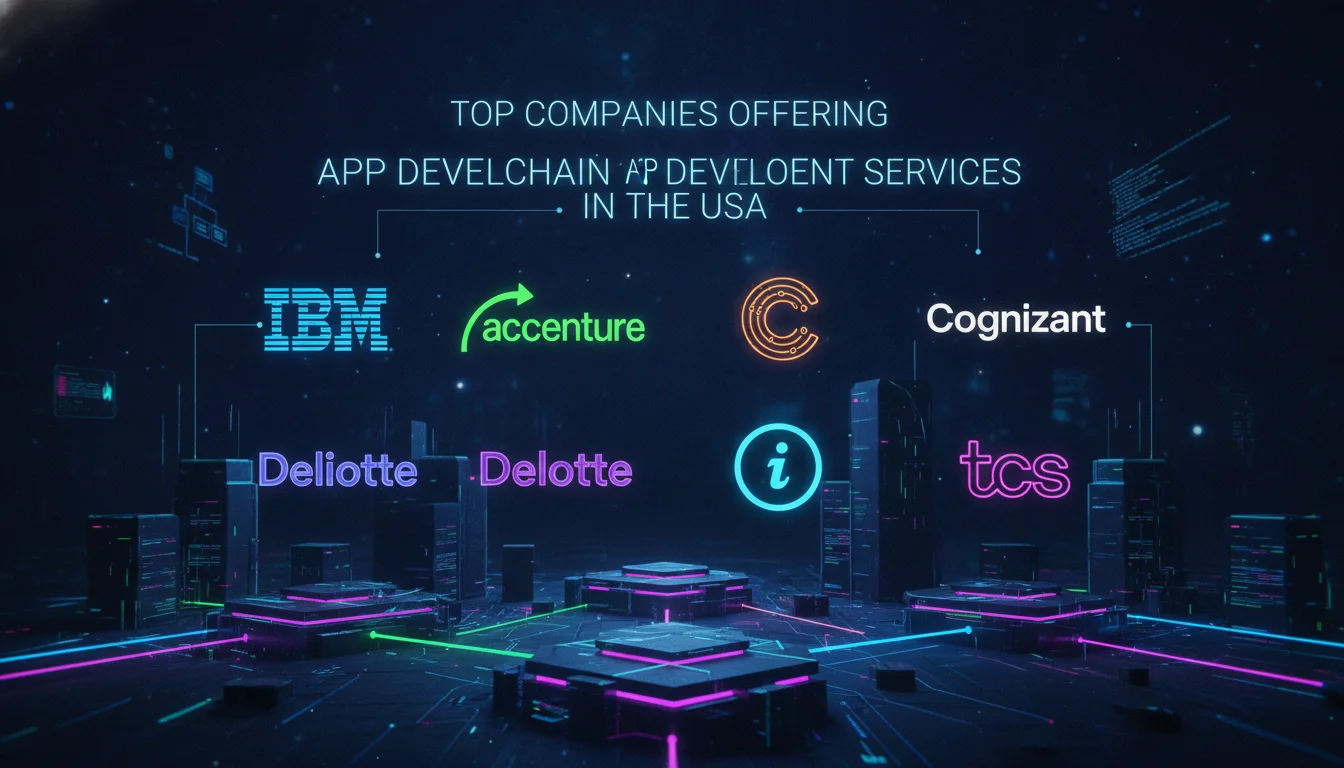
The U.S. is a global hub for blockchain innovation, contributing more than 40% of global blockchain market activity. Below is a comparison of leading providers, drawn from the Dribbble curated list and individual company profiles.
| Company | Core Expertise | Platforms | Project Size (USD) | Notable Industries |
|---|---|---|---|---|
| PixelPlex | Enterprise fintech, tokenization, DAOs | Ethereum, Solana, Hyperledger, Cardano, Avalanche | Custom quote | Fintech, healthcare, real estate |
| AppsChopper | Mobile blockchain apps, wallets, exchanges | Ethereum, Tron, Hyperledger, Solana, Cardano | $45K–$200K | Banking, healthcare, travel |
| Interexy | Healthcare and fintech dApps, NFTs | Ethereum, BNB Chain, Solana, Avalanche, Hyperledger | $50K–$1M+ | Healthcare, fintech, real estate |
| Appinventiv | Full-cycle blockchain, enterprise PoC | Ethereum, Polygon, Hyperledger | Custom quote | Banking, gaming, social |
| A3Logics | Multi-chain DeFi and NFT platforms | Ethereum, Cardano, Solana, Polygon, Cosmos | $10K–$500K | Supply chain, fintech, gaming |
| BlockchainAppsDeveloper | DeFi, NFT, metaverse, smart contracts | Ethereum, Cosmos, Hyperledger, Bitcoin | Custom quote | Gaming, enterprises |
| Inceptives Digital | Scalable DeFi, NFT, and wallet projects | Ethereum, Solana, Polygon, Avalanche, Hyperledger | $40K–$300K+ | Healthcare, gaming, e-commerce |
These companies offering have demonstrated track records, but selection should align with your specific project requirements, technical needs, and budget. PixelPlex excels in complex enterprise architectures and DAO infrastructure. Interexy brings specialized depth in healthcare and fintech dApps. A3Logics covers the widest price range, making it accessible for earlier-stage projects.
“The business value-add of blockchain will grow to slightly more than $176 billion by 2025, and then it will exceed $3.1 trillion by 2030.” – Gartner
Pros and Cons of Hiring Companies Offering Blockchain App Development Services
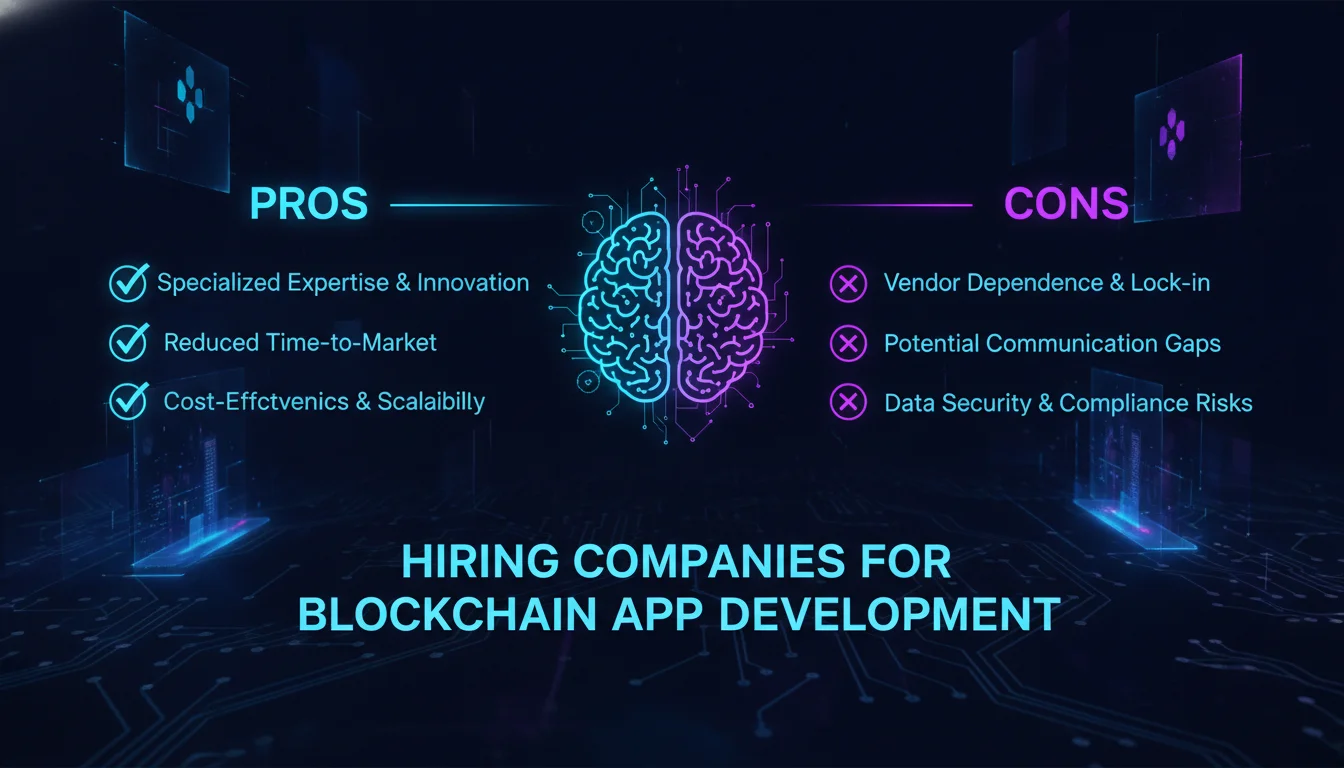
Pros
- Specialized expertise: Dedicated blockchain firms bring protocol-level knowledge that general software agencies rarely match, covering smart contract security, tokenomics design, and multi-chain architecture.
- Faster time to market: Established firms have reusable components, audited contract templates, and tested deployment pipelines that compress development timelines significantly.
- Security-first culture: Top providers treat auditing as a core deliverable, not an optional add-on, reducing the risk of costly post-deployment exploits.
- Multi-chain flexibility: Leading firms support Ethereum, Solana, Polygon, Hyperledger, and Avalanche, letting you choose the network that fits your throughput and cost requirements.
- Post-launch continuity: Reputable partners offer ongoing maintenance, gas optimization, and upgrade planning as networks evolve and user bases grow.
Cons
- High cost floor: Quality blockchain development rarely starts below $10,000, and enterprise-grade systems routinely exceed $500,000. Budget constraints can limit your options.
- Talent scarcity: Demand for blockchain development services has doubled in recent years, meaning top firms are often booked out and timelines can slip.
- Vendor lock-in risk: Some firms build on proprietary tooling or undocumented internal frameworks, making it difficult to switch partners or bring development in-house later.
- Rapidly shifting landscape: Protocol upgrades, new EIPs, and regulatory changes require your partner to stay current. Firms that aren’t actively shipping on mainnet may fall behind quickly.
Pricing and Engagement Models for Blockchain Development
How Much Does Blockchain App Development Cost?
Costs vary widely based on project scope, blockchain network, smart contract complexity, security auditing requirements, and third-party integrations. Simple dApps typically start in the $10,000–$40,000 range, while complex DeFi platforms or enterprise systems can exceed $1,000,000. Per the Dribbble comparison data, AppsChopper projects range from $45,000 to $200,000, Interexy quotes $50,000 to $1,000,000+, and A3Logics covers $10,000 to $500,000, giving a clear picture of the market spread.
Factors Influencing Pricing
Key cost drivers include: choice of blockchain network (public chains like Ethereum carry higher gas costs but offer richer tooling, while private chains like Hyperledger require more custom infrastructure work); number and complexity of smart contracts; frontend and UX design scope; security audit rounds; regulatory compliance features like KYC and AML integration; and post-launch maintenance commitments. Companies offering blockchain app development services typically provide detailed proposals after a structured discovery phase, so budget for that discovery work upfront.
Global Pricing Trends
North America commands premium rates, with senior blockchain developers billing $150–$250 per hour. Eastern European and South Asian firms often deliver competitive work at $25–$80 per hour. The U.S. blockchain market holds more than 40% of global market share with a 30%+ CAGR, per market data from Octal Software’s 2026 research. North America contributed 46% of global blockchain technology market growth, according to BlockchainAppsDeveloper’s market analysis citing industry data. That concentration of activity drives both high demand and corresponding pricing pressure.
How to Choose the Best Blockchain Development Partner
Step 1: Define Your Project Scope and Goals
Start by clearly outlining your project’s objectives, target users, required features, and success metrics. Decide whether you need a public, private, or hybrid blockchain, and identify must-have integrations with existing systems. A well-defined scope lets companies offering blockchain app development services provide accurate estimates and recommend the right tech stack from the start, rather than pivoting mid-build.
Step 2: Evaluate Technical Expertise and Experience
Assess the firm’s proficiency in the blockchain platforms and languages your project requires. Review their portfolio for comparable projects, examine case studies, and verify client feedback on platforms like Clutch and GoodFirms. Confirm they have hands-on experience with smart contract security audits and can demonstrate scalability on production systems. A DeFi project demands deep tokenomics knowledge and liquidity pool design experience. A supply chain solution requires IoT integration and data privacy architecture.
Step 3: Check Security Practices and Compliance
Blockchain applications handle sensitive data and high-value assets, so security cannot be treated as a checkbox. Ask about their audit history, use of formal verification tools, and compliance with standards like ISO 27001. The firm should follow established practices for key management, penetration testing, and incident response planning. Companies offering blockchain app development services that take security seriously will include multiple audit rounds and ongoing monitoring in their standard proposals, not as premium add-ons.
Step 4: Understand Regulatory Exposure
Regulatory clarity is accelerating in 2026. The U.S. SEC continues to define which tokens qualify as securities, directly affecting how you structure token launches and DeFi protocols. In Europe, the Markets in Crypto-Assets (MiCA) regulation establishes licensing requirements for crypto asset service providers. Any development partner working on token issuance, DeFi, or NFT platforms should have compliance counsel in their network and be able to advise on KYC, AML, and securities law implications before a single line of code is written.
Step 5: Consider Post-Launch Support and Scalability
Blockchain networks evolve constantly, and your application must adapt. Choose a partner that offers long-term maintenance, protocol upgrade support, and scalability planning. This includes handling network forks, gas optimization, and user growth. Appinventiv reports 99% client satisfaction and dedicated post-launch support teams, reflecting the industry standard that serious firms are expected to meet.
Industry Use Cases
Healthcare: Secure Patient Data and Drug Traceability
Healthcare is one of the highest-stakes verticals for blockchain, where data integrity directly affects patient outcomes. Interexy and A3Logics have developed blockchain solutions enabling secure sharing of electronic health records and tracking pharmaceutical supply chains from manufacturer to pharmacy. These applications reduce fraud, ensure data integrity, and give patients meaningful control over their medical information. Companies offering blockchain app development services in this vertical must comply with both HIPAA and GDPR, making regulatory experience a non-negotiable selection criterion.
Finance: DeFi and Cross-Border Payments
PixelPlex and Rapid Innovation specialize in fintech blockchain solutions including decentralized exchanges, lending protocols, and remittance platforms. These systems compress settlement times from days to minutes and cut transaction costs by removing intermediaries from the chain. The Gartner-projected $176 billion in blockchain business value by 2025 is largely driven by exactly these financial infrastructure improvements.
Supply Chain: Transparency and Anti-Counterfeiting
Supply chain is where blockchain’s immutability delivers the most immediate operational value. Platforms that record every step of a product’s journey on an immutable ledger provide real-time visibility, reduce counterfeiting, and automate compliance reporting. Walmart and Maersk are among the enterprises that have deployed blockchain-based supply chain tracking at scale, and many companies offering blockchain app development services replicate these architectures for mid-market clients in food, pharma, and manufacturing.
The Future of Blockchain App Development
Interoperability and Cross-Chain Solutions
Interoperability is the next major frontier. As of 2026, the number of active blockchain networks has grown substantially, and users increasingly expect applications to work across chains without friction. Projects like Polkadot and Cosmos provide cross-chain communication infrastructure, and development firms are building bridges and multichain dApps on top of them. North America contributed 46% of global blockchain technology market growth, according to industry data, and much of that growth is concentrated in interoperability infrastructure and Layer 2 scaling solutions.
AI and Blockchain Convergence
Artificial intelligence is being integrated with blockchain for enhanced analytics, fraud detection, and automated decision-making. Rapid Innovation already uses AI-assisted development to accelerate smart contract generation and audit processes. This convergence produces more adaptive decentralized systems: AI models that can analyze on-chain data in real time, flag anomalous transactions, and even propose governance actions through DAO mechanisms.
Regulatory Clarity and Enterprise Adoption
Government agencies worldwide are establishing clearer blockchain frameworks, which is accelerating enterprise adoption. The U.S., China, Switzerland, the UK, and Germany are leading this regulatory development. On-chain market data indicates that more than 70% of large U.S. enterprises are actively using or piloting blockchain initiatives, and demand for blockchain development services has doubled in recent years. Compliance-focused development, including AML and KYC integration, is becoming a baseline requirement rather than a differentiator.
“Blockchain has moved well beyond cryptocurrency. Businesses across finance, healthcare, logistics, retail, real estate, and manufacturing are using blockchain to improve security, automate workflows, verify transactions, and build transparent digital ecosystems.” – AVIXA Xchange, July 2026
If you’re evaluating where to focus your blockchain development investment, our Digital Blockchains blog covers protocol infrastructure, tokenomics design, and DAO architecture in depth. For a closer look at how we approach building, visit the Digital Blockchains Studio.
Frequently Asked Questions
What services do blockchain app development companies offer?
They provide smart contract development and auditing, dApp creation, enterprise blockchain integration, asset tokenization, DeFi solutions, crypto wallet and exchange development, and regulatory compliance consulting. Most reputable firms also offer post-launch maintenance and scalability planning as standard deliverables.
How much does it cost to develop a blockchain application?
Costs range from $10,000 for a basic dApp to over $1,000,000 for a complex enterprise platform. Key variables include the blockchain network, number and complexity of smart contracts, security audit requirements, and the scope of third-party integrations.
Which blockchain platform is best for my project?
Ethereum is the default choice for DeFi and NFTs due to its mature tooling and audit ecosystem. Hyperledger Fabric suits permissioned enterprise networks where privacy and throughput matter more than decentralization. Solana and Polygon offer lower fees and faster finality for high-volume consumer applications. The right choice depends on your specific throughput, cost, and decentralization requirements.
How long does it take to build a blockchain app?
Development timelines range from 3–6 months for a basic dApp to 12 months or more for a full-scale enterprise system. Smart contract auditing, regulatory compliance work, and third-party integrations are the most common sources of schedule extension.
How do I ensure my blockchain app is secure?
Choose a development company that conducts thorough smart contract audits using established tools, follows best practices for private key management, and performs penetration testing before launch. Ongoing monitoring and a defined incident response plan are equally important after deployment.